
Macro stability, but risks still very high: Ex-CEA explains why private investment isn't taking off
Government's efforts to boost returns on investment - including corporate tax cuts and subsidies - have not overcome the deeper structural concerns, says former CEA Arvind Subramanian
- Dec 1, 2025,
- Updated Dec 1, 2025 1:33 PM IST
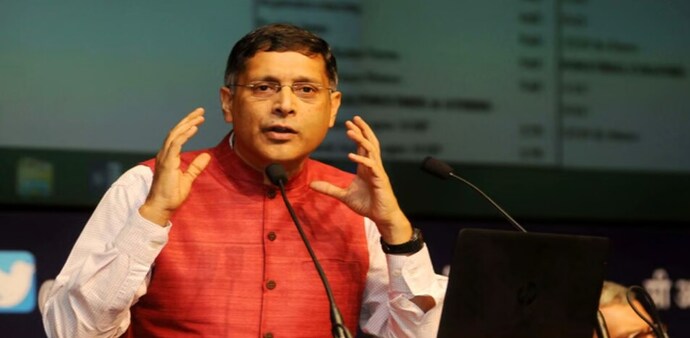
India's macroeconomic stability has improved significantly, yet private investment remains weak because the "risks of doing business in India are still very high", according to former Chief Economic Advisor Arvind Subramanian. "One of the big challenges of the Indian economy today is - low private investment," Subramanian said in a conversation with Business Today Group Editor Siddharth Zarabi and Rajdeep Sardesai.
"There's a lot of macro stability, there's low inflation, reserves are good, fiscal position is broadly okay, the banking system has also been cleaned up, infrastructure and connectivity have improved - so there's macro stability. And yet the central puzzle of the economy is - why the private investment is still so weak and why are jobs not being created on the back of private investment."
Speaking alongside co-author Devesh Kapur on their new book A Sixth of Humanity: Independent India's Development Odyssey, Subramanian said the investment climate continues to be shaped by enforcement overreach, policy unpredictability, and an uneven playing field. He said government efforts to boost returns on investment - including corporate tax cuts and subsidies - have not overcome the deeper structural concerns.
"The problem is that the risks of doing business in India are still very high. And the government, especially, the way it's weaponised the state. The way there's still tax terrorism, and this administrative overzealous enforcement. The way some groups are favored over other groups. The playing field is not level across all investors. The way that policies keep changing. The way that center-state relations are not as harmonious as they should be."
"These," he said, "are all the factors that we touch upon in the end (in the book). The kind of institutional deterioration, the weaponisation of the state that although they seem to be affecting India's politics and society, they do have an impact on the conditions for investment as well. And that may be one of the reasons why private investment is also not taking off as it should."
Political economist Devesh Kapur added that a weak rule of law at the state level is also a major part of the problem. "When we say the state, we're really thinking of Delhi, the central government. But a lot of these actions of the lack of rule of law is at also at the state level."
He compared West Bengal and Tamil Nadu to illustrate the point. "West Bengal has had three chief ministers since 1977. It has had so much political stability, and we generally think political stability is very conducive to business, yet we don't see that transformation happening in Bengal, the state that was India's leading state around independence and that has to do much more with local factors."
"Because West Bengal and Tamil Nadu are both opposition-ruled states, yet one opposition state seems to have, despite the constraints from the central government, has undoubtedly done much better than the other. Therefore, we'll have to think about factors at the state level as well and not just what happens in Delhi," Kapur said.
India's macroeconomic stability has improved significantly, yet private investment remains weak because the "risks of doing business in India are still very high", according to former Chief Economic Advisor Arvind Subramanian. "One of the big challenges of the Indian economy today is - low private investment," Subramanian said in a conversation with Business Today Group Editor Siddharth Zarabi and Rajdeep Sardesai.
"There's a lot of macro stability, there's low inflation, reserves are good, fiscal position is broadly okay, the banking system has also been cleaned up, infrastructure and connectivity have improved - so there's macro stability. And yet the central puzzle of the economy is - why the private investment is still so weak and why are jobs not being created on the back of private investment."
Speaking alongside co-author Devesh Kapur on their new book A Sixth of Humanity: Independent India's Development Odyssey, Subramanian said the investment climate continues to be shaped by enforcement overreach, policy unpredictability, and an uneven playing field. He said government efforts to boost returns on investment - including corporate tax cuts and subsidies - have not overcome the deeper structural concerns.
"The problem is that the risks of doing business in India are still very high. And the government, especially, the way it's weaponised the state. The way there's still tax terrorism, and this administrative overzealous enforcement. The way some groups are favored over other groups. The playing field is not level across all investors. The way that policies keep changing. The way that center-state relations are not as harmonious as they should be."
"These," he said, "are all the factors that we touch upon in the end (in the book). The kind of institutional deterioration, the weaponisation of the state that although they seem to be affecting India's politics and society, they do have an impact on the conditions for investment as well. And that may be one of the reasons why private investment is also not taking off as it should."
Political economist Devesh Kapur added that a weak rule of law at the state level is also a major part of the problem. "When we say the state, we're really thinking of Delhi, the central government. But a lot of these actions of the lack of rule of law is at also at the state level."
He compared West Bengal and Tamil Nadu to illustrate the point. "West Bengal has had three chief ministers since 1977. It has had so much political stability, and we generally think political stability is very conducive to business, yet we don't see that transformation happening in Bengal, the state that was India's leading state around independence and that has to do much more with local factors."
"Because West Bengal and Tamil Nadu are both opposition-ruled states, yet one opposition state seems to have, despite the constraints from the central government, has undoubtedly done much better than the other. Therefore, we'll have to think about factors at the state level as well and not just what happens in Delhi," Kapur said.