
Fadnavis-led cabinet clears 'Dharma Swatantrya Adhiniyam, 2026'; What does it say, provisions on conversion and more
The proposed legislation seeks to prevent conversions carried out through coercion, deception or inducements while outlining a formal process to change religion.
- Mar 6, 2026,
- Updated Mar 6, 2026 12:04 PM IST
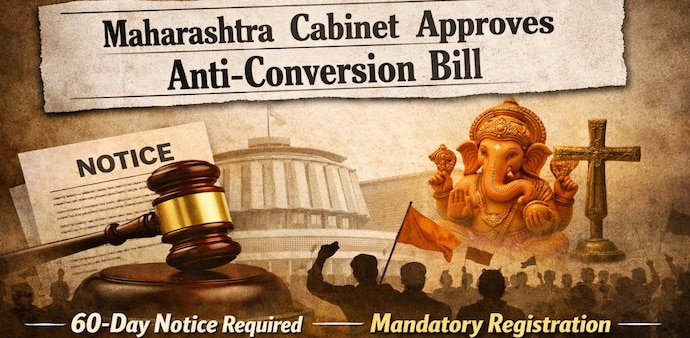
The Maharashtra cabinet has approved a draft anti-conversion bill that proposes stricter rules for religious conversion, including mandatory permission from authorities and registration of the conversion process.
The proposed legislation, titled Dharma Swatantrya Adhiniyam 2026, seeks to prevent conversions carried out through coercion, deception or inducements while outlining a formal process for individuals who wish to change their religion.
What does the proposed law say?
Under the draft provisions, anyone intending to convert to another religion will have to give a 60-day notice and seek permission from the designated authority before converting and obtain official approval before the conversion can take place.
After the conversion is carried out, the individual will also need to register the change within 25 days with the relevant authority. If this registration requirement is not fulfilled within the specified time frame, the conversion may be treated as invalid under the proposed law.
What does it say on conversion?
The bill further states that if a close family member suspects the conversion has taken place through unlawful means such as force, fraud or allurement, they can lodge a complaint. In such cases, the police would be required to register a First Information Report (FIR) and initiate an investigation.
According to the draft legislation, the constitutional guarantee of religious freedom protects individuals from forced or deceptive conversions but does not extend to conversions obtained through coercive or misleading practices.
Reactions to the draft law
Maharashtra minister and BJP leader Nitesh Rane said the cabinet's approval fulfils a commitment made by the party ahead of the state Assembly elections.
Addressing reporters at Vidhan Bhavan, Rane said, "We had firmly stated during the Assembly elections that once we come to power, we will bring a strong anti-conversion law, also referred to as a law against 'love jihad', in Maharashtra. Today, I feel a deep sense of satisfaction that such a strong anti-conversion law has been approved by the cabinet," he said.
Rane also thanked Chief Minister Devendra Fadnavis and Deputy Chief Ministers Eknath Shinde and Sunetra Pawar for supporting the measure. He added that a government resolution outlining the details of the proposed law will be issued soon.
The minister noted that the demand for such legislation has been raised repeatedly by activists and several Hindutva organisations, which have organised protests and demonstrations in the past seeking stricter measures against alleged forced conversions. The bill is expected to be placed before the state legislature in the coming period for discussion and possible passage.
(With PTI inputs)
The Maharashtra cabinet has approved a draft anti-conversion bill that proposes stricter rules for religious conversion, including mandatory permission from authorities and registration of the conversion process.
The proposed legislation, titled Dharma Swatantrya Adhiniyam 2026, seeks to prevent conversions carried out through coercion, deception or inducements while outlining a formal process for individuals who wish to change their religion.
What does the proposed law say?
Under the draft provisions, anyone intending to convert to another religion will have to give a 60-day notice and seek permission from the designated authority before converting and obtain official approval before the conversion can take place.
After the conversion is carried out, the individual will also need to register the change within 25 days with the relevant authority. If this registration requirement is not fulfilled within the specified time frame, the conversion may be treated as invalid under the proposed law.
What does it say on conversion?
The bill further states that if a close family member suspects the conversion has taken place through unlawful means such as force, fraud or allurement, they can lodge a complaint. In such cases, the police would be required to register a First Information Report (FIR) and initiate an investigation.
According to the draft legislation, the constitutional guarantee of religious freedom protects individuals from forced or deceptive conversions but does not extend to conversions obtained through coercive or misleading practices.
Reactions to the draft law
Maharashtra minister and BJP leader Nitesh Rane said the cabinet's approval fulfils a commitment made by the party ahead of the state Assembly elections.
Addressing reporters at Vidhan Bhavan, Rane said, "We had firmly stated during the Assembly elections that once we come to power, we will bring a strong anti-conversion law, also referred to as a law against 'love jihad', in Maharashtra. Today, I feel a deep sense of satisfaction that such a strong anti-conversion law has been approved by the cabinet," he said.
Rane also thanked Chief Minister Devendra Fadnavis and Deputy Chief Ministers Eknath Shinde and Sunetra Pawar for supporting the measure. He added that a government resolution outlining the details of the proposed law will be issued soon.
The minister noted that the demand for such legislation has been raised repeatedly by activists and several Hindutva organisations, which have organised protests and demonstrations in the past seeking stricter measures against alleged forced conversions. The bill is expected to be placed before the state legislature in the coming period for discussion and possible passage.
(With PTI inputs)