
Meet Abhay Karandikar: From IIT professor to NITI Aayog member & the researcher behind India’s 5G and 6G journey
His areas of expertise and interest include telecommunications, wireless networking, electronics and semiconductors, AI and quantum communication.
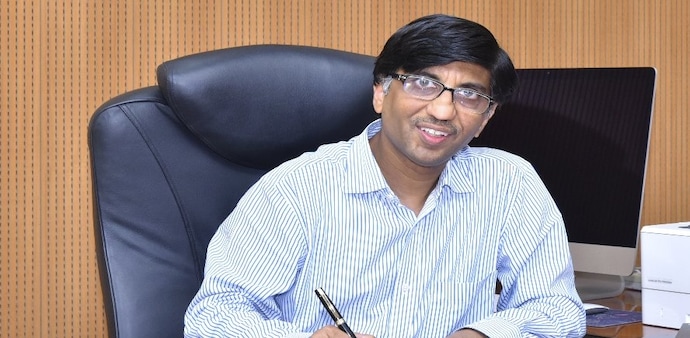
- Sep 24, 2026,
- Updated Sep 24, 2026 1:12 PM IST
Abhay Karandikar’s career has taken him from being an IIT Kanpur student to a professor at IIT Bombay, Director of IIT Kanpur, Secretary of the Department of Science and Technology and, most recently, a Member of NITI Aayog. His research in telecommunications and wireless networking has contributed to affordable broadband, 5G standards and emerging 6G technologies.
Karandikar received his MTech in Electrical Engineering from IIT Kanpur in 1988 and his PhD in Electrical Engineering from the institute in 1994.
From IIT Kanpur to IIT Bombay
In April 1997, Karandikar joined the Department of Electrical Engineering at IIT Bombay, where he remained until April 2018.
During his time at IIT Bombay, he headed the Computer Centre, led the Electrical Engineering Department, became the first Professor-in-Charge of the IIT Bombay Research Park and served as Dean of Faculty Affairs.
His research focused on wired and wireless networks, resource allocation, software-defined networking and broadband access, particularly in areas where conventional infrastructure was expensive.
One of his key research areas was affordable rural broadband. His group worked on what came to be known as “Frugal 5G”, focusing on network arrangements suited to affordable broadband access.
Don't Miss: AI is already making developers 50% more productive, says Zoho’s Sridhar Vembu
Contributions to 5G
Karandikar also worked on telecom standards. He helped establish the Telecom Standards Development Society, India (TSDSI), the country’s telecom standards body, and served as its founding member and former chairman.
His research contributed to IEEE standards, including IEEE 1930.1 and IEEE 2061.
“IEEE 1930.1: SDN based Middleware for Control and Management of Networks” is the first IEEE standard coming out of Indian efforts led by him.
His work on affordable broadband also led to the formation of the “Frugal 5G” working group in IEEE standards and another global standard, “IEEE 2061: Architecture for Low Mobility Energy Efficient Network for Affordable Broadband” under “IEEE's Standards Activities for 5G”.
His team’s work on rural broadband received the Mozilla Open Innovation Challenge prize in 2017.
Leading IIT Kanpur
In April 2018, Karandikar moved from IIT Bombay to become Director of IIT Kanpur. He held the position until October 2, 2023.
During his tenure, IIT Kanpur expanded academic and research infrastructure, strengthened incubation and advanced plans for a medical school focused on medical technology. The institute also pursued new research facilities, faculty expansion, industry partnerships and international collaborations.
Its incubation efforts were consolidated under the Foundation for Innovation and Research in Science and Technology.
From academia to science policy
On October 3, 2023, Karandikar became Secretary of the Department of Science and Technology, Ministry of Science and Technology, Government of India. He held the post until May 18, 2026.
As Secretary, he was instrumental in operationalising several government initiatives, including the National Quantum Mission and the Anusandhan National Research Foundation (ANRF).
He also operationalised the Rs.1 Lakh Crore Research, Development and Innovation Fund for supporting cutting-edge R&D in the private sector and deep tech startups.
During his tenure, several R&D programmes and initiatives were launched in clean energy, green hydrogen, advanced materials, geospatial technologies, manufacturing, R&D infrastructure, technology incubation and international bilateral R&D programmes.
Research moves towards 6G
Karandikar’s research group has also contributed to AI driven Programmable Protocols for 6G.
His areas of expertise and interest include telecommunications, wireless networking, electronics and semiconductors, AI and quantum communication.
After serving as DST Secretary until May 18, 2026, Karandikar moved to NITI Aayog, where he is now a Member.
His career has thus spanned academic research at IIT Bombay, the leadership of IIT Kanpur, national science and technology policy and his current role at NITI Aayog.
Abhay Karandikar’s career has taken him from being an IIT Kanpur student to a professor at IIT Bombay, Director of IIT Kanpur, Secretary of the Department of Science and Technology and, most recently, a Member of NITI Aayog. His research in telecommunications and wireless networking has contributed to affordable broadband, 5G standards and emerging 6G technologies.
Karandikar received his MTech in Electrical Engineering from IIT Kanpur in 1988 and his PhD in Electrical Engineering from the institute in 1994.
From IIT Kanpur to IIT Bombay
In April 1997, Karandikar joined the Department of Electrical Engineering at IIT Bombay, where he remained until April 2018.
During his time at IIT Bombay, he headed the Computer Centre, led the Electrical Engineering Department, became the first Professor-in-Charge of the IIT Bombay Research Park and served as Dean of Faculty Affairs.
His research focused on wired and wireless networks, resource allocation, software-defined networking and broadband access, particularly in areas where conventional infrastructure was expensive.
One of his key research areas was affordable rural broadband. His group worked on what came to be known as “Frugal 5G”, focusing on network arrangements suited to affordable broadband access.
Don't Miss: AI is already making developers 50% more productive, says Zoho’s Sridhar Vembu
Contributions to 5G
Karandikar also worked on telecom standards. He helped establish the Telecom Standards Development Society, India (TSDSI), the country’s telecom standards body, and served as its founding member and former chairman.
His research contributed to IEEE standards, including IEEE 1930.1 and IEEE 2061.
“IEEE 1930.1: SDN based Middleware for Control and Management of Networks” is the first IEEE standard coming out of Indian efforts led by him.
His work on affordable broadband also led to the formation of the “Frugal 5G” working group in IEEE standards and another global standard, “IEEE 2061: Architecture for Low Mobility Energy Efficient Network for Affordable Broadband” under “IEEE's Standards Activities for 5G”.
His team’s work on rural broadband received the Mozilla Open Innovation Challenge prize in 2017.
Leading IIT Kanpur
In April 2018, Karandikar moved from IIT Bombay to become Director of IIT Kanpur. He held the position until October 2, 2023.
During his tenure, IIT Kanpur expanded academic and research infrastructure, strengthened incubation and advanced plans for a medical school focused on medical technology. The institute also pursued new research facilities, faculty expansion, industry partnerships and international collaborations.
Its incubation efforts were consolidated under the Foundation for Innovation and Research in Science and Technology.
From academia to science policy
On October 3, 2023, Karandikar became Secretary of the Department of Science and Technology, Ministry of Science and Technology, Government of India. He held the post until May 18, 2026.
As Secretary, he was instrumental in operationalising several government initiatives, including the National Quantum Mission and the Anusandhan National Research Foundation (ANRF).
He also operationalised the Rs.1 Lakh Crore Research, Development and Innovation Fund for supporting cutting-edge R&D in the private sector and deep tech startups.
During his tenure, several R&D programmes and initiatives were launched in clean energy, green hydrogen, advanced materials, geospatial technologies, manufacturing, R&D infrastructure, technology incubation and international bilateral R&D programmes.
Research moves towards 6G
Karandikar’s research group has also contributed to AI driven Programmable Protocols for 6G.
His areas of expertise and interest include telecommunications, wireless networking, electronics and semiconductors, AI and quantum communication.
After serving as DST Secretary until May 18, 2026, Karandikar moved to NITI Aayog, where he is now a Member.
His career has thus spanned academic research at IIT Bombay, the leadership of IIT Kanpur, national science and technology policy and his current role at NITI Aayog.