
'BRICS important in shaping the multipolar world...': PM Modi highlights BRICS role, pushes India-Japan ties
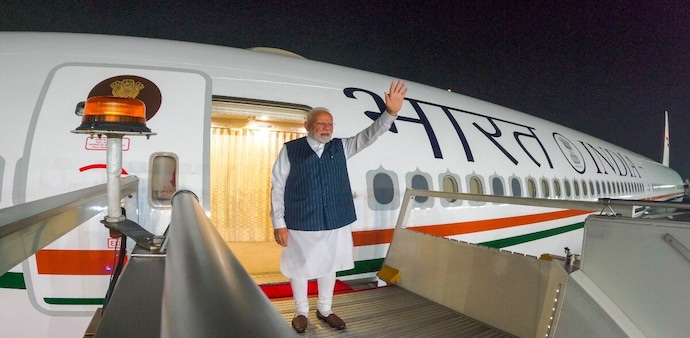
PM Narendra Modi, who began a two-day visit to Japan on Friday, also highlighted the strategic partnership between India and Japan, framing it as a key element in safeguarding a rules-based international order and promoting economic stability.
- Aug 30, 2025,
- Updated Aug 30, 2025 10:43 AM IST
Prime Minister Narendra Modi has underscored the critical role of the BRICS grouping in shaping a multipolar world, saying the bloc’s agenda is particularly relevant at a time when global institutions are under pressure and lack credibility to deliver effectively. In an exclusive interview with Nikkei, Modi emphasized that BRICS—originally comprising Brazil, Russia, India, China, and South Africa, and now expanded to ten countries—aligns with India’s priorities, including global governance reform, defense, multilateralism, development, and artificial intelligence. His remarks come amid a turbulent period in global trade, with India recently facing a 50% duty from the United States as Washington seeks to pressure New Delhi over its purchase of Russian oil, part of a broader wave of “reciprocal” tariffs triggered by U.S. President Donald Trump.
Modi, who began a two-day visit to Japan on Friday, highlighted the strategic partnership between India and Japan, framing it as a key element in safeguarding a rules-based international order and promoting economic stability. The visit coincides with the 15th India-Japan Annual Summit with Prime Minister Shigeru Ishiba. Modi described the summit mechanism as an opportunity for both nations to exchange perspectives on evolving national and global priorities, explore new areas of cooperation, and strengthen existing partnerships.
Japan and India ties
India and Japan, he noted, are both vibrant democracies and among the top five economies in the world. Their partnership, Modi said, is anchored in trust, friendship, and mutual goodwill. “Our visions are convergent and our resources are complementary, which makes India and Japan natural partners,” he told Nikkei. Modi emphasized that the changing global economic environment, including challenges to globalization and the need for supply chain diversification, makes India a reliable partner for many countries seeking stability and collaboration in trade and technology.
During his visit, Modi highlighted tangible examples of India-Japan collaboration in technology and green mobility. He pointed to the launch of Suzuki’s first battery electric vehicle manufactured in India and the joint Toshiba-Denso-Suzuki initiative aimed at revolutionizing the battery ecosystem. These projects, he said, demonstrate the potential of India-Japan cooperation under programs such as Make in India, Startup India, Digital India, the Semiconductor Mission, and the AI Mission.
Human resource exchange also remains a key pillar of bilateral ties. Modi noted India’s large population of skilled, tech-savvy youth and emphasized the complementarity between Indian talent and Japanese expertise. “High-skilled and semi-skilled professionals, students and scientists from India can learn immensely from Japan and at the same time contribute to Japan’s growth,” he said. Similarly, Japanese investment and managerial acumen are crucial for India’s manufacturing, clean energy, infrastructure, and high-technology sectors.
High Speed Rail
The Mumbai-Ahmedabad High-Speed Rail project exemplifies the two countries’ long-term collaboration. Modi noted that Japan’s participation in the project, including the introduction of its latest E10 Shinkansen model, reflects a partnership where Japan contributes systems and India brings speed, skill, and scale. He also highlighted opportunities to replicate such success stories across sectors including automobiles, electronics, and semiconductors.
Defence and security cooperation
On defence and security cooperation, Modi stressed ongoing efforts with Japan on technology transfer and joint production, including projects such as the UNICORN (Unified Complex Radio Antenna) to enhance the Indian Navy’s operational capabilities. He described the Special Strategic and Global Partnership with Japan as rooted in mutual trust and a shared vision for a peaceful and prosperous Indo-Pacific.
BRICS and Global South
Returning to BRICS, Modi said the grouping’s agenda supports India’s emphasis on reforming global governance, strengthening the voice of the Global South, and addressing peace, security, development, and AI. “BRICS has an important role to play in shaping the multipolar world, especially at a time when the world order is under pressure and institutions of global governance lack effectiveness or credibility to deliver,” he said. He further reiterated India’s call for a multipolar and inclusive global order, where the perspectives and growth of the Global South are recognized as central to global progress.
Modi’s statements reflect a dual focus: deepening strategic and technological ties with Japan while reinforcing India’s commitment to shaping a more balanced, multipolar global order through BRICS and multilateral engagement.
Prime Minister Narendra Modi has underscored the critical role of the BRICS grouping in shaping a multipolar world, saying the bloc’s agenda is particularly relevant at a time when global institutions are under pressure and lack credibility to deliver effectively. In an exclusive interview with Nikkei, Modi emphasized that BRICS—originally comprising Brazil, Russia, India, China, and South Africa, and now expanded to ten countries—aligns with India’s priorities, including global governance reform, defense, multilateralism, development, and artificial intelligence. His remarks come amid a turbulent period in global trade, with India recently facing a 50% duty from the United States as Washington seeks to pressure New Delhi over its purchase of Russian oil, part of a broader wave of “reciprocal” tariffs triggered by U.S. President Donald Trump.
Modi, who began a two-day visit to Japan on Friday, highlighted the strategic partnership between India and Japan, framing it as a key element in safeguarding a rules-based international order and promoting economic stability. The visit coincides with the 15th India-Japan Annual Summit with Prime Minister Shigeru Ishiba. Modi described the summit mechanism as an opportunity for both nations to exchange perspectives on evolving national and global priorities, explore new areas of cooperation, and strengthen existing partnerships.
Japan and India ties
India and Japan, he noted, are both vibrant democracies and among the top five economies in the world. Their partnership, Modi said, is anchored in trust, friendship, and mutual goodwill. “Our visions are convergent and our resources are complementary, which makes India and Japan natural partners,” he told Nikkei. Modi emphasized that the changing global economic environment, including challenges to globalization and the need for supply chain diversification, makes India a reliable partner for many countries seeking stability and collaboration in trade and technology.
During his visit, Modi highlighted tangible examples of India-Japan collaboration in technology and green mobility. He pointed to the launch of Suzuki’s first battery electric vehicle manufactured in India and the joint Toshiba-Denso-Suzuki initiative aimed at revolutionizing the battery ecosystem. These projects, he said, demonstrate the potential of India-Japan cooperation under programs such as Make in India, Startup India, Digital India, the Semiconductor Mission, and the AI Mission.
Human resource exchange also remains a key pillar of bilateral ties. Modi noted India’s large population of skilled, tech-savvy youth and emphasized the complementarity between Indian talent and Japanese expertise. “High-skilled and semi-skilled professionals, students and scientists from India can learn immensely from Japan and at the same time contribute to Japan’s growth,” he said. Similarly, Japanese investment and managerial acumen are crucial for India’s manufacturing, clean energy, infrastructure, and high-technology sectors.
High Speed Rail
The Mumbai-Ahmedabad High-Speed Rail project exemplifies the two countries’ long-term collaboration. Modi noted that Japan’s participation in the project, including the introduction of its latest E10 Shinkansen model, reflects a partnership where Japan contributes systems and India brings speed, skill, and scale. He also highlighted opportunities to replicate such success stories across sectors including automobiles, electronics, and semiconductors.
Defence and security cooperation
On defence and security cooperation, Modi stressed ongoing efforts with Japan on technology transfer and joint production, including projects such as the UNICORN (Unified Complex Radio Antenna) to enhance the Indian Navy’s operational capabilities. He described the Special Strategic and Global Partnership with Japan as rooted in mutual trust and a shared vision for a peaceful and prosperous Indo-Pacific.
BRICS and Global South
Returning to BRICS, Modi said the grouping’s agenda supports India’s emphasis on reforming global governance, strengthening the voice of the Global South, and addressing peace, security, development, and AI. “BRICS has an important role to play in shaping the multipolar world, especially at a time when the world order is under pressure and institutions of global governance lack effectiveness or credibility to deliver,” he said. He further reiterated India’s call for a multipolar and inclusive global order, where the perspectives and growth of the Global South are recognized as central to global progress.
Modi’s statements reflect a dual focus: deepening strategic and technological ties with Japan while reinforcing India’s commitment to shaping a more balanced, multipolar global order through BRICS and multilateral engagement.