
Monsoon in India arrived on June 4 but five weather systems got together to stall it: Here's how
After an early burst of activity that suggested a strong seasonal onset, the monsoon's advance across the country slowed dramatically, leaving a sharp rainfall deficit
- Jun 19, 2026,
- Updated Jun 19, 2026 11:55 AM IST
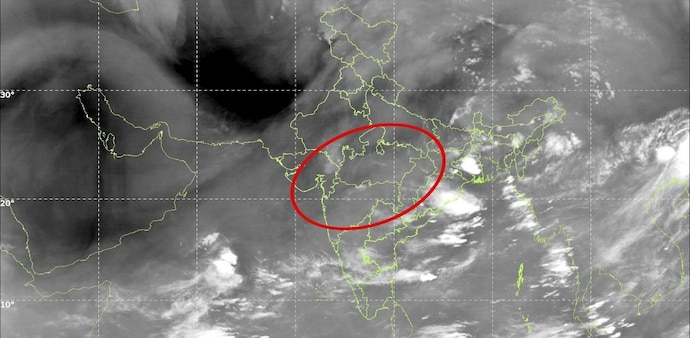
India's southwest monsoon arrived on June 4, 2026, and then, unusually, it stopped. After an early burst of activity that suggested a strong seasonal onset, the monsoon's advance across the country slowed dramatically, leaving a sharp rainfall deficit and raising concerns among farmers and water resource managers across the country.
Meteorologists say what followed was not the result of a single cause but a convergence of several atmospheric systems working against each other at the same time.
The Pacific connection
One of the most consequential influences came from thousands of kilometres away. During early June, a monsoon surge developed over the Indian Ocean, but a significant portion of its atmospheric energy appears to have been drawn toward tropical circulations in the western Pacific, including a system that later intensified into Typhoon Jagmi.
The consequence for India was significant. Instead of that energy helping generate a low-pressure system over the Bay of Bengal, the engine that typically drives the monsoon's march northward across the subcontinent, much of it was redirected eastward. The Bay of Bengal low that India needed simply did not form.
Western Disturbances pushing the wrong air
Compounding the problem was an unusual southward dip of repeated Western Disturbances across northern India. These systems, which typically affect India during winter, kept transporting dry northwesterly winds into the country — precisely the conditions that suppress cloud formation and rainfall. At the same time, the monsoon trough, the belt of low pressure that normally stretches across the subcontinent and organises thunderstorm activity, failed to perform its usual function.
A cyclonic circulation did develop along the trough, but instead of drawing moisture deeper into the Bay of Bengal, it kept low-level wind flow circulating along the trough itself. The result was weakly organised convection and no meaningful low-pressure area forming.
Winds are going the wrong way
As Pacific disturbances strengthened through mid-June, weather maps showed low-level winds becoming increasingly straight and oriented from west to east. The physics here matter: low-pressure systems need curved, converging winds to concentrate moisture and generate the rising motion that produces rainfall. With winds running more parallel to the monsoon trough, convergence weakened significantly, further reducing the chances of a Bay of Bengal low developing.
An evolving El Niño added another layer of difficulty. While El Niño alone cannot halt the monsoon, it can undermine the background atmospheric conditions needed for sustained and widespread thunderstorm activity.
The missing MJO
The final piece of the puzzle was the absence of support from the Madden-Julian Oscillation (MJO), a pulse of enhanced tropical rainfall that moves around the globe roughly every 30 to 60 days. During the first half of June, the MJO remained in an unfavourable phase over the Indian Ocean region, offering little encouragement for cloud formation.
A brief surge did push rainfall along parts of the west coast, but without a Bay of Bengal low to anchor the flow and with dry air repeatedly returning, the surge weakened and retreated southward.
When does relief arrive?
The outlook, meteorologists say, is beginning to improve. Forecasters expect the MJO to shift into a favourable phase, while the Low Level Jet, cross-equatorial flow and upper-level easterly winds are all expected to strengthen during the fourth week of June. If these changes align as anticipated, they could finally overcome the persistent dry air intrusions and trigger a genuine monsoon revival across India.
India's southwest monsoon arrived on June 4, 2026, and then, unusually, it stopped. After an early burst of activity that suggested a strong seasonal onset, the monsoon's advance across the country slowed dramatically, leaving a sharp rainfall deficit and raising concerns among farmers and water resource managers across the country.
Meteorologists say what followed was not the result of a single cause but a convergence of several atmospheric systems working against each other at the same time.
The Pacific connection
One of the most consequential influences came from thousands of kilometres away. During early June, a monsoon surge developed over the Indian Ocean, but a significant portion of its atmospheric energy appears to have been drawn toward tropical circulations in the western Pacific, including a system that later intensified into Typhoon Jagmi.
The consequence for India was significant. Instead of that energy helping generate a low-pressure system over the Bay of Bengal, the engine that typically drives the monsoon's march northward across the subcontinent, much of it was redirected eastward. The Bay of Bengal low that India needed simply did not form.
Western Disturbances pushing the wrong air
Compounding the problem was an unusual southward dip of repeated Western Disturbances across northern India. These systems, which typically affect India during winter, kept transporting dry northwesterly winds into the country — precisely the conditions that suppress cloud formation and rainfall. At the same time, the monsoon trough, the belt of low pressure that normally stretches across the subcontinent and organises thunderstorm activity, failed to perform its usual function.
A cyclonic circulation did develop along the trough, but instead of drawing moisture deeper into the Bay of Bengal, it kept low-level wind flow circulating along the trough itself. The result was weakly organised convection and no meaningful low-pressure area forming.
Winds are going the wrong way
As Pacific disturbances strengthened through mid-June, weather maps showed low-level winds becoming increasingly straight and oriented from west to east. The physics here matter: low-pressure systems need curved, converging winds to concentrate moisture and generate the rising motion that produces rainfall. With winds running more parallel to the monsoon trough, convergence weakened significantly, further reducing the chances of a Bay of Bengal low developing.
An evolving El Niño added another layer of difficulty. While El Niño alone cannot halt the monsoon, it can undermine the background atmospheric conditions needed for sustained and widespread thunderstorm activity.
The missing MJO
The final piece of the puzzle was the absence of support from the Madden-Julian Oscillation (MJO), a pulse of enhanced tropical rainfall that moves around the globe roughly every 30 to 60 days. During the first half of June, the MJO remained in an unfavourable phase over the Indian Ocean region, offering little encouragement for cloud formation.
A brief surge did push rainfall along parts of the west coast, but without a Bay of Bengal low to anchor the flow and with dry air repeatedly returning, the surge weakened and retreated southward.
When does relief arrive?
The outlook, meteorologists say, is beginning to improve. Forecasters expect the MJO to shift into a favourable phase, while the Low Level Jet, cross-equatorial flow and upper-level easterly winds are all expected to strengthen during the fourth week of June. If these changes align as anticipated, they could finally overcome the persistent dry air intrusions and trigger a genuine monsoon revival across India.