
Mumbai, Pune rain: Why Mumbai's extreme rainfall is no longer just about El Niño as climate risks intensify
Climate change is becoming the dominant driver of Mumbai's extreme rainfall, with scientists saying El Niño now mainly influences when the monsoon arrives rather than how intensely it rains. Climate projections also indicate that Mumbai, Pune and parts of coastal Maharashtra could face heavier monsoons, rising temperatures and nearly an additional week of heavy rainfall in the future.
- Jul 7, 2026,
- Updated Jul 7, 2026 6:27 PM IST
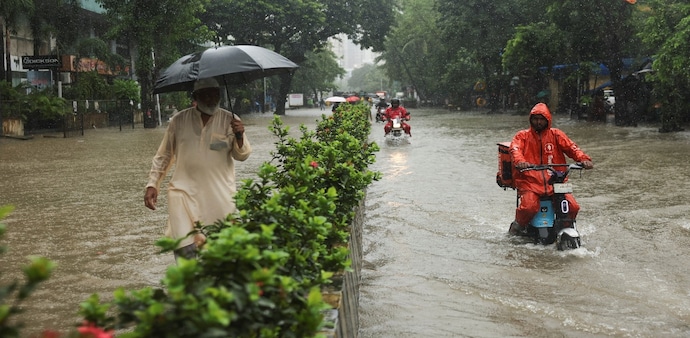
Climate change is emerging as the dominant force behind Mumbai's increasingly intense rainfall, with scientists saying El Niño can no longer fully explain the city's recent deluges. While the warming Pacific Ocean continues to influence the timing and strength of the Indian monsoon, a warmer atmosphere and rapidly heating Arabian Sea are making rainfall events shorter but far more intense, increasing the risk of urban flooding.
The warning comes as climate projections indicate that Mumbai, Pune and other parts of coastal Maharashtra could experience even heavier monsoons in the coming years, with rising temperatures and an additional week of heavy rainfall becoming the new normal.
Climate change
The 2026 southwest monsoon illustrates the changing pattern. A strengthening El Niño delayed the onset of the monsoon and left India with a rainfall deficit of nearly 40% by the end of June. However, once the monsoon entered an active phase, rainfall intensified rapidly across the west coast, helping reduce the nationwide rainfall deficit to around 20% by July 6.
MUST READ: Mumbai rains: Schools closed, orange alert issued, road and rail links severed amid heavy downpour
Scientists say the episode highlights a key shift in India's monsoon behaviour. Rather than determining how much rain ultimately falls, El Niño is increasingly affecting when the rain arrives. Climate change, meanwhile, is altering the nature of rainfall itself by loading the atmosphere with more moisture, resulting in fewer rainy days but much heavier downpours.
Intense rainfall
Mumbai experienced four spells of triple-digit rainfall during the first week of July alone. The Colaba observatory recorded 791 mm of rainfall between July 1 and July 7, exceeding its normal rainfall for the entire month of July, while the Santa Cruz observatory received 879 mm, almost matching its monthly average.
MUST READ: Tree falls in front of Mukesh Ambani’s security convoy amid heavy Mumbai rain
Experts attribute these intense rainfall events to multiple weather systems interacting with a much warmer Arabian Sea, which is supplying continuous moisture and allowing rain-bearing clouds to regenerate repeatedly over Maharashtra. According to the report, El Niño and climate change should no longer be viewed as separate influences because warming oceans are amplifying rainfall whenever favourable weather systems develop.
Heavier monsoons projected
Long-term climate data also points towards a wetter future for western India. Compared with 1981-2000, Mumbai's average monsoon rainfall during 2001-2024 has increased by nearly 15%, while Pune has recorded a rise of around 23%, indicating a growing trend towards more intense rainfall events.
The report further cites climate projections showing that parts of coastal Maharashtra and Gujarat could receive almost an additional week of heavy rainfall during the southwest monsoon. For suburban Mumbai, southwest monsoon rainfall is projected to increase by 18%, while temperatures are also expected to rise, with wet-bulb and winter minimum temperatures increasing by about 1.3°C.
MUST READ: Mumbai rains: 17 flights cancelled, 217 delayed as Akasa, IndiGo issue advisories
A new climate reality
The report argues that urban flooding is now a climate-plus-infrastructure challenge. While climate change is increasing the likelihood of extreme rainfall, factors such as inadequate drainage, unchecked urbanisation, concretisation, shrinking wetlands and poor land-use planning determine the scale of flood damage.
It calls for cities such as Mumbai and Pune to strengthen climate resilience through flood-resilient drainage systems, early warning mechanisms, nature-based solutions and risk-informed urban planning, warning that extreme rainfall events are likely to become more frequent as the climate continues to warm.
MUST READ: Stepping out today? IMD issues red alert as heavy rain, strong winds lash Delhi-NCR
Climate change is emerging as the dominant force behind Mumbai's increasingly intense rainfall, with scientists saying El Niño can no longer fully explain the city's recent deluges. While the warming Pacific Ocean continues to influence the timing and strength of the Indian monsoon, a warmer atmosphere and rapidly heating Arabian Sea are making rainfall events shorter but far more intense, increasing the risk of urban flooding.
The warning comes as climate projections indicate that Mumbai, Pune and other parts of coastal Maharashtra could experience even heavier monsoons in the coming years, with rising temperatures and an additional week of heavy rainfall becoming the new normal.
Climate change
The 2026 southwest monsoon illustrates the changing pattern. A strengthening El Niño delayed the onset of the monsoon and left India with a rainfall deficit of nearly 40% by the end of June. However, once the monsoon entered an active phase, rainfall intensified rapidly across the west coast, helping reduce the nationwide rainfall deficit to around 20% by July 6.
MUST READ: Mumbai rains: Schools closed, orange alert issued, road and rail links severed amid heavy downpour
Scientists say the episode highlights a key shift in India's monsoon behaviour. Rather than determining how much rain ultimately falls, El Niño is increasingly affecting when the rain arrives. Climate change, meanwhile, is altering the nature of rainfall itself by loading the atmosphere with more moisture, resulting in fewer rainy days but much heavier downpours.
Intense rainfall
Mumbai experienced four spells of triple-digit rainfall during the first week of July alone. The Colaba observatory recorded 791 mm of rainfall between July 1 and July 7, exceeding its normal rainfall for the entire month of July, while the Santa Cruz observatory received 879 mm, almost matching its monthly average.
MUST READ: Tree falls in front of Mukesh Ambani’s security convoy amid heavy Mumbai rain
Experts attribute these intense rainfall events to multiple weather systems interacting with a much warmer Arabian Sea, which is supplying continuous moisture and allowing rain-bearing clouds to regenerate repeatedly over Maharashtra. According to the report, El Niño and climate change should no longer be viewed as separate influences because warming oceans are amplifying rainfall whenever favourable weather systems develop.
Heavier monsoons projected
Long-term climate data also points towards a wetter future for western India. Compared with 1981-2000, Mumbai's average monsoon rainfall during 2001-2024 has increased by nearly 15%, while Pune has recorded a rise of around 23%, indicating a growing trend towards more intense rainfall events.
The report further cites climate projections showing that parts of coastal Maharashtra and Gujarat could receive almost an additional week of heavy rainfall during the southwest monsoon. For suburban Mumbai, southwest monsoon rainfall is projected to increase by 18%, while temperatures are also expected to rise, with wet-bulb and winter minimum temperatures increasing by about 1.3°C.
MUST READ: Mumbai rains: 17 flights cancelled, 217 delayed as Akasa, IndiGo issue advisories
A new climate reality
The report argues that urban flooding is now a climate-plus-infrastructure challenge. While climate change is increasing the likelihood of extreme rainfall, factors such as inadequate drainage, unchecked urbanisation, concretisation, shrinking wetlands and poor land-use planning determine the scale of flood damage.
It calls for cities such as Mumbai and Pune to strengthen climate resilience through flood-resilient drainage systems, early warning mechanisms, nature-based solutions and risk-informed urban planning, warning that extreme rainfall events are likely to become more frequent as the climate continues to warm.
MUST READ: Stepping out today? IMD issues red alert as heavy rain, strong winds lash Delhi-NCR