
Nancy Pelosi's scathing attack on Xi Jinping: 'Dalai Lama's legacy will live forever, you'll be gone'
Nancy Pelosi's scathing attack on Xi Jinping: 'Dalai Lama's legacy will live forever, you'll be gone'
A US congressional delegation, led by House Foreign Affairs Committee Chairman Michael McCaulis, is visiting India to strengthen bilateral ties and to meet the Tibetan spiritual leader.
Business Today Desk
- Jun 19, 2024,
- Updated Jun 19, 2024 1:23 PM IST
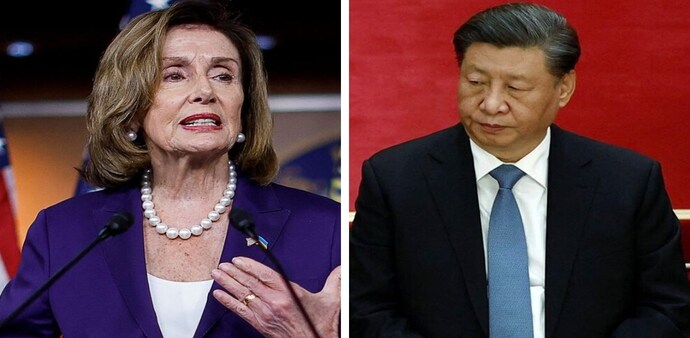
Former US House Speaker Nancy Pelosi, who is on a two-day visit to India, on Wednesday launched a blistering attack on Chinese President Xi Jinping, saying Dalai Lama's legacy will live forever but Xi will be gone in a few years. "His Holiness Dalai Lama, with his message of knowledge, tradition, compassion, purity of soul, and love, will live a long time and his legacy will live forever. But you, the President of China, you'll be gone and nobody will give you credit for anything," she said during the public felicitation programme at Tsuglagkhang Complex in Dharamshala.
Advertisement
China considers spiritual leader Dalai Lama as a separatist because of his demand for autonomy for Tibet, which Beijing occupied in the 1950s.
During the address, Pelosi said the Dalai Lama would not approve of her comment against China. "When I criticize the Chinese government, he (Dalai Lama) says, let's pray for Nancy to rid her of her negative attitudes. I hope he will indulge me today to say that change is on the way. As our colleagues have said hope brings some faith and the faith of the Tibetan people in the goodness of others is what is going to make all the difference."
A US congressional delegation, led by House Foreign Affairs Committee Chairman Michael McCaulis, is visiting India to strengthen bilateral ties and to meet the Tibetan spiritual leader. Former US House Speaker Nancy Pelosi is part of the delegation that reached Dharamsala on Tuesday.
Advertisement
Dharamsala is the seat of power for Tibet's government in exile since the Dalai Lama stepped into India six decades ago. Last Wednesday, the US House of Representatives voted 391-26 to approve the Promoting and Resolution to the Tibet-China Dispute Act, which the Senate passed. the bill would direct funds to counter what it calls "disinformation" from Beijing about Tibet’s history, people, and institutions.
On Tuesday, China urged US President Joe Biden not to sign the Tibet policy bill. "The 14th Dalai Lama is not a pure religious figure, but a political exile engaged in anti-China separatist activities under the cloak of religion," Chinese Foreign Ministry spokesperson Lin Jian said. He also said that Beijing was gravely concerned and urged the US side to fully recognise the anti-China separatist nature of the Dalai group, honour the commitments the US has made to China on issues related to Xizang, a Chinese name for Tibet. Jian also urged the US to have no contact with the Dalai group in any form.
Advertisement
On Wednesday, the White House said that Biden was going to make a decision that he thought was in the best interest of the US. "The President is going to do what he thinks is best on behalf of the American people, that's what I can tell you," White House Press Secretary Karine Jean-Pierre told reporters when asked about China's warning.
Referring to the legislation, Pelosi said the passage of this bill (Resolve Tibet Act) is a message to the Chinese government that the US has clarity in its thinking and understanding of this issue of the freedom of Tibet. "Listening to the leader of our delegation and the leader of the foreign affairs committee was so masterful in not only the policy but in the process of getting it passed in the most bipartisan way."
The Resolve Tibet Act is a bipartisan bill to enhance US support for Tibet and promote dialogue between the People's Republic of China and the Dalai Lama toward a peaceful resolution of the long-standing dispute between Tibet and China. The Act enhances US support for Tibet – empowering State Department officials to actively and directly counter disinformation about Tibet from the Chinese government, and reject false claims that Tibet has been part of China since "ancient times".
Advertisement
The bill also encourages officials to push for negotiations without preconditions between Beijing and the Dalai Lama or his representatives and coordinate with other governments in multilateral efforts toward the goal of a negotiated agreement on Tibet.
However, Beijing is opposed to the Act and has asked Biden not to sign it. The Chinese foreign ministry spokesperson has said that anyone or any force who attempts to destabilise Xizang to contain or suppress China will not succeed. "The US should not sign the bill. China will take resolute measures to defend its sovereignty, security, and development interests," Jian said.
China, which officially refers to Tibet as Xizang, earlier this year said it would talk only with the representatives of the Dalai Lama and not the officials of the Tibetan government in exile. At the same time, China ruled out dialogue on the Dalai Lama’s long-pending demand for autonomy for his remote Himalayan homeland.
In its talks with China between 2002 and 2010, the Tibetan side pitched genuine autonomy for the Tibetan people in line with the middle-way policy as proposed by the Dalai Lama. The Tibetan spiritual leader has said he does not seek political independence for Tibet but seeks autonomy for all Tibetan areas which include Gansu, Qinghai, Sichuan and Yunnan provinces besides the current official Tibet Autonomous Region, a truncated version of Tibet before it was annexed by China.
Advertisement
After a failed anti-Chinese uprising in 1959, the 14th Dalai Lama fled Tibet and came to India. He set up the government-in-exile in Himachal.
(With inputs from PTI)
Former US House Speaker Nancy Pelosi, who is on a two-day visit to India, on Wednesday launched a blistering attack on Chinese President Xi Jinping, saying Dalai Lama's legacy will live forever but Xi will be gone in a few years. "His Holiness Dalai Lama, with his message of knowledge, tradition, compassion, purity of soul, and love, will live a long time and his legacy will live forever. But you, the President of China, you'll be gone and nobody will give you credit for anything," she said during the public felicitation programme at Tsuglagkhang Complex in Dharamshala.
Advertisement
China considers spiritual leader Dalai Lama as a separatist because of his demand for autonomy for Tibet, which Beijing occupied in the 1950s.
During the address, Pelosi said the Dalai Lama would not approve of her comment against China. "When I criticize the Chinese government, he (Dalai Lama) says, let's pray for Nancy to rid her of her negative attitudes. I hope he will indulge me today to say that change is on the way. As our colleagues have said hope brings some faith and the faith of the Tibetan people in the goodness of others is what is going to make all the difference."
A US congressional delegation, led by House Foreign Affairs Committee Chairman Michael McCaulis, is visiting India to strengthen bilateral ties and to meet the Tibetan spiritual leader. Former US House Speaker Nancy Pelosi is part of the delegation that reached Dharamsala on Tuesday.
Advertisement
Dharamsala is the seat of power for Tibet's government in exile since the Dalai Lama stepped into India six decades ago. Last Wednesday, the US House of Representatives voted 391-26 to approve the Promoting and Resolution to the Tibet-China Dispute Act, which the Senate passed. the bill would direct funds to counter what it calls "disinformation" from Beijing about Tibet’s history, people, and institutions.
On Tuesday, China urged US President Joe Biden not to sign the Tibet policy bill. "The 14th Dalai Lama is not a pure religious figure, but a political exile engaged in anti-China separatist activities under the cloak of religion," Chinese Foreign Ministry spokesperson Lin Jian said. He also said that Beijing was gravely concerned and urged the US side to fully recognise the anti-China separatist nature of the Dalai group, honour the commitments the US has made to China on issues related to Xizang, a Chinese name for Tibet. Jian also urged the US to have no contact with the Dalai group in any form.
Advertisement
On Wednesday, the White House said that Biden was going to make a decision that he thought was in the best interest of the US. "The President is going to do what he thinks is best on behalf of the American people, that's what I can tell you," White House Press Secretary Karine Jean-Pierre told reporters when asked about China's warning.
Referring to the legislation, Pelosi said the passage of this bill (Resolve Tibet Act) is a message to the Chinese government that the US has clarity in its thinking and understanding of this issue of the freedom of Tibet. "Listening to the leader of our delegation and the leader of the foreign affairs committee was so masterful in not only the policy but in the process of getting it passed in the most bipartisan way."
The Resolve Tibet Act is a bipartisan bill to enhance US support for Tibet and promote dialogue between the People's Republic of China and the Dalai Lama toward a peaceful resolution of the long-standing dispute between Tibet and China. The Act enhances US support for Tibet – empowering State Department officials to actively and directly counter disinformation about Tibet from the Chinese government, and reject false claims that Tibet has been part of China since "ancient times".
Advertisement
The bill also encourages officials to push for negotiations without preconditions between Beijing and the Dalai Lama or his representatives and coordinate with other governments in multilateral efforts toward the goal of a negotiated agreement on Tibet.
However, Beijing is opposed to the Act and has asked Biden not to sign it. The Chinese foreign ministry spokesperson has said that anyone or any force who attempts to destabilise Xizang to contain or suppress China will not succeed. "The US should not sign the bill. China will take resolute measures to defend its sovereignty, security, and development interests," Jian said.
China, which officially refers to Tibet as Xizang, earlier this year said it would talk only with the representatives of the Dalai Lama and not the officials of the Tibetan government in exile. At the same time, China ruled out dialogue on the Dalai Lama’s long-pending demand for autonomy for his remote Himalayan homeland.
In its talks with China between 2002 and 2010, the Tibetan side pitched genuine autonomy for the Tibetan people in line with the middle-way policy as proposed by the Dalai Lama. The Tibetan spiritual leader has said he does not seek political independence for Tibet but seeks autonomy for all Tibetan areas which include Gansu, Qinghai, Sichuan and Yunnan provinces besides the current official Tibet Autonomous Region, a truncated version of Tibet before it was annexed by China.
Advertisement
After a failed anti-Chinese uprising in 1959, the 14th Dalai Lama fled Tibet and came to India. He set up the government-in-exile in Himachal.
(With inputs from PTI)
Read more!