
'Need to avoid restrictive trade measures': Jaishankar tells Wang Yi as India-China talks resume in Beijing
Without directly naming China’s export controls on sensitive sectors, Jaishankar said that any future cooperation would depend on both sides moving away from restrictive trade practices.
- Jul 14, 2025,
- Updated Jul 14, 2025 7:54 PM IST
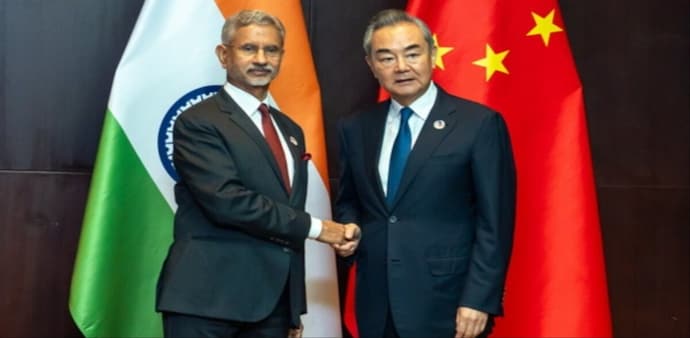
External Affairs Minister S Jaishankar on Monday called for the removal of "restrictive" trade measures and roadblocks during a bilateral meeting with Chinese Foreign Minister Wang Yi in Beijing, underscoring the need to build mutual trust as both countries seek to normalise ties following years of border tensions.
"It is also essential in this context that restrictive trade measures and roadblocks are avoided. I hope to discuss these issues in further detail,” Jaishankar said in his opening remarks, while noting that both sides had made progress in normalising relations in the past nine months.
The visit marks Jaishankar’s first trip to China since the 2020 Galwan Valley clashes, which severely strained bilateral ties. His remarks come amid ongoing concerns about China’s curbs on exports of critical minerals and barriers affecting Indian imports like fertilisers.
"We have made good progress in the past nine months for the normalisation of our bilateral relations. It is a result of the resolution of friction along the border and our ability to maintain peace and tranquillity there," he said.
"This is the fundamental basis for mutual strategic trust and for smooth development of bilateral relations. It is now incumbent on us to address other aspects related to the border, including de-escalation," Jaishankar added.
Without directly naming China’s export controls on sensitive sectors, he said that any future cooperation would depend on both sides moving away from restrictive trade practices. "Measures towards normalising our people-to-people exchanges can certainly foster mutually beneficial cooperation. It is also essential... that restrictive trade measures and roadblocks are avoided."
The external affairs minister reiterated India’s long-standing position that ties between the two countries should be based on "mutual respect, mutual interest, and mutual sensitivity," and that differences should "not become disputes, nor should competition ever become conflict."
He said the bilateral relationship needed a "far-seeing approach," recalling the October 2024 meeting between Prime Minister Narendra Modi and Chinese President Xi Jinping in Kazan, after which both sides agreed to complete disengagement at the remaining friction points in Demchok and Depsang.
Since then, mechanisms of dialogue have been gradually revived. "Our responsibility is to maintain that momentum," Jaishankar said, while also urging more regular communication between the two foreign ministries. "It is our expectation that this will now be regular and take place in each other’s countries."
Jaishankar’s visit also included a meeting with Chinese Vice President Han Zheng, where he reiterated that further normalisation of India-China relations would be mutually beneficial and that open, high-level exchanges were crucial "given the complexity of the current global scenario."
External Affairs Minister S Jaishankar on Monday called for the removal of "restrictive" trade measures and roadblocks during a bilateral meeting with Chinese Foreign Minister Wang Yi in Beijing, underscoring the need to build mutual trust as both countries seek to normalise ties following years of border tensions.
"It is also essential in this context that restrictive trade measures and roadblocks are avoided. I hope to discuss these issues in further detail,” Jaishankar said in his opening remarks, while noting that both sides had made progress in normalising relations in the past nine months.
The visit marks Jaishankar’s first trip to China since the 2020 Galwan Valley clashes, which severely strained bilateral ties. His remarks come amid ongoing concerns about China’s curbs on exports of critical minerals and barriers affecting Indian imports like fertilisers.
"We have made good progress in the past nine months for the normalisation of our bilateral relations. It is a result of the resolution of friction along the border and our ability to maintain peace and tranquillity there," he said.
"This is the fundamental basis for mutual strategic trust and for smooth development of bilateral relations. It is now incumbent on us to address other aspects related to the border, including de-escalation," Jaishankar added.
Without directly naming China’s export controls on sensitive sectors, he said that any future cooperation would depend on both sides moving away from restrictive trade practices. "Measures towards normalising our people-to-people exchanges can certainly foster mutually beneficial cooperation. It is also essential... that restrictive trade measures and roadblocks are avoided."
The external affairs minister reiterated India’s long-standing position that ties between the two countries should be based on "mutual respect, mutual interest, and mutual sensitivity," and that differences should "not become disputes, nor should competition ever become conflict."
He said the bilateral relationship needed a "far-seeing approach," recalling the October 2024 meeting between Prime Minister Narendra Modi and Chinese President Xi Jinping in Kazan, after which both sides agreed to complete disengagement at the remaining friction points in Demchok and Depsang.
Since then, mechanisms of dialogue have been gradually revived. "Our responsibility is to maintain that momentum," Jaishankar said, while also urging more regular communication between the two foreign ministries. "It is our expectation that this will now be regular and take place in each other’s countries."
Jaishankar’s visit also included a meeting with Chinese Vice President Han Zheng, where he reiterated that further normalisation of India-China relations would be mutually beneficial and that open, high-level exchanges were crucial "given the complexity of the current global scenario."