
'Never seen anything like this in 40 years': Eminent historian's stark warning as smog chokes Delhi
On Monday, Delhi’s AQI soared to a season-high of 484, placing it in the "severe" category. According to the Central Pollution Control Board, this level of air quality poses significant risks to healthy individuals and severely impacts those with pre-existing conditions
- Nov 18, 2024,
- Updated Nov 18, 2024 3:56 PM IST
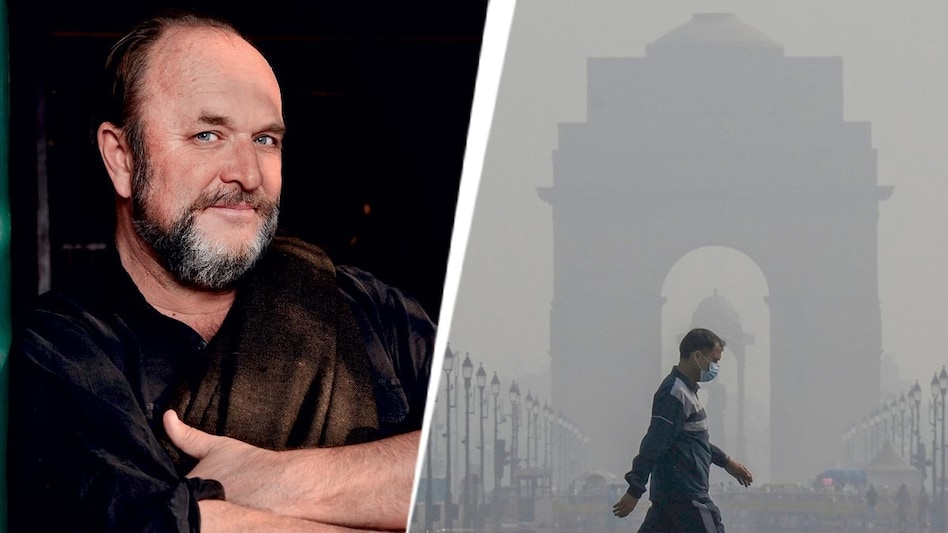
Air quality in Delhi has plummeted to alarming levels, making it the second-most polluted city in India. Eminent historian William Dalrymple, who arrived in Delhi today, expressed his shock at the severity of the pollution. "Just arrived back in Delhi to find the city embalmed in an all-enveloping burial shroud of pollution. Even at 2 pm, it’s impossible to see 100m across the runway," he tweeted.
"I've never seen anything like this in forty years of living here. What a fate for the City of Djinns—still, at its best the most fascinating of cities, but currently a tragic, choking death-trap," Dalrymple said as he reflected on his four decades in the city.
On Monday, Delhi’s Air Quality Index (AQI) soared to a season-high of 484, placing it in the "severe" category. According to the Central Pollution Control Board (CPCB), this level of air quality poses significant risks to healthy individuals and severely impacts those with pre-existing conditions.
Nationwide, four cities recorded AQI in the "severe" category, with Bahadurgarh in Haryana leading at 445, followed by Delhi (441), Bhiwani in Haryana (415), and Bikaner in Rajasthan (404).
Data from 34 of Delhi's 40 monitoring stations showed that 32 recorded "severe" AQI levels above 400. The CPCB classifies AQI as follows: 0-50 is "good," 51-100 "satisfactory," 101-200 "moderate," 201-300 "poor," 301-400 "very poor," 401-450 "severe," and above 450 as "severe plus."
Pushpinder Singh, a podcaster, said that people have been told for years that Delhi's pollution is because of the stubble burning in Punjab and Haryana. "I have been checking the AQI on CPCB's website and here is how it looks like right now. Can any expert explain why Punjab/Haryana has cleaner air than Delhi?"
Author Anand Ranganathan highlighted the gravity of the situation, noting, "An AQI of 50 is considered safe and acceptable. But in Delhi, it has touched 999. 932 babies were born in Delhi yesterday. They are all breathing in this air—acrid, stinging, poisonous, with burnt stubble residues, equivalent of chain-smoking 30 cigarettes. What is their fault?"
Concerns over stubble burning as a key pollutant were raised by Nitin Panigrahi, Nodal Officer for the Chandni Chowk Redevelopment under GNCTD. He questioned why pollution levels were so high in Delhi compared to neighboring northern states. "Can it be explained if stubble burning is the reason for the spike in pollution in Delhi, then why is the AQI of northern states like Punjab, Haryana, Rajasthan, or UP much lower? Stubble burning and crackers are alibis for the failure to have an annual plan to reduce vehicular emissions and dust," Panigrahi wrote on X.
In response to the deteriorating air quality, authorities have imposed stringent measures: construction and demolition activities have been banned, mining operations suspended, and daily water sprinkling on major roads mandated. Additionally, shifting to online classes for students up to Class 5 is under consideration.
The Centre’s Decision Support System for Air Quality Management reported that vehicular emissions contributed approximately 15.8% to Delhi’s pollution on Sunday. On Saturday, stubble burning accounted for 25% of the total pollution, making it the primary contributor to the capital’s air quality crisis.
Air quality in Delhi has plummeted to alarming levels, making it the second-most polluted city in India. Eminent historian William Dalrymple, who arrived in Delhi today, expressed his shock at the severity of the pollution. "Just arrived back in Delhi to find the city embalmed in an all-enveloping burial shroud of pollution. Even at 2 pm, it’s impossible to see 100m across the runway," he tweeted.
"I've never seen anything like this in forty years of living here. What a fate for the City of Djinns—still, at its best the most fascinating of cities, but currently a tragic, choking death-trap," Dalrymple said as he reflected on his four decades in the city.
On Monday, Delhi’s Air Quality Index (AQI) soared to a season-high of 484, placing it in the "severe" category. According to the Central Pollution Control Board (CPCB), this level of air quality poses significant risks to healthy individuals and severely impacts those with pre-existing conditions.
Nationwide, four cities recorded AQI in the "severe" category, with Bahadurgarh in Haryana leading at 445, followed by Delhi (441), Bhiwani in Haryana (415), and Bikaner in Rajasthan (404).
Data from 34 of Delhi's 40 monitoring stations showed that 32 recorded "severe" AQI levels above 400. The CPCB classifies AQI as follows: 0-50 is "good," 51-100 "satisfactory," 101-200 "moderate," 201-300 "poor," 301-400 "very poor," 401-450 "severe," and above 450 as "severe plus."
Pushpinder Singh, a podcaster, said that people have been told for years that Delhi's pollution is because of the stubble burning in Punjab and Haryana. "I have been checking the AQI on CPCB's website and here is how it looks like right now. Can any expert explain why Punjab/Haryana has cleaner air than Delhi?"
Author Anand Ranganathan highlighted the gravity of the situation, noting, "An AQI of 50 is considered safe and acceptable. But in Delhi, it has touched 999. 932 babies were born in Delhi yesterday. They are all breathing in this air—acrid, stinging, poisonous, with burnt stubble residues, equivalent of chain-smoking 30 cigarettes. What is their fault?"
Concerns over stubble burning as a key pollutant were raised by Nitin Panigrahi, Nodal Officer for the Chandni Chowk Redevelopment under GNCTD. He questioned why pollution levels were so high in Delhi compared to neighboring northern states. "Can it be explained if stubble burning is the reason for the spike in pollution in Delhi, then why is the AQI of northern states like Punjab, Haryana, Rajasthan, or UP much lower? Stubble burning and crackers are alibis for the failure to have an annual plan to reduce vehicular emissions and dust," Panigrahi wrote on X.
In response to the deteriorating air quality, authorities have imposed stringent measures: construction and demolition activities have been banned, mining operations suspended, and daily water sprinkling on major roads mandated. Additionally, shifting to online classes for students up to Class 5 is under consideration.
The Centre’s Decision Support System for Air Quality Management reported that vehicular emissions contributed approximately 15.8% to Delhi’s pollution on Sunday. On Saturday, stubble burning accounted for 25% of the total pollution, making it the primary contributor to the capital’s air quality crisis.