
New bloc without India? China, Pakistan and Bangladesh are quietly plotting a SAARC power pivot
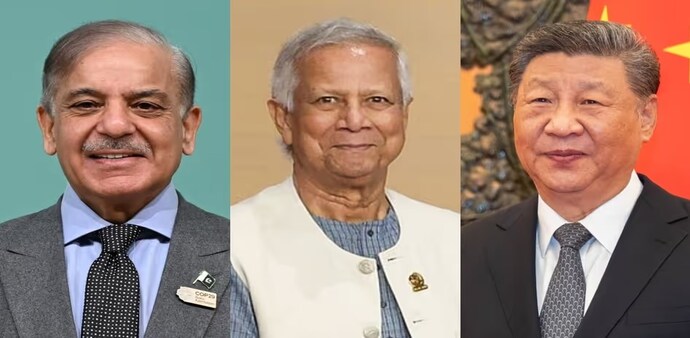
According to Pakistan’s The Express Tribune, officials from China, Pakistan, and Bangladesh met on June 19 in Kunming to discuss forming a new grouping aimed at boosting regional connectivity and cooperation.
- Jul 2, 2025,
- Updated Jul 2, 2025 8:26 AM IST
China and Pakistan are spearheading a bold new effort to replace SAARC with a fresh regional bloc—excluding India. Talks are reportedly at an advanced stage, with Beijing and Islamabad actively courting other South Asian nations to join the new initiative.
According to Pakistan’s The Express Tribune, officials from China, Pakistan, and Bangladesh met on June 19 in Kunming to discuss forming a new grouping aimed at boosting regional connectivity and cooperation. The goal, the report claims, is to bring in other former SAARC members including Sri Lanka, the Maldives, and Afghanistan.
“This is not a political alliance,” Dhaka’s foreign affairs adviser M Touhid Hossain clarified. “It was a meeting at the official level, not political.”
But the optics are unmistakable. The Kunming meeting followed a China-Pakistan-Afghanistan trilateral in May that emphasized expanding the China-Pakistan Economic Corridor—raising concerns that the new bloc may mirror China’s Belt and Road agenda with a South Asian twist.
India, once the backbone of SAARC, appears frozen out. Though the report claims Delhi may be invited, it acknowledges India is unlikely to join, citing “divergent interests.”
SAARC has been largely dormant since 2016, when India, Bangladesh, Bhutan, and Afghanistan boycotted a summit in Islamabad following the deadly Uri terror attack, which Delhi blamed on Pakistan. The summit was cancelled and never rescheduled.
India had led several SAARC initiatives—establishing the SAARC Development Fund, founding the South Asian University in Delhi, and proposing joint economic and anti-terror frameworks. But Pakistan repeatedly blocked key efforts, including the SAARC Motor Vehicles Agreement in 2014. India and other members responded by pivoting to smaller sub-regional pacts like the BBIN corridor.
Now, as Islamabad and Beijing push for a SAARC alternative, the geopolitical reshuffle may further sideline India in its own neighborhood.
“The need for a new organisation,” The Express Tribune stated, “is the hour for regional integration and connectivity.”
China and Pakistan are spearheading a bold new effort to replace SAARC with a fresh regional bloc—excluding India. Talks are reportedly at an advanced stage, with Beijing and Islamabad actively courting other South Asian nations to join the new initiative.
According to Pakistan’s The Express Tribune, officials from China, Pakistan, and Bangladesh met on June 19 in Kunming to discuss forming a new grouping aimed at boosting regional connectivity and cooperation. The goal, the report claims, is to bring in other former SAARC members including Sri Lanka, the Maldives, and Afghanistan.
“This is not a political alliance,” Dhaka’s foreign affairs adviser M Touhid Hossain clarified. “It was a meeting at the official level, not political.”
But the optics are unmistakable. The Kunming meeting followed a China-Pakistan-Afghanistan trilateral in May that emphasized expanding the China-Pakistan Economic Corridor—raising concerns that the new bloc may mirror China’s Belt and Road agenda with a South Asian twist.
India, once the backbone of SAARC, appears frozen out. Though the report claims Delhi may be invited, it acknowledges India is unlikely to join, citing “divergent interests.”
SAARC has been largely dormant since 2016, when India, Bangladesh, Bhutan, and Afghanistan boycotted a summit in Islamabad following the deadly Uri terror attack, which Delhi blamed on Pakistan. The summit was cancelled and never rescheduled.
India had led several SAARC initiatives—establishing the SAARC Development Fund, founding the South Asian University in Delhi, and proposing joint economic and anti-terror frameworks. But Pakistan repeatedly blocked key efforts, including the SAARC Motor Vehicles Agreement in 2014. India and other members responded by pivoting to smaller sub-regional pacts like the BBIN corridor.
Now, as Islamabad and Beijing push for a SAARC alternative, the geopolitical reshuffle may further sideline India in its own neighborhood.
“The need for a new organisation,” The Express Tribune stated, “is the hour for regional integration and connectivity.”