
New PMO, new priorities: PM Modi signs welfare schemes for farmers, women, youth
Approval of the RAHAT scheme, expansion of the Lakhpati Didi initiative and an increase in the allocation under the agriculture infrastructure fund.
- Feb 13, 2026,
- Updated Feb 13, 2026 4:57 PM IST
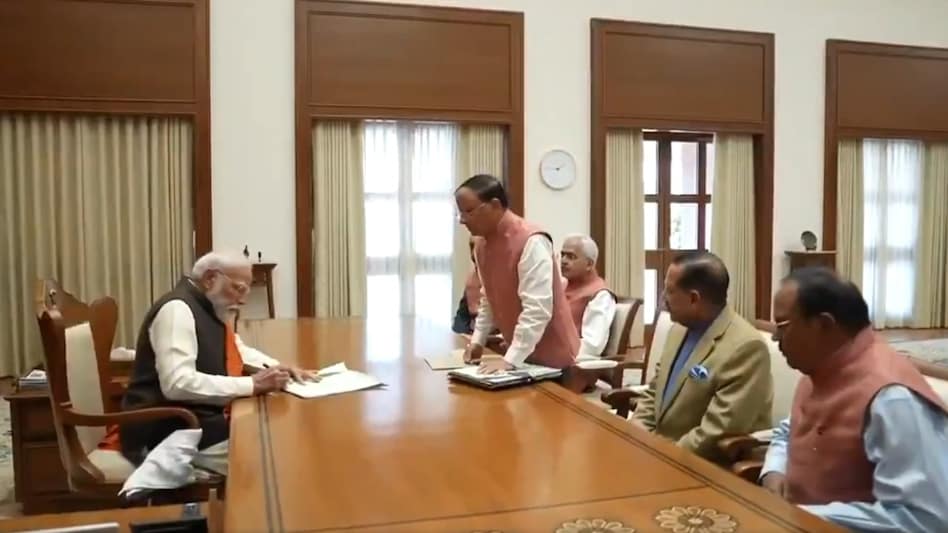
Prime Minister Narendra Modi's first decisions from the newly shifted Prime Minister's Office at the Seva Teerth complex centred on welfare measures for women, farmers, youth and vulnerable groups, signalling the government's continued focus on social support and grassroots beneficiaries.
As the PMO began functioning from its new location on Friday, the Prime Minister cleared four major decisions linked to key welfare segments considered crucial to governance priorities and public outreach.
These included the launch of the Road Accident Victims Hospitalisation and Assured Treatment (PM RAHAT) scheme, expansion of the Lakhpati Didi target to ₹6 crore, and an increase in the allocation under the agriculture infrastructure fund to ₹2 lakh crore and clearing Startup India Fund of Funds 2.0 with a corpus of ₹10,000 crore.
About the first four schemes signed by PM Modi from Seva Teerth
- PM RAHAT Scheme: The scheme aims to provide cashless emergency treatment up to Rs 1.5 lakh to road accident victims, ensuring timely medical care without financial hurdles. The initiative is designed to prevent loss of life due to delays in treatment and strengthen support for vulnerable citizens.
- Lakhpati Didi initiative expanded: The government has crossed the milestone of 3 crore Lakhpati Didis. PM Modi doubled the target of the programme to reach 6 crore women by March 2029, focusing on financial independence and entrepreneurship through self-help groups and livelihood opportunities in rural areas.
- Agriculture Infrastructure Fund outlay increased: The allocation under the fund has been expanded to ₹2 lakh crore from ₹1 lakh crore, to improve rural infrastructure, strengthen supply chains and support farmers with better storage and logistics systems.
- Startup India Fund of Funds 2.0: A ₹10,000 crore corpus has been approved to boost innovation, support early-stage startups and generate employment for young entrepreneurs, particularly in emerging and technology sectors.
The initial set of approvals from the new office highlighted a focus on strengthening rural incomes, empowering women and supporting young people and vulnerable citizens through targeted interventions. Officials said the files signed by the Prime Minister reflected the broader spirit of 'seva' or public service associated with the new administrative setup.
The Seva Teerth complex, inaugurated by PM Modi, represents a significant revamp of the government's administrative infrastructure. The facility now houses the Prime Minister's Office along with key institutions such as the National Security Council Secretariat and the Cabinet Secretariat, marking a major shift in how top-level governance functions operate from a centralised space.
Prime Minister Narendra Modi's first decisions from the newly shifted Prime Minister's Office at the Seva Teerth complex centred on welfare measures for women, farmers, youth and vulnerable groups, signalling the government's continued focus on social support and grassroots beneficiaries.
As the PMO began functioning from its new location on Friday, the Prime Minister cleared four major decisions linked to key welfare segments considered crucial to governance priorities and public outreach.
These included the launch of the Road Accident Victims Hospitalisation and Assured Treatment (PM RAHAT) scheme, expansion of the Lakhpati Didi target to ₹6 crore, and an increase in the allocation under the agriculture infrastructure fund to ₹2 lakh crore and clearing Startup India Fund of Funds 2.0 with a corpus of ₹10,000 crore.
About the first four schemes signed by PM Modi from Seva Teerth
- PM RAHAT Scheme: The scheme aims to provide cashless emergency treatment up to Rs 1.5 lakh to road accident victims, ensuring timely medical care without financial hurdles. The initiative is designed to prevent loss of life due to delays in treatment and strengthen support for vulnerable citizens.
- Lakhpati Didi initiative expanded: The government has crossed the milestone of 3 crore Lakhpati Didis. PM Modi doubled the target of the programme to reach 6 crore women by March 2029, focusing on financial independence and entrepreneurship through self-help groups and livelihood opportunities in rural areas.
- Agriculture Infrastructure Fund outlay increased: The allocation under the fund has been expanded to ₹2 lakh crore from ₹1 lakh crore, to improve rural infrastructure, strengthen supply chains and support farmers with better storage and logistics systems.
- Startup India Fund of Funds 2.0: A ₹10,000 crore corpus has been approved to boost innovation, support early-stage startups and generate employment for young entrepreneurs, particularly in emerging and technology sectors.
The initial set of approvals from the new office highlighted a focus on strengthening rural incomes, empowering women and supporting young people and vulnerable citizens through targeted interventions. Officials said the files signed by the Prime Minister reflected the broader spirit of 'seva' or public service associated with the new administrative setup.
The Seva Teerth complex, inaugurated by PM Modi, represents a significant revamp of the government's administrative infrastructure. The facility now houses the Prime Minister's Office along with key institutions such as the National Security Council Secretariat and the Cabinet Secretariat, marking a major shift in how top-level governance functions operate from a centralised space.