
Nita Ambani’s Ganesh Chaturthi neckpiece took 3 years and 14 master karigars to assemble
Nita Ambani’s Ganesh Chaturthi neckpiece took 3 years and 14 master karigars to assemble
The antique and vintage components were collected over three years, while 14 master karigars worked for months to bring the final piece together
Business Today Desk
- Sep 17, 2026,
- Updated Sep 17, 2026 3:58 PM IST
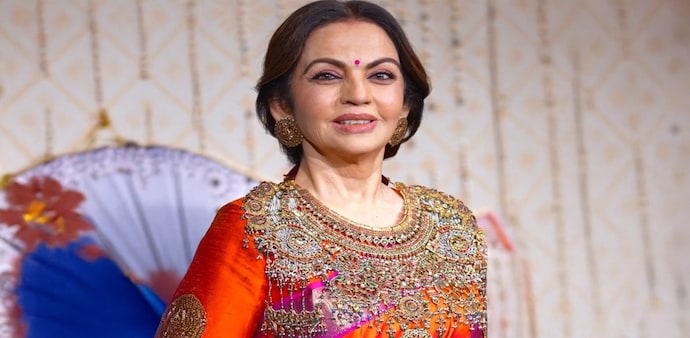
Nita Ambani’s grand Ganesh Chaturthi look at Antilia grabbed attention for more than just her vibrant silk saree. The highlight was an enormous statement necklace that stretched almost from one shoulder to the other, a one-of-a-kind creation that took years to curate and months to assemble, as reported by India Today.
Advertisement
Called Amrapali Bharatam, the necklace by Amrapali Jewels is not a conventional piece crafted from scratch. Instead, it brings together antique and vintage jewellery from different parts of India, creating a single elaborate composition.
The antique and vintage components were collected over three years, while 14 master karigars worked for months to bring the final piece together. The process involved extensive research, experimentation and repeated adjustments to ensure that jewellery pieces from different traditions could sit together harmoniously.
Not made as one piece, but assembled
Advertisement
The necklace features a traditional Kerala necklace as part of its upper structure, alongside vintage South Indian naths, jhoomars, earrings, billas and chandbalis. Pearls, coloured gemstones and diamonds add further layers to the design.
Tarang Arora, CEO and Creative Director of Amrapali Jewels, explained that a creation of this scale cannot simply be designed on paper and manufactured according to a fixed blueprint. The individual components have to be physically arranged, balanced and repositioned until the overall composition works.
DON'T MISS: A Ganpati covered in 3.83 lakh diamonds: Why Hyderabad is talking about Lee-Chee Ka Raja
Even the pearl strings at the back were developed during this hands-on process.
The result is deliberately different from a conventionally symmetrical necklace. Each antique ornament retains something of its original identity, giving the piece an almost museum-like appearance.
Advertisement
Sonam Kapoor wore the same necklace first
Interestingly, Nita Ambani was not the first celebrity to wear the striking Amrapali Bharatam necklace.
Sonam Kapoor had previously worn the same piece in November 2025, pairing it with an ivory-and-gold Anarkali. Her understated ensemble allowed the enormous antique necklace to become the centrepiece of the look, according to India Today.
Sonam used an ivory-and-gold palette to provide a relatively muted backdrop for the jewellery; Nita opted for a much more vibrant styling approach with her silk saree and additional jewellery.
The contrast also highlights the versatility of the unusual piece: the same necklace appeared relatively restrained against Sonam’s ivory ensemble, while Nita’s colourful Ganpati look leaned into its maximalist character.
A collection of India’s jewellery traditions
What makes Amrapali Bharatam distinctive is that it does not attempt to erase the individual character of the ornaments used in its construction. Instead, traditional forms from different regions have been brought together to create a larger jewellery tableau.
Advertisement
The necklace therefore represents more than a single design. It combines multiple forms of Indian craftsmanship, from Kerala jewellery to South Indian ornaments with pearls, gemstones and diamonds.
Nita Ambani’s grand Ganesh Chaturthi look at Antilia grabbed attention for more than just her vibrant silk saree. The highlight was an enormous statement necklace that stretched almost from one shoulder to the other, a one-of-a-kind creation that took years to curate and months to assemble, as reported by India Today.
Advertisement
Called Amrapali Bharatam, the necklace by Amrapali Jewels is not a conventional piece crafted from scratch. Instead, it brings together antique and vintage jewellery from different parts of India, creating a single elaborate composition.
The antique and vintage components were collected over three years, while 14 master karigars worked for months to bring the final piece together. The process involved extensive research, experimentation and repeated adjustments to ensure that jewellery pieces from different traditions could sit together harmoniously.
Not made as one piece, but assembled
Advertisement
The necklace features a traditional Kerala necklace as part of its upper structure, alongside vintage South Indian naths, jhoomars, earrings, billas and chandbalis. Pearls, coloured gemstones and diamonds add further layers to the design.
Tarang Arora, CEO and Creative Director of Amrapali Jewels, explained that a creation of this scale cannot simply be designed on paper and manufactured according to a fixed blueprint. The individual components have to be physically arranged, balanced and repositioned until the overall composition works.
DON'T MISS: A Ganpati covered in 3.83 lakh diamonds: Why Hyderabad is talking about Lee-Chee Ka Raja
Even the pearl strings at the back were developed during this hands-on process.
The result is deliberately different from a conventionally symmetrical necklace. Each antique ornament retains something of its original identity, giving the piece an almost museum-like appearance.
Advertisement
Sonam Kapoor wore the same necklace first
Interestingly, Nita Ambani was not the first celebrity to wear the striking Amrapali Bharatam necklace.
Sonam Kapoor had previously worn the same piece in November 2025, pairing it with an ivory-and-gold Anarkali. Her understated ensemble allowed the enormous antique necklace to become the centrepiece of the look, according to India Today.
Sonam used an ivory-and-gold palette to provide a relatively muted backdrop for the jewellery; Nita opted for a much more vibrant styling approach with her silk saree and additional jewellery.
The contrast also highlights the versatility of the unusual piece: the same necklace appeared relatively restrained against Sonam’s ivory ensemble, while Nita’s colourful Ganpati look leaned into its maximalist character.
A collection of India’s jewellery traditions
What makes Amrapali Bharatam distinctive is that it does not attempt to erase the individual character of the ornaments used in its construction. Instead, traditional forms from different regions have been brought together to create a larger jewellery tableau.
Advertisement
The necklace therefore represents more than a single design. It combines multiple forms of Indian craftsmanship, from Kerala jewellery to South Indian ornaments with pearls, gemstones and diamonds.
Read more!