
'No govt in Islamabad, work with army': Obama's ambassador warned in 2009. Trump follows the playbook in 2025
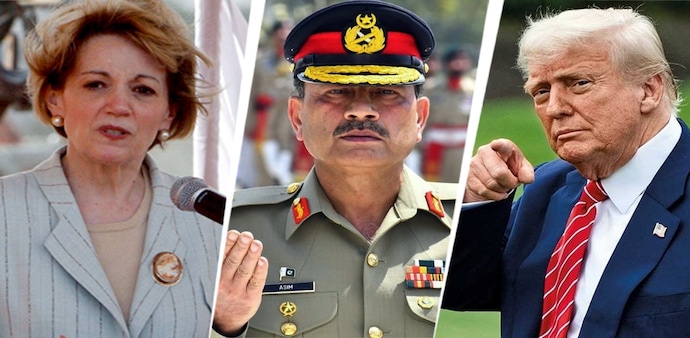
Anne Patterson, the US ambassador in Islamabad, warned against putting too much faith in Pakistan's civilian government
- Jun 23, 2025,
- Updated Jun 24, 2025 8:42 AM IST
Over a decade before Donald Trump met Asim Munir, former US ambassador to Islamabad Anne Patterson had warned: Pakistan does not have a democratic civilian government. This was in 2009. That assessment remains just as relevant today.
After Trump met Munir at the White House earlier this month, India's former Foreign Secretary Kanwal Sibal said the US takes it that the civilian government in Pakistan is a "facade" and that the real person to discuss vital matters, including financial and investment, is Asim Munir. By this move, Kanwal added, Trump is making the civilian government in Pakistan look irrelevant even on core economic issues. But it is not that Trump is making the civilian government in Pakistan irrelevant, he is just following a playbook Washington has used before.
Pulitzer-winning author Steve Coll has, in his book - Directorate S, documents how, during Barack Obama's Afghanistan strategy review, US generals and officials concluded that Pakistan required a huge infusion of American aid to help the country defeat its own Taliban insurgents.
However, Anne Patterson, the US ambassador in Islamabad, warned against putting too much faith in Pakistan's civilian government, Coll writes in Directorate S. "Let's not fool ourselves that we have a democracy" to work with in Islamabad, Patterson said, writes Coll. "The United States had to work with the Pakistan Army."
Coll further writes that the US judged Pakistan's army to be its essential partner, to be resourced above all other Pakistani institutions, "yet the United States also wished for a more effective civilian government in Islamabad". As in earlier eras, Obama's advisers had convinced themselves that then army chief Ashfaq Parvez Kayani and then ISI chief Ahmad Shuja Pasha were with them, at least to an adequate extent, or else, if they weren't, Washington States had no choice but to forge ahead and achieve what might be possible.
Trump's recent meeting with Munir occurred just days before the US launched massive airstrikes on Iran's vital nuclear sites at Fordow, Natanz, and Isfahan. Notably, there was no known communication between top US and Pakistani civilian officials during this period. Kanwal Sibal called it a "huge snub to Shehbaz Sharif."
This isn't unprecedented. In November of 2009, US NSA Jones flew to Pakistan bearing a letter from Obama to President Asif Zardari. Protocol required an exchange between counterparts, "but the real audience for Obama's correspondence was (army chief) Kayani". The letter's essence, as Richard Holbrooke, Special Representative for Afghanistan and Pakistan, summarised it, was "We want to listen to your strategic terms" for a peaceful settlement in Afghanistan. "Tell us what they are."
Holbrooke, Obama's special envoy to the region, flew to Pakistan next, writes Coll. "He dined for four hours with Kayani and Pasha. They delivered the first draft of an answer: "It was all India all the time," Holbrooke recounted. "The Pakistanis see everything through the prism of India." The specifics included Kashmir, access to water from Indian glaciers, and whether Afghanistan would be governed by the likes of Amrullah Saleh and other perceived Indian allies. Kayani's goal, Holbrooke thought, was to "get us to lean on the Indians. Fool us a little. Play us against ourselves. The usual game."
While what Trump may have discussed with Munir on Iran remains unclear, one thing is evident: Washington continues to see Rawalpindi — not Islamabad — as the real power centre in Pakistan.
Over a decade before Donald Trump met Asim Munir, former US ambassador to Islamabad Anne Patterson had warned: Pakistan does not have a democratic civilian government. This was in 2009. That assessment remains just as relevant today.
After Trump met Munir at the White House earlier this month, India's former Foreign Secretary Kanwal Sibal said the US takes it that the civilian government in Pakistan is a "facade" and that the real person to discuss vital matters, including financial and investment, is Asim Munir. By this move, Kanwal added, Trump is making the civilian government in Pakistan look irrelevant even on core economic issues. But it is not that Trump is making the civilian government in Pakistan irrelevant, he is just following a playbook Washington has used before.
Pulitzer-winning author Steve Coll has, in his book - Directorate S, documents how, during Barack Obama's Afghanistan strategy review, US generals and officials concluded that Pakistan required a huge infusion of American aid to help the country defeat its own Taliban insurgents.
However, Anne Patterson, the US ambassador in Islamabad, warned against putting too much faith in Pakistan's civilian government, Coll writes in Directorate S. "Let's not fool ourselves that we have a democracy" to work with in Islamabad, Patterson said, writes Coll. "The United States had to work with the Pakistan Army."
Coll further writes that the US judged Pakistan's army to be its essential partner, to be resourced above all other Pakistani institutions, "yet the United States also wished for a more effective civilian government in Islamabad". As in earlier eras, Obama's advisers had convinced themselves that then army chief Ashfaq Parvez Kayani and then ISI chief Ahmad Shuja Pasha were with them, at least to an adequate extent, or else, if they weren't, Washington States had no choice but to forge ahead and achieve what might be possible.
Trump's recent meeting with Munir occurred just days before the US launched massive airstrikes on Iran's vital nuclear sites at Fordow, Natanz, and Isfahan. Notably, there was no known communication between top US and Pakistani civilian officials during this period. Kanwal Sibal called it a "huge snub to Shehbaz Sharif."
This isn't unprecedented. In November of 2009, US NSA Jones flew to Pakistan bearing a letter from Obama to President Asif Zardari. Protocol required an exchange between counterparts, "but the real audience for Obama's correspondence was (army chief) Kayani". The letter's essence, as Richard Holbrooke, Special Representative for Afghanistan and Pakistan, summarised it, was "We want to listen to your strategic terms" for a peaceful settlement in Afghanistan. "Tell us what they are."
Holbrooke, Obama's special envoy to the region, flew to Pakistan next, writes Coll. "He dined for four hours with Kayani and Pasha. They delivered the first draft of an answer: "It was all India all the time," Holbrooke recounted. "The Pakistanis see everything through the prism of India." The specifics included Kashmir, access to water from Indian glaciers, and whether Afghanistan would be governed by the likes of Amrullah Saleh and other perceived Indian allies. Kayani's goal, Holbrooke thought, was to "get us to lean on the Indians. Fool us a little. Play us against ourselves. The usual game."
While what Trump may have discussed with Munir on Iran remains unclear, one thing is evident: Washington continues to see Rawalpindi — not Islamabad — as the real power centre in Pakistan.