
'No conclusive national data': Centre after Lancet study links pollution to 15 lakh deaths yearly
Centre's stance contrasts with numerous global studies that highlight India’s growing health burden linked to pollution
- Dec 11, 2025,
- Updated Dec 11, 2025 8:27 AM IST
The Centre has told Parliament that there is no definitive national data proving a direct link between deaths or illnesses solely caused by air pollution. This stance contrasts with numerous global studies that highlight India’s growing health burden linked to pollution.
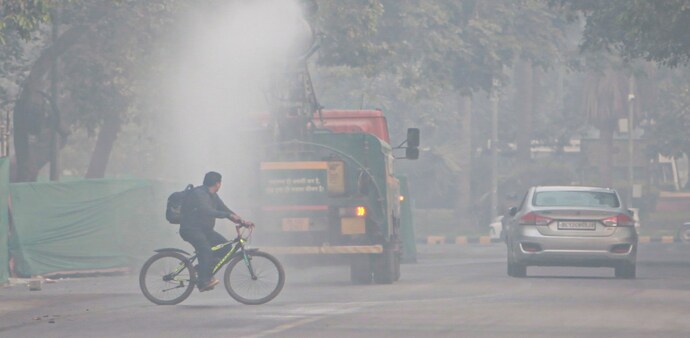
The comments coincide with protests and renewed calls for decisive action to attain cleaner air due to the hazardous air quality in major Indian cities, especially in Delhi and the National Capital Region. According to a study published in The Lancet Planetary Health last December, long-term exposure to contaminated air causes almost 1.5 million extra deaths in India each year as compared to a scenario in which the nation complies with the acceptable exposure limits set by the World Health Organisation.
The report highlighted the critical role of PM2.5, fine particles smaller than 2.5 micrometres that can reach deep into the lungs and bloodstream, whose levels in India frequently exceed global safety parameters.
The most recent Global Burden of Disease data, published in November, found that toxic air was the leading cause of death in Delhi in 2023. According to the study, air pollution was responsible for nearly 15% of all deaths in the capital that year, surpassing several significant infectious and non-communicable diseases.
A national hurdle
Very few Indian cities maintain healthy air quality on any given day, and experts warn that long-term exposure has become a nationwide public-health emergency.
Minister of State for Health Prakashrao Jadhav noted that the National Programme for Climate Change and Human Health (NPCCHH), which has been running since 2019, aims to raise awareness, build capacity, improve preparedness, and foster partnerships on climate-sensitive health issues.
Under this programme, the government has developed a national Health Adaptation Plan to address the health effects of air pollution and has helped all 36 states and Union Territories draft specific State Action Plans on climate change and human health. Each plan includes a chapter on air pollution, along with recommended strategies to mitigate its health impacts.
The health impact is already visible in consumer behaviour. A new report from Pharmatrac, a pharma-market intelligence firm, found that November’s severe air quality spikes drove asthma and COPD medication sales to a three-year high. Respiratory drugs constituted 8% of all medicines sold that month, a notable surge closely linked to the worsening pollution crisis.
The Centre has told Parliament that there is no definitive national data proving a direct link between deaths or illnesses solely caused by air pollution. This stance contrasts with numerous global studies that highlight India’s growing health burden linked to pollution.
The comments coincide with protests and renewed calls for decisive action to attain cleaner air due to the hazardous air quality in major Indian cities, especially in Delhi and the National Capital Region. According to a study published in The Lancet Planetary Health last December, long-term exposure to contaminated air causes almost 1.5 million extra deaths in India each year as compared to a scenario in which the nation complies with the acceptable exposure limits set by the World Health Organisation.
The report highlighted the critical role of PM2.5, fine particles smaller than 2.5 micrometres that can reach deep into the lungs and bloodstream, whose levels in India frequently exceed global safety parameters.
The most recent Global Burden of Disease data, published in November, found that toxic air was the leading cause of death in Delhi in 2023. According to the study, air pollution was responsible for nearly 15% of all deaths in the capital that year, surpassing several significant infectious and non-communicable diseases.
A national hurdle
Very few Indian cities maintain healthy air quality on any given day, and experts warn that long-term exposure has become a nationwide public-health emergency.
Minister of State for Health Prakashrao Jadhav noted that the National Programme for Climate Change and Human Health (NPCCHH), which has been running since 2019, aims to raise awareness, build capacity, improve preparedness, and foster partnerships on climate-sensitive health issues.
Under this programme, the government has developed a national Health Adaptation Plan to address the health effects of air pollution and has helped all 36 states and Union Territories draft specific State Action Plans on climate change and human health. Each plan includes a chapter on air pollution, along with recommended strategies to mitigate its health impacts.
The health impact is already visible in consumer behaviour. A new report from Pharmatrac, a pharma-market intelligence firm, found that November’s severe air quality spikes drove asthma and COPD medication sales to a three-year high. Respiratory drugs constituted 8% of all medicines sold that month, a notable surge closely linked to the worsening pollution crisis.