
No immediate action for Boeing or GE as probe continues: AIBB after initial report out on AI 171 crash
India’s Aircraft Accident Investigation Bureau (AAIB) said there is currently no immediate need for action by Boeing or GE following last month’s Air India crash in Ahmedabad that killed 260 people
- Jul 12, 2025,
- Updated Jul 12, 2025 7:09 AM IST
India’s worst aviation disaster in over a decade has stunned the industry—but investigators say, for now, there’s no call for urgent changes to Boeing’s Dreamliner or its engines.
India’s Aircraft Accident Investigation Bureau (AAIB) said there is currently no immediate need for action by Boeing or GE following last month’s Air India crash in Ahmedabad that killed 260 people.
“At this stage of investigation, there are no recommended actions to Boeing 787-8 and/or GE GEnx-1B engine operators and manufacturers,” the AAIB said in its preliminary report released Saturday.
CUTOFF & RUN confusion
The report noted that just seconds before the crash, the aircraft’s engine fuel cutoff switches moved from “cutoff” to “run” almost simultaneously. However, investigators have not yet linked this specific sequence directly to the cause of the crash.
These switches—small but powerful—control the flow of fuel to a plane’s engines. Located below the thrust levers in the cockpit of the Boeing 787, they allow pilots to start or shut down engines during ground operations, or to manually stop and restart them midair in case of an emergency. The switches are spring-loaded and require a deliberate pull-up and shift motion to change modes—either to ‘RUN’ to allow fuel flow or ‘CUTOFF’ to stop it.
The AAIB, operating under the Ministry of Civil Aviation, is leading the probe and working closely with both the aircraft and engine manufacturers to study technical systems, operational circumstances, and potential human factors behind the tragedy. A final report will follow after a deeper analysis of flight data and cockpit voice recordings.
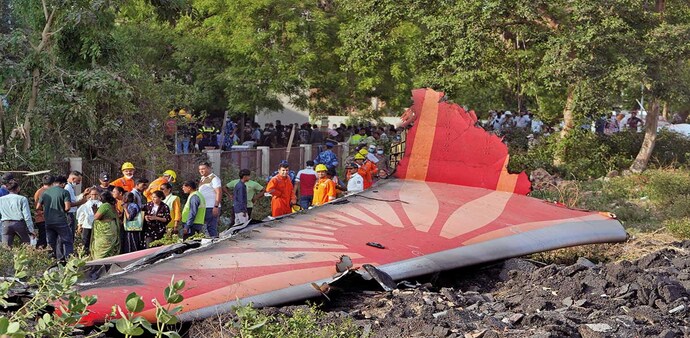
The June 12 accident was a devastating milestone for Boeing’s 787 Dreamliner program. Air India’s Flight AI171, operating from Ahmedabad to London Gatwick, crashed shortly after take-off, slamming into a medical hostel complex near the airport. Of the 241 people onboard, only one passenger survived. Nineteen more people lost their lives on the ground.
India’s worst aviation disaster in over a decade has stunned the industry—but investigators say, for now, there’s no call for urgent changes to Boeing’s Dreamliner or its engines.
India’s Aircraft Accident Investigation Bureau (AAIB) said there is currently no immediate need for action by Boeing or GE following last month’s Air India crash in Ahmedabad that killed 260 people.
“At this stage of investigation, there are no recommended actions to Boeing 787-8 and/or GE GEnx-1B engine operators and manufacturers,” the AAIB said in its preliminary report released Saturday.
CUTOFF & RUN confusion
The report noted that just seconds before the crash, the aircraft’s engine fuel cutoff switches moved from “cutoff” to “run” almost simultaneously. However, investigators have not yet linked this specific sequence directly to the cause of the crash.
These switches—small but powerful—control the flow of fuel to a plane’s engines. Located below the thrust levers in the cockpit of the Boeing 787, they allow pilots to start or shut down engines during ground operations, or to manually stop and restart them midair in case of an emergency. The switches are spring-loaded and require a deliberate pull-up and shift motion to change modes—either to ‘RUN’ to allow fuel flow or ‘CUTOFF’ to stop it.
The AAIB, operating under the Ministry of Civil Aviation, is leading the probe and working closely with both the aircraft and engine manufacturers to study technical systems, operational circumstances, and potential human factors behind the tragedy. A final report will follow after a deeper analysis of flight data and cockpit voice recordings.
The June 12 accident was a devastating milestone for Boeing’s 787 Dreamliner program. Air India’s Flight AI171, operating from Ahmedabad to London Gatwick, crashed shortly after take-off, slamming into a medical hostel complex near the airport. Of the 241 people onboard, only one passenger survived. Nineteen more people lost their lives on the ground.