
'No social security, no paid insurance': TGPWA counters Deepinder Goyal's claim on delivery partner pay
The TGPWA has questioned the recent claims by Deepinder Goyal regarding average earnings per hour, highlighting ongoing concerns over pay structures, social security, and work benefits.
- Jan 3, 2026,
- Updated Jan 3, 2026 8:30 AM IST
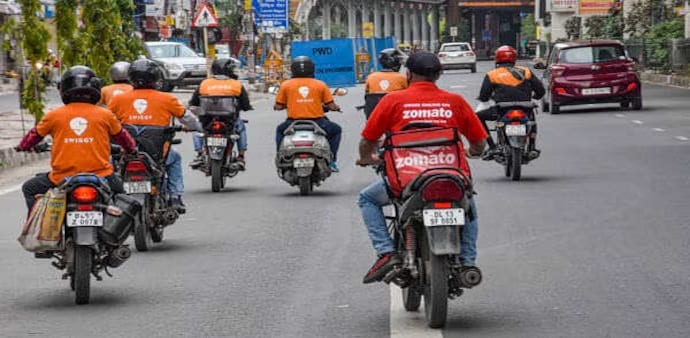
Gig workers associations across the country, led by the Telangana Gig and Platform Workers Association (TGPWA), are protesting against Swiggy and Zomato's 10-minute delivery model. The TGPWA has questioned the recent claims made by Zomato founder, Deepinder Goyal, regarding average earnings per hour, highlighting ongoing concerns over pay structures, social security, and work benefits.
The association wrote on X, "Mr @deepigoyal @zomato claims ₹102/hour EPH (2025). But at 10 hrs/day × 26 days, gross ≈ ₹26,500. After fuel and maintenance (~20%), net is ~ ₹21,000/month—for 260 hours of work. That’s ~ ₹81/hour net, with no social security, no paid leave, no accident cover."
Goyal defended his stance, asserting in a post on X that, "The average earnings per hour of delivery workers was ₹102 in 2025, excluding tips. Most delivery partners work for a few hours and only a few days in a month. But if someone were to work for 10 hours/day, 26 days/month, this translates to ~ ₹26,500/month in gross earnings." He acknowledged post fuel and maintenance costs, the net earnings could reduce to approximately ₹21,000 per month.
He further clarified, "Earnings per hour are calculated on total hours logged in, including the time when the partner might be waiting to receive an order", adding that while earnings per ‘busy’ hour may be higher, it is not the correct metric to evaluate.
The union criticised the tipping system, highlighting that merely 5% of orders receive tips, averaging ₹2.6 per hour. "This is not decent work," they remarked, emphasising their concern over inadequate earnings. Goyal responded by stating that all tips received are transferred to delivery partners without deductions, "Tips are transformed instantly, with zero deductions. We absorb the payment gateway processing cost ourselves. About 5% of the orders get tipped on Zomato; 2.5% on Blinkit," he explained.
These exchanges underscore the broader debate around the sustainability and fairness of gig work models, particularly in the rapidly evolving context of India's bustling delivery services sector.
Gig workers associations across the country, led by the Telangana Gig and Platform Workers Association (TGPWA), are protesting against Swiggy and Zomato's 10-minute delivery model. The TGPWA has questioned the recent claims made by Zomato founder, Deepinder Goyal, regarding average earnings per hour, highlighting ongoing concerns over pay structures, social security, and work benefits.
The association wrote on X, "Mr @deepigoyal @zomato claims ₹102/hour EPH (2025). But at 10 hrs/day × 26 days, gross ≈ ₹26,500. After fuel and maintenance (~20%), net is ~ ₹21,000/month—for 260 hours of work. That’s ~ ₹81/hour net, with no social security, no paid leave, no accident cover."
Goyal defended his stance, asserting in a post on X that, "The average earnings per hour of delivery workers was ₹102 in 2025, excluding tips. Most delivery partners work for a few hours and only a few days in a month. But if someone were to work for 10 hours/day, 26 days/month, this translates to ~ ₹26,500/month in gross earnings." He acknowledged post fuel and maintenance costs, the net earnings could reduce to approximately ₹21,000 per month.
He further clarified, "Earnings per hour are calculated on total hours logged in, including the time when the partner might be waiting to receive an order", adding that while earnings per ‘busy’ hour may be higher, it is not the correct metric to evaluate.
The union criticised the tipping system, highlighting that merely 5% of orders receive tips, averaging ₹2.6 per hour. "This is not decent work," they remarked, emphasising their concern over inadequate earnings. Goyal responded by stating that all tips received are transferred to delivery partners without deductions, "Tips are transformed instantly, with zero deductions. We absorb the payment gateway processing cost ourselves. About 5% of the orders get tipped on Zomato; 2.5% on Blinkit," he explained.
These exchanges underscore the broader debate around the sustainability and fairness of gig work models, particularly in the rapidly evolving context of India's bustling delivery services sector.