
No tax, no worries: UAE ambassador breaks down Dubai's financial magic
Oil and gas revenues still play a role, particularly at the federal level, but Dubai, unlike some of its neighbors, has diversified aggressively into trade, tourism, logistics, real estate, and financial services.
- Sep 17, 2025,
- Updated Sep 17, 2025 6:57 PM IST
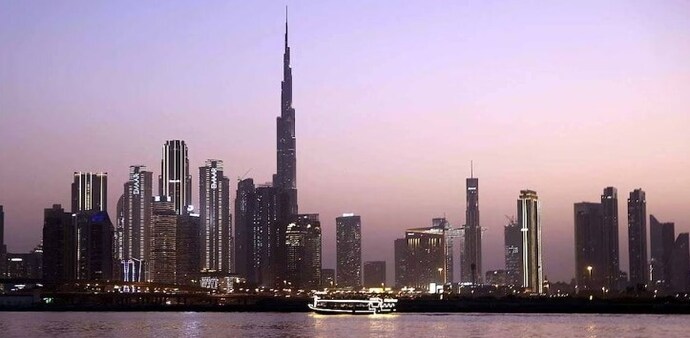
Dubai, long admired for its gleaming skyscrapers, world-class schools, and seamless healthcare, has also become famous for another reason: zero personal income tax. But how does the emirate sustain its world-class infrastructure and public services without taxing its residents? Dr. Abdulnasser Alshaali, UAE Ambassador to India, explained the system during a podcast with Raj Shamani, shedding light on the financial model that keeps the city thriving.
“The model is different and unique,” Dr. Alshaali explained. “Some of the money obviously is coming from oil and gas and there’s a federal budget, and then there are local budgets. Federal entities generate their own revenues. For example, the Ministry of Foreign Affairs gets revenue from attestations of documents, commercial documents, and other personal documents.”
According to the ambassador, this layered financial system allows Dubai — and the wider UAE — to spread responsibility for revenue generation across multiple entities rather than relying on income tax. “That revenue goes to the Ministry of Finance, which decides with the cabinet on the allocation for each ministry when it comes to their budgets,” he said. “There are also sources of revenue generated at the local government level. They differ from one place to the other.”
One of the biggest revenue drivers, he noted, comes from fees and services that residents and businesses willingly pay for. “For instance, you pay for setting up a trading license, certain services, or property valuations. All of this goes into the local budget, and from the local budget to local expenditure,” Dr. Alshaali said. “Yes, there are costs involved, but this is how the system works.”
The ambassador pointed out that this ecosystem of revenue generation is far from ad hoc — it is carefully designed to sustain both federal and local needs. Oil and gas revenues still play a role, particularly at the federal level, but Dubai, unlike some of its neighbors, has diversified aggressively into trade, tourism, logistics, real estate, and financial services. Fees from company registrations, licenses, real estate transactions, and high-value services provide steady income that keeps the system running.
“The infrastructure is great, safety is top-notch, and all of this is funded through multiple revenue streams,” he concluded. “It’s not magic — it’s a planned, sustainable financial ecosystem.”
The result is a city where residents enjoy smooth roads, advanced healthcare, and strong law-and-order systems — all without paying personal income tax. Add to that high-quality international schools, a cosmopolitan social fabric, and ease of doing business, and Dubai’s formula becomes clearer.
As Dr. Alshaali put it, the sustainability of Dubai’s model lies in its ability to balance free-market appeal with structured governance. “It’s a system where people pay for services they directly use, and in return, they see value immediately — whether in safety, healthcare, or infrastructure,” he explained.
Dubai, long admired for its gleaming skyscrapers, world-class schools, and seamless healthcare, has also become famous for another reason: zero personal income tax. But how does the emirate sustain its world-class infrastructure and public services without taxing its residents? Dr. Abdulnasser Alshaali, UAE Ambassador to India, explained the system during a podcast with Raj Shamani, shedding light on the financial model that keeps the city thriving.
“The model is different and unique,” Dr. Alshaali explained. “Some of the money obviously is coming from oil and gas and there’s a federal budget, and then there are local budgets. Federal entities generate their own revenues. For example, the Ministry of Foreign Affairs gets revenue from attestations of documents, commercial documents, and other personal documents.”
According to the ambassador, this layered financial system allows Dubai — and the wider UAE — to spread responsibility for revenue generation across multiple entities rather than relying on income tax. “That revenue goes to the Ministry of Finance, which decides with the cabinet on the allocation for each ministry when it comes to their budgets,” he said. “There are also sources of revenue generated at the local government level. They differ from one place to the other.”
One of the biggest revenue drivers, he noted, comes from fees and services that residents and businesses willingly pay for. “For instance, you pay for setting up a trading license, certain services, or property valuations. All of this goes into the local budget, and from the local budget to local expenditure,” Dr. Alshaali said. “Yes, there are costs involved, but this is how the system works.”
The ambassador pointed out that this ecosystem of revenue generation is far from ad hoc — it is carefully designed to sustain both federal and local needs. Oil and gas revenues still play a role, particularly at the federal level, but Dubai, unlike some of its neighbors, has diversified aggressively into trade, tourism, logistics, real estate, and financial services. Fees from company registrations, licenses, real estate transactions, and high-value services provide steady income that keeps the system running.
“The infrastructure is great, safety is top-notch, and all of this is funded through multiple revenue streams,” he concluded. “It’s not magic — it’s a planned, sustainable financial ecosystem.”
The result is a city where residents enjoy smooth roads, advanced healthcare, and strong law-and-order systems — all without paying personal income tax. Add to that high-quality international schools, a cosmopolitan social fabric, and ease of doing business, and Dubai’s formula becomes clearer.
As Dr. Alshaali put it, the sustainability of Dubai’s model lies in its ability to balance free-market appeal with structured governance. “It’s a system where people pay for services they directly use, and in return, they see value immediately — whether in safety, healthcare, or infrastructure,” he explained.