
Noida workers protest: Six demands behind escalating labour unrest
Noida wage rage: Behind the torched vehicles, stone-pelting and tear gas in Phase-2 and Sector 60 lies a set of concrete, long-pending demands that workers say have been ignored for too long
- Apr 13, 2026,
- Updated Apr 13, 2026 3:30 PM IST
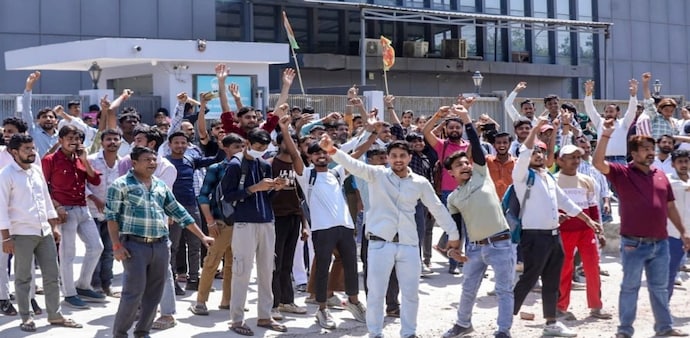
Noida protests: The violence that swept through Noida's industrial zones on Monday did not come out of nowhere. Behind the torched vehicles, stone-pelting and tear gas in Phase-2 and Sector 60 lies a set of concrete, long-pending demands that workers say have been ignored for too long. Here is what they are fighting for.
1. Minimum wage increase
The most fundamental demand is a significant wage increase. Workers currently earn between Rs 13,000 and Rs 15,000 a month, an amount they say is no longer enough to cover basic living costs. They are demanding a minimum monthly salary of at least Rs 20,000, arguing that years of stagnant wages against rising inflation have left them with little to show for long hours on the factory floor.
2. Pay parity with Haryana
The trigger for the current wave of protests was Haryana's decision to raise its minimum monthly wage from Rs 14,000 to Rs 19,000, a jump of nearly 35 per cent. Workers in Noida, employed in similar industries doing comparable work just across the state border, want the same. The Rs 6,000 gap between what a worker earns in Uttar Pradesh versus Haryana has become the sharpest symbol of the inequality driving the unrest. Banners outside factories in Noida have explicitly demanded wage structures on par with those seen in Manesar.
3. An end to 12-hour shifts
Workers are also pushing back against what they describe as punishing working hours. Mandatory 12-hour shifts are the norm across many units in the Hosiery Complex and surrounding industrial areas. The demand is straightforward: cap the working day at eight hours, in line with standard labour norms, and stop treating extended shifts as a given.
4. Overtime pay and annual bonuses
Where extra hours are worked, workers want to be compensated at double the standard rate, a provision that exists in labour law but is widely flouted, they say. They are also demanding that annual bonuses be paid on time and without dispute, rather than being delayed or withheld at the discretion of individual factory managements.
The Noida administration, in its meetings ahead of Monday's protests, had acknowledged both demands and said factories would be directed to comply.
5. Safer workplaces and dignity at work
Beyond wages, workers are demanding better physical safety conditions on factory floors and formal mechanisms to address harassment. The administration has said a complaints committee led by a woman will be set up to handle such cases, but workers say meaningful implementation, not just announcements, is what they are waiting for.
6. Unpaid arrears and retirement dues
Finally, workers are demanding the immediate clearance of salary arrears and pending retirement dues, money they say is owed to them but has been held back.
Noida protests: The violence that swept through Noida's industrial zones on Monday did not come out of nowhere. Behind the torched vehicles, stone-pelting and tear gas in Phase-2 and Sector 60 lies a set of concrete, long-pending demands that workers say have been ignored for too long. Here is what they are fighting for.
1. Minimum wage increase
The most fundamental demand is a significant wage increase. Workers currently earn between Rs 13,000 and Rs 15,000 a month, an amount they say is no longer enough to cover basic living costs. They are demanding a minimum monthly salary of at least Rs 20,000, arguing that years of stagnant wages against rising inflation have left them with little to show for long hours on the factory floor.
2. Pay parity with Haryana
The trigger for the current wave of protests was Haryana's decision to raise its minimum monthly wage from Rs 14,000 to Rs 19,000, a jump of nearly 35 per cent. Workers in Noida, employed in similar industries doing comparable work just across the state border, want the same. The Rs 6,000 gap between what a worker earns in Uttar Pradesh versus Haryana has become the sharpest symbol of the inequality driving the unrest. Banners outside factories in Noida have explicitly demanded wage structures on par with those seen in Manesar.
3. An end to 12-hour shifts
Workers are also pushing back against what they describe as punishing working hours. Mandatory 12-hour shifts are the norm across many units in the Hosiery Complex and surrounding industrial areas. The demand is straightforward: cap the working day at eight hours, in line with standard labour norms, and stop treating extended shifts as a given.
4. Overtime pay and annual bonuses
Where extra hours are worked, workers want to be compensated at double the standard rate, a provision that exists in labour law but is widely flouted, they say. They are also demanding that annual bonuses be paid on time and without dispute, rather than being delayed or withheld at the discretion of individual factory managements.
The Noida administration, in its meetings ahead of Monday's protests, had acknowledged both demands and said factories would be directed to comply.
5. Safer workplaces and dignity at work
Beyond wages, workers are demanding better physical safety conditions on factory floors and formal mechanisms to address harassment. The administration has said a complaints committee led by a woman will be set up to handle such cases, but workers say meaningful implementation, not just announcements, is what they are waiting for.
6. Unpaid arrears and retirement dues
Finally, workers are demanding the immediate clearance of salary arrears and pending retirement dues, money they say is owed to them but has been held back.