
‘Not hostage to disputes’: China urges India reset as Trump redraws global alliances
“Despite frictions, powerful converging interests compel both sides to compartmentalize disputes,” the paper writes, noting that bilateral trade has soared to record highs, even amid frozen diplomatic ties.
- Aug 20, 2025,
- Updated Aug 20, 2025 8:15 AM IST
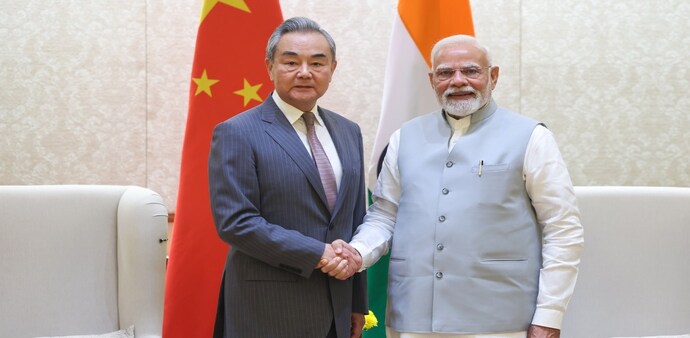
As Chinese Foreign Minister Wang Yi visits New Delhi for the first time in over three years, China’s Global Times signals a marked shift in tone — calling China-India cooperation “indispensable” to the future of the Global South and urging both powers to move beyond border frictions toward strategic convergence.
In a sharply worded editorial released Monday, Global Times framed Wang’s three-day visit — including the 24th Round of Special Representative talks on the boundary dispute — as more than a diplomatic reset. It is, the paper argues, a strategic necessity: “Cooperation between Beijing and New Delhi shouldn’t be held hostage to bilateral disputes.”
The commentary acknowledges the rupture caused by the 2020 border clashes, which shattered a fragile status quo. While over 20 rounds of Corps Commander-level talks have tried to stabilize the Line of Actual Control (LAC), Global Times emphasizes that shared economic, security, and geopolitical stakes now demand a compartmentalization of conflicts.
“Despite frictions, powerful converging interests compel both sides to compartmentalize disputes,” the paper writes, noting that bilateral trade has soared to record highs, even amid frozen diplomatic ties.
India and China, it says, must act as co-architects of a multipolar order through platforms like BRICS and the SCO. A fractured relationship, the editorial warns, “would weaken the Global South’s collective leverage in global governance, climate negotiations, and economic resilience.”
Recent signs — including talks of resuming direct flights, easing visa restrictions, and restoring border trade — are framed as both “symbolic and practical,” suggesting growing confidence in managing tensions. Prime Minister Narendra Modi’s recent remarks about a return to “normalcy” at the border, and his upcoming visit to the SCO summit in China, are seen as signals of a “cautious optimism.”
The editorial goes further, proposing deeper alignment between China’s Belt and Road Initiative and India’s Act East policy — to build infrastructure corridors connecting South Asia with ASEAN. Such cooperation, it argues, would “demonstrate that their cooperation delivers tangible benefits not only to themselves but to the broader Global South.”
Ultimately, Global Times positions China-India engagement as pivotal: “Constructive China-India engagement is indispensable,” it writes. “The ability of Beijing and New Delhi to cooperate will directly shape the collective strength and bargaining power of developing nations.”
As Chinese Foreign Minister Wang Yi visits New Delhi for the first time in over three years, China’s Global Times signals a marked shift in tone — calling China-India cooperation “indispensable” to the future of the Global South and urging both powers to move beyond border frictions toward strategic convergence.
In a sharply worded editorial released Monday, Global Times framed Wang’s three-day visit — including the 24th Round of Special Representative talks on the boundary dispute — as more than a diplomatic reset. It is, the paper argues, a strategic necessity: “Cooperation between Beijing and New Delhi shouldn’t be held hostage to bilateral disputes.”
The commentary acknowledges the rupture caused by the 2020 border clashes, which shattered a fragile status quo. While over 20 rounds of Corps Commander-level talks have tried to stabilize the Line of Actual Control (LAC), Global Times emphasizes that shared economic, security, and geopolitical stakes now demand a compartmentalization of conflicts.
“Despite frictions, powerful converging interests compel both sides to compartmentalize disputes,” the paper writes, noting that bilateral trade has soared to record highs, even amid frozen diplomatic ties.
India and China, it says, must act as co-architects of a multipolar order through platforms like BRICS and the SCO. A fractured relationship, the editorial warns, “would weaken the Global South’s collective leverage in global governance, climate negotiations, and economic resilience.”
Recent signs — including talks of resuming direct flights, easing visa restrictions, and restoring border trade — are framed as both “symbolic and practical,” suggesting growing confidence in managing tensions. Prime Minister Narendra Modi’s recent remarks about a return to “normalcy” at the border, and his upcoming visit to the SCO summit in China, are seen as signals of a “cautious optimism.”
The editorial goes further, proposing deeper alignment between China’s Belt and Road Initiative and India’s Act East policy — to build infrastructure corridors connecting South Asia with ASEAN. Such cooperation, it argues, would “demonstrate that their cooperation delivers tangible benefits not only to themselves but to the broader Global South.”
Ultimately, Global Times positions China-India engagement as pivotal: “Constructive China-India engagement is indispensable,” it writes. “The ability of Beijing and New Delhi to cooperate will directly shape the collective strength and bargaining power of developing nations.”