
'Not just a trade deal': India-US trade pact hailed as a historic turning point
The tariff reset also gives India a clear edge over several export competitors in the region, with lower rates than Indonesia, Bangladesh and Vietnam, and significantly lower tariffs than China and Pakistan
- Feb 3, 2026,
- Updated Feb 3, 2026 7:59 AM IST
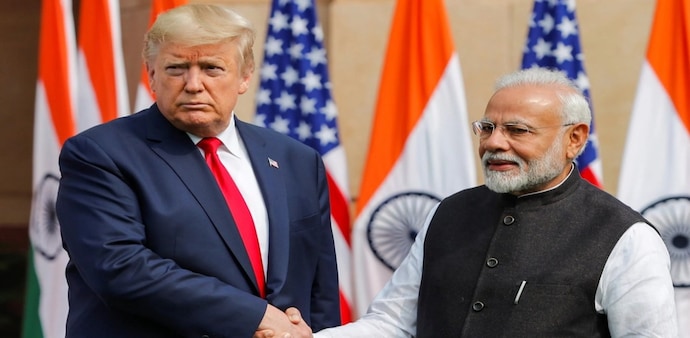
US President Donald Trump has announced a trade agreement with India that cuts tariffs on Indian goods from 50 per cent to 18 per cent, a move that immediately reshaped the tone of India-US economic ties and triggered a flood of political and corporate reactions in New Delhi.
The earlier 50 per cent levy included a 25 per cent reciprocal tariff and an additional 25 per cent penalty linked to India’s purchase of Russian crude oil. With the new deal, Washington has removed the extra punitive duty and lowered the overall tariff rate.
The tariff reset also gives India a clear edge over several export competitors in the region, with lower rates than Indonesia, Bangladesh and Vietnam, and significantly lower tariffs than China and Pakistan.
Government calls it a breakthrough moment
Commerce and Industry Minister Piyush Goyal welcomed the announcement as a “landmark trade agreement”, calling it a major step by “two like-minded, fair-trading democracies” working for “shared prosperity.” He also pitched the deal as opening new opportunities for farmers, MSMEs, entrepreneurs, and skilled workers, aligning it with India’s pitch of building and exporting from India, “Make in India for the world.”
External Affairs Minister S Jaishankar framed the development as a growth and jobs story, saying it will “create more jobs,” “spur growth,” and “promote innovation” in both economies. He also linked it directly to stronger “Make in India” efforts and “trusted technology ties,” underlining that economic engagement is the strongest base for a strategic partnership.
Union Home Minister Amit Shah described it as a “big day” for India-US relations, pointing to the “significantly reduced tariff of 18%” as a trigger for stronger trade ties and “mutual growth,” while saying business between the two countries is now set to flourish further.
Corporate India signals investment and supply chain upside
Industry response was equally upbeat, with Kumar Mangalam Birla, chairman of the Aditya Birla Group, applauding both leaders for the announcement and calling the reduced tariffs a boost to strategic and economic ties.
Birla said the deal will create more room for “investment and collaboration,” help build “more resilient supply chains,” and “unlock manufacturing opportunities” in both countries. The Aditya Birla Group, he noted, remains committed to expanding its presence and investments in the US, where it sees “substantial opportunities for innovation, growth and enduring partnerships.”
Congress attacks optics, questions who holds leverage
The Congress took a combative position, with MP Jairam Ramesh questioning the sequencing and messaging around the deal.
He argued that key announcements were being made “from Washington DC,” claimed Trump “seems to have some leverage over Prime Minister Modi,” and alleged that Modi has “capitulated finally.” He also took a swipe at the political optics, saying “in Washington clearly Mogambo Khush Hai,” while noting that full details of the trade deal are still awaited.
US President Donald Trump has announced a trade agreement with India that cuts tariffs on Indian goods from 50 per cent to 18 per cent, a move that immediately reshaped the tone of India-US economic ties and triggered a flood of political and corporate reactions in New Delhi.
The earlier 50 per cent levy included a 25 per cent reciprocal tariff and an additional 25 per cent penalty linked to India’s purchase of Russian crude oil. With the new deal, Washington has removed the extra punitive duty and lowered the overall tariff rate.
The tariff reset also gives India a clear edge over several export competitors in the region, with lower rates than Indonesia, Bangladesh and Vietnam, and significantly lower tariffs than China and Pakistan.
Government calls it a breakthrough moment
Commerce and Industry Minister Piyush Goyal welcomed the announcement as a “landmark trade agreement”, calling it a major step by “two like-minded, fair-trading democracies” working for “shared prosperity.” He also pitched the deal as opening new opportunities for farmers, MSMEs, entrepreneurs, and skilled workers, aligning it with India’s pitch of building and exporting from India, “Make in India for the world.”
External Affairs Minister S Jaishankar framed the development as a growth and jobs story, saying it will “create more jobs,” “spur growth,” and “promote innovation” in both economies. He also linked it directly to stronger “Make in India” efforts and “trusted technology ties,” underlining that economic engagement is the strongest base for a strategic partnership.
Union Home Minister Amit Shah described it as a “big day” for India-US relations, pointing to the “significantly reduced tariff of 18%” as a trigger for stronger trade ties and “mutual growth,” while saying business between the two countries is now set to flourish further.
Corporate India signals investment and supply chain upside
Industry response was equally upbeat, with Kumar Mangalam Birla, chairman of the Aditya Birla Group, applauding both leaders for the announcement and calling the reduced tariffs a boost to strategic and economic ties.
Birla said the deal will create more room for “investment and collaboration,” help build “more resilient supply chains,” and “unlock manufacturing opportunities” in both countries. The Aditya Birla Group, he noted, remains committed to expanding its presence and investments in the US, where it sees “substantial opportunities for innovation, growth and enduring partnerships.”
Congress attacks optics, questions who holds leverage
The Congress took a combative position, with MP Jairam Ramesh questioning the sequencing and messaging around the deal.
He argued that key announcements were being made “from Washington DC,” claimed Trump “seems to have some leverage over Prime Minister Modi,” and alleged that Modi has “capitulated finally.” He also took a swipe at the political optics, saying “in Washington clearly Mogambo Khush Hai,” while noting that full details of the trade deal are still awaited.