
Not like China: Fareed Zakaria says India is more approachable, manageable; has a multi-alignment policy
"If you're a developing country and trying to figure out how to grow, you're going to find more interesting lessons that you can copy from India than you can from China," said Zakaria.
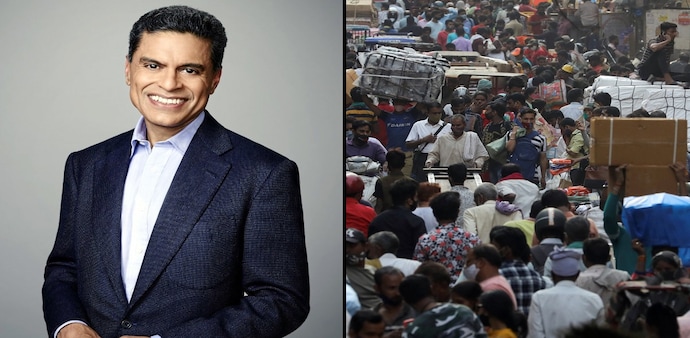
- Mar 23, 2026,
- Updated Mar 23, 2026 12:59 PM IST
India is not like China but that is not necessarily a bad thing, says veteran journalist and geopolitics expert, Fareed Zakaria. He said India has mapped a long road of economic advancement and technological sophistication. It might not be growing like China did but it is doing better than just about every other economy.
Speaking at the Watson School on global economic affairs, Zakaria said, people moan about India not growing as fast as China – which is true, and India is unlikely to grow as fast. “China has had the fastest growth of any large economy in the history of the world, and it will not be beaten by India. But India has been the second fastest growing large economy in the world for the last 25 years. So it's not a bad record if you compare it to the other 195 countries in the world. It's just, it's not China,” he explained.
“And I think that in some ways, it's much more approachable. It's much more manageable. If you're a developing country and trying to figure out how to grow, you're going to find more interesting lessons that you can copy from India than you can from China. And India, in that sense, can play a much larger and broader role,” said Zakaria.
He said India is a very different country that it was in the past. It is “one of the most important countries in the world without any question”, said Zakaria. Talking about India’s technological advancements, Zakaria said, “If any of you have the latest iPhone 17 in your pocket, it was made in India. Every single iPhone 17 was made in India. About 25 per cent of all smartphones and about 50 per cent of all iPhones are now made in India. What is remarkable about that is, particularly on the iPhone dimension, if you go back four years, zero was made in India. This is India essentially replacing China as the principal manufacturer of smartphones for the United States within four years,” he said.
This kind of rise was reserved only for China. “It was always thought that you needed that kind of discipline and direction that the Chinese state could provide, which allowed for this kind of thing,” he said, adding that we must still remember that India is not Shanghai, and that its per capita GDP is still $3,000 and it is still very much developing.
Zakaria said India has enormous potential and it is realising that potential. “What that means is India’s foreign policy is changing,” he added. India’s non-alignment has moved to multi-alignment, he said. India has been able to do that because it occupies “central place, both economically and strategically”. He said countries have to accept that India will not be entirely in their camp, but will do business with them nonetheless.
“So India is unusual in being able to buy Russian military equipment, buy Russian oil at a discount, while at the same time forging closer and closer ties with the United States, even militarily, even in defence terms. It is able to work out economic arrangements with Russia and at the same time with Europe,” observed Zakaria.
India is not like China but that is not necessarily a bad thing, says veteran journalist and geopolitics expert, Fareed Zakaria. He said India has mapped a long road of economic advancement and technological sophistication. It might not be growing like China did but it is doing better than just about every other economy.
Speaking at the Watson School on global economic affairs, Zakaria said, people moan about India not growing as fast as China – which is true, and India is unlikely to grow as fast. “China has had the fastest growth of any large economy in the history of the world, and it will not be beaten by India. But India has been the second fastest growing large economy in the world for the last 25 years. So it's not a bad record if you compare it to the other 195 countries in the world. It's just, it's not China,” he explained.
“And I think that in some ways, it's much more approachable. It's much more manageable. If you're a developing country and trying to figure out how to grow, you're going to find more interesting lessons that you can copy from India than you can from China. And India, in that sense, can play a much larger and broader role,” said Zakaria.
He said India is a very different country that it was in the past. It is “one of the most important countries in the world without any question”, said Zakaria. Talking about India’s technological advancements, Zakaria said, “If any of you have the latest iPhone 17 in your pocket, it was made in India. Every single iPhone 17 was made in India. About 25 per cent of all smartphones and about 50 per cent of all iPhones are now made in India. What is remarkable about that is, particularly on the iPhone dimension, if you go back four years, zero was made in India. This is India essentially replacing China as the principal manufacturer of smartphones for the United States within four years,” he said.
This kind of rise was reserved only for China. “It was always thought that you needed that kind of discipline and direction that the Chinese state could provide, which allowed for this kind of thing,” he said, adding that we must still remember that India is not Shanghai, and that its per capita GDP is still $3,000 and it is still very much developing.
Zakaria said India has enormous potential and it is realising that potential. “What that means is India’s foreign policy is changing,” he added. India’s non-alignment has moved to multi-alignment, he said. India has been able to do that because it occupies “central place, both economically and strategically”. He said countries have to accept that India will not be entirely in their camp, but will do business with them nonetheless.
“So India is unusual in being able to buy Russian military equipment, buy Russian oil at a discount, while at the same time forging closer and closer ties with the United States, even militarily, even in defence terms. It is able to work out economic arrangements with Russia and at the same time with Europe,” observed Zakaria.