
'One can't rule out US-Pak attempt to put India on FATF list': Analysts alarmed after US gives terror tag to Baloch group
The announcement left strategic analysts shocked, with one even claiming an extremely disastrous outcome for India from Munir and Trump's camaraderie.
- Aug 12, 2025,
- Updated Aug 12, 2025 12:53 PM IST
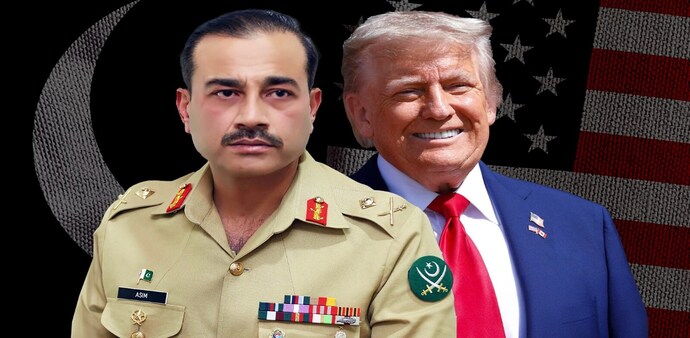
The United States on Tuesday labelled the Balochistan Liberation Army (BLA) as a terrorist organisation, coinciding with the visit of Pakistan Army Chief Asim Munir. This move highlights a shift in US-Pakistan relations under Donald Trump's administration.
The designation criminalises support for the BLA, responsible for multiple attacks in Pakistan. The announcement left strategic analysts shocked, with one even claiming an extremely disastrous outcome for India from Munir and Trump's camaraderie.
Commentator Surya Kanegaonkar wrote on X (formerly Twitter) that the US' designation of BLA as a terrorist organisation goes beyond balancing. He also warned that if US-India ties deteriorate further, it is highly likely that the US and Pakistan could come together to put India on a Financial Action Task Force (FATF) list.
"If US-India ties deteriorate much further, one cannot rule out a US/Pak attempt to put India on an FATF list. It would follow up on tariffs to take aim at the Indian economy. We are dealing with provocations going up the escalation ladder. When the terms of deescalation are unilaterally set by the aggressor, the only way is up the ladder," he wrote in a post on X.
Historian Hindol Sengupta claimed that the BLA has been designated as a terrorist group because the Pakistan Army sold "the vision of oil and gas in Balochistan to TACO", a reference to an acronym coined in May this year after many threats and withdrawals by Trump.
"The designation of BLA as a 'terrorist group' has happened no doubt, in part, because the Pakistani Army sold the vision of oil and gas in Balochistan to TACO. Another farcical saga is about to unfold between clueless America and Machiavellian Pakistan," Sengupta said.
So, what can India do in such a scenario? As per Harsh Gupta Madhusudan, India should go back to the drawing board and rejig its budget spending.
While explaining what Trump is up to, Madhusudan said: "Trump goes after Balochi freedom fighters and extends trade truce with China a few months again. Clear negative signs to Taiwan, Europe, Canada, Australia too. Meanwhile, he wants up to 50% tariffs on India (higher than China) for importing from Russia - imports also done by China, EU and US itself. Our budget is a distillation of our priorities. We must spend more on defense, urban/rural infra, PLIs, energy, health. We need a coordinated monetary-fiscal expansion with focus on indigenisation of key tech. Just saying 'reforms' won't cut it. That is one key part. But there are other parts too."
Moreover, during his visit, Munir stated, "We are a nuclear nation. If we think we are going down, we will take half the world down with us." General Michael Kurilla, US Central Command Commander, described Pakistan as a "phenomenal partner" in counter-terrorism efforts.
India expressed displeasure over Munir's nuclear remarks, stating, "It is regrettable that these remarks should have been made from the soil of a friendly third country."
The United States on Tuesday labelled the Balochistan Liberation Army (BLA) as a terrorist organisation, coinciding with the visit of Pakistan Army Chief Asim Munir. This move highlights a shift in US-Pakistan relations under Donald Trump's administration.
The designation criminalises support for the BLA, responsible for multiple attacks in Pakistan. The announcement left strategic analysts shocked, with one even claiming an extremely disastrous outcome for India from Munir and Trump's camaraderie.
Commentator Surya Kanegaonkar wrote on X (formerly Twitter) that the US' designation of BLA as a terrorist organisation goes beyond balancing. He also warned that if US-India ties deteriorate further, it is highly likely that the US and Pakistan could come together to put India on a Financial Action Task Force (FATF) list.
"If US-India ties deteriorate much further, one cannot rule out a US/Pak attempt to put India on an FATF list. It would follow up on tariffs to take aim at the Indian economy. We are dealing with provocations going up the escalation ladder. When the terms of deescalation are unilaterally set by the aggressor, the only way is up the ladder," he wrote in a post on X.
Historian Hindol Sengupta claimed that the BLA has been designated as a terrorist group because the Pakistan Army sold "the vision of oil and gas in Balochistan to TACO", a reference to an acronym coined in May this year after many threats and withdrawals by Trump.
"The designation of BLA as a 'terrorist group' has happened no doubt, in part, because the Pakistani Army sold the vision of oil and gas in Balochistan to TACO. Another farcical saga is about to unfold between clueless America and Machiavellian Pakistan," Sengupta said.
So, what can India do in such a scenario? As per Harsh Gupta Madhusudan, India should go back to the drawing board and rejig its budget spending.
While explaining what Trump is up to, Madhusudan said: "Trump goes after Balochi freedom fighters and extends trade truce with China a few months again. Clear negative signs to Taiwan, Europe, Canada, Australia too. Meanwhile, he wants up to 50% tariffs on India (higher than China) for importing from Russia - imports also done by China, EU and US itself. Our budget is a distillation of our priorities. We must spend more on defense, urban/rural infra, PLIs, energy, health. We need a coordinated monetary-fiscal expansion with focus on indigenisation of key tech. Just saying 'reforms' won't cut it. That is one key part. But there are other parts too."
Moreover, during his visit, Munir stated, "We are a nuclear nation. If we think we are going down, we will take half the world down with us." General Michael Kurilla, US Central Command Commander, described Pakistan as a "phenomenal partner" in counter-terrorism efforts.
India expressed displeasure over Munir's nuclear remarks, stating, "It is regrettable that these remarks should have been made from the soil of a friendly third country."