
'Only ₹35 on a ₹1,000 shirt': PM Modi on how next-Gen GST reforms will benefit the poor, middle class
He explained that the reforms in the indirect tax regime were introduced by implementing the GST in 2017, followed by further reforms in September this year.
- Sep 25, 2025,
- Updated Sep 25, 2025 12:28 PM IST
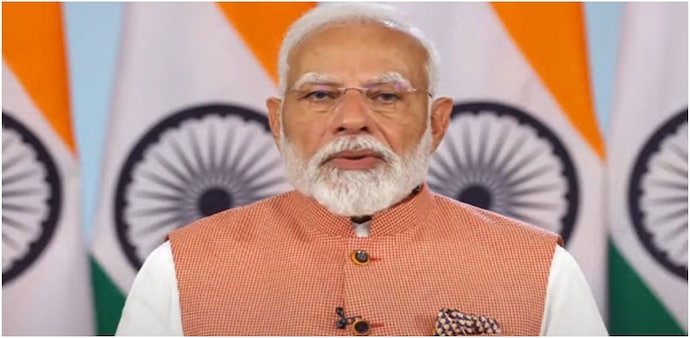
Prime Minister Narendra Modi on Thursday said that his government's next-generation goods and services tax (GST) reforms drastically reduced the tax burden on the poor and the middle class. He explained that the reforms in the indirect tax regime were introduced by implementing the GST in 2017, followed by further reforms in September this year.
Furthermore, the Prime Minister compared the taxes under the UPA government.
“Before 2014, there were so many taxes that neither businesses nor families could balance their budgets. In 2014, a ₹1,000 shirt carried a tax of ₹117. After the implementation of GST in 2017, the tax came down to ₹50. Now, after the NextGen GST reform, only ₹35 will have to be paid on a ₹1,000 shirt,” the prime minister said at the inauguration of the Uttar Pradesh International Trade Show 2025.
He said that the structural reforms will "give new wings to India's growth story". Modi said that GST reforms will continue further to make India's taxation system simpler, fairer and growth-oriented. He also highlighted how the reduction in GST rates has benefited households and small traders.
"We are not going to stop here... As the economy strengthens further, the tax burden will keep going down... With countrymen's blessings, reforms in GST will continue," Modi said.
He emphasised the actions implemented by the government, such as the absence of income tax for individuals making up to ₹12 lakh per year and the GST 2.0 reforms, and mentioned that these efforts will lead to increased savings for the public.
GST rate cuts, which came into effect from September 22, provided a huge relief to the middle class as staples and consumer durables such as paneer, butter, ghee, cereals, nuts, frozen parathas, and dates now attract just 5 per cent GST.
Daily-use items such as toothpaste, hair oil and shampoo also became cheaper. Kitchenware, utensils, bicycles and bamboo furniture also saw similar rate cuts. The GST on TVs, refrigerators, and washing machines went down to 18 per cent from 28 per cent.
Health and life insurance premiums, previously taxed at 18%, are now GST-free. Luxury and sin goods, however, attract a 40 per cent GST. These include vehicles, yachts, cigarettes and aerated drinks.
Prime Minister Narendra Modi on Thursday said that his government's next-generation goods and services tax (GST) reforms drastically reduced the tax burden on the poor and the middle class. He explained that the reforms in the indirect tax regime were introduced by implementing the GST in 2017, followed by further reforms in September this year.
Furthermore, the Prime Minister compared the taxes under the UPA government.
“Before 2014, there were so many taxes that neither businesses nor families could balance their budgets. In 2014, a ₹1,000 shirt carried a tax of ₹117. After the implementation of GST in 2017, the tax came down to ₹50. Now, after the NextGen GST reform, only ₹35 will have to be paid on a ₹1,000 shirt,” the prime minister said at the inauguration of the Uttar Pradesh International Trade Show 2025.
He said that the structural reforms will "give new wings to India's growth story". Modi said that GST reforms will continue further to make India's taxation system simpler, fairer and growth-oriented. He also highlighted how the reduction in GST rates has benefited households and small traders.
"We are not going to stop here... As the economy strengthens further, the tax burden will keep going down... With countrymen's blessings, reforms in GST will continue," Modi said.
He emphasised the actions implemented by the government, such as the absence of income tax for individuals making up to ₹12 lakh per year and the GST 2.0 reforms, and mentioned that these efforts will lead to increased savings for the public.
GST rate cuts, which came into effect from September 22, provided a huge relief to the middle class as staples and consumer durables such as paneer, butter, ghee, cereals, nuts, frozen parathas, and dates now attract just 5 per cent GST.
Daily-use items such as toothpaste, hair oil and shampoo also became cheaper. Kitchenware, utensils, bicycles and bamboo furniture also saw similar rate cuts. The GST on TVs, refrigerators, and washing machines went down to 18 per cent from 28 per cent.
Health and life insurance premiums, previously taxed at 18%, are now GST-free. Luxury and sin goods, however, attract a 40 per cent GST. These include vehicles, yachts, cigarettes and aerated drinks.