
'Op Sindoor in May was a trailer which ended in 88 hrs': Army Chief's stern warning to Pakistan
He further said that battles are multi-domain in today's time, while adding, "We cannot say how long it will last. We have to ensure we have supplies to last long."
- Nov 17, 2025,
- Updated Nov 17, 2025 12:05 PM IST
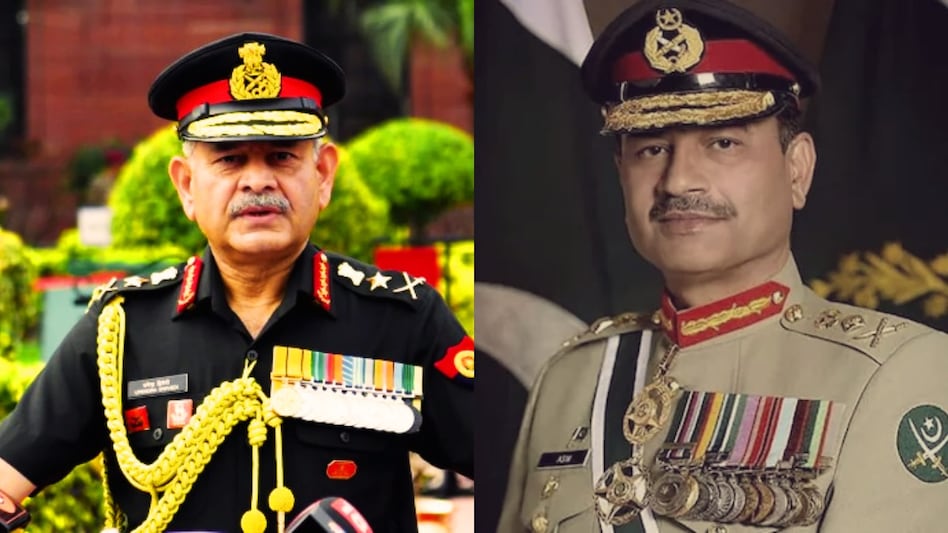
Indian Army Chief General Upendra Dwivedi recently gave a stern warning to Pakistan while speaking at an event in Delhi. General Dwivedi said that Operation Sindoor, which took place in May this year, was just a trailer.
In his keynote address at the Chanakya Defence Dialogue in Delhi, he said: "Operation Sindoor was just a trailer which ended in 88 hours. We are prepared for any circumstances in future. If Pakistan gives a chance, we will teach it how to behave responsibly with a neighbouring nation."
He further said that battles are multi-domain in today's time, while adding, "We cannot say how long it will last. We have to ensure we have supplies to last long."
General Dwivedi highlighted that the Operation's success was a deterrent while underlining the need for sustained vigilance against state-sponsored terrorism. He also reiterated India's "new normal" policy vis-a-vis Pakistan, saying "talks and terror can't go together".
"All we are asking is to adopt a peaceful process, which we will cooperate with. Until then, we will treat terrorists and their sponsors alike. We will respond to those who encourage terrorists. Today, India is so accomplished that it is not scared of any blackmail attempts."
On May 7 this year, the Indian Armed Forces launched an offensive against Pakistan in retaliation for the terror attack in Pahalgam that claimed the lives of 26 people.
The attack was described as a "focused, measured, and non-escalatory" multi-domain strike. It destroyed terror infrastructure, launchpads, and military assets inside Pakistan and Pakistan-occupied Kashmir (PoK), including the Nur Khan airbase. The intense operation lasted around 88 hours, ending in a ceasefire requested by Pakistan on May 10 this year.
His comments come days after Pakistan's government has introduced the 27th Constitutional Amendment in the Senate, signalling major changes to military command and the judiciary. The bill, approved by the cabinet, elevates Field Marshal Asim Munir by formally granting him combined leadership of the Army, Navy, and Air Force.
The amendment abolishes the Chairman, Joint Chiefs of Staff Committee from 27 November, consolidating the Army Chief's role as Chief of Defence Forces. Law Minister Azam Nazeer Tarar confirmed no successor would be appointed, making Munir the senior-most authority across all branches.
A new Commander of the National Strategic Command will oversee Pakistan's nuclear arsenal, appointed on the Chief of Defence Forces' recommendation, further increasing the Army Chief's authority.
Five-star officers, such as Field Marshal, will retain their titles and privileges for life, with post-retirement responsibilities and constitutional immunity. Removal requires a parliamentary process.
Indian Army Chief General Upendra Dwivedi recently gave a stern warning to Pakistan while speaking at an event in Delhi. General Dwivedi said that Operation Sindoor, which took place in May this year, was just a trailer.
In his keynote address at the Chanakya Defence Dialogue in Delhi, he said: "Operation Sindoor was just a trailer which ended in 88 hours. We are prepared for any circumstances in future. If Pakistan gives a chance, we will teach it how to behave responsibly with a neighbouring nation."
He further said that battles are multi-domain in today's time, while adding, "We cannot say how long it will last. We have to ensure we have supplies to last long."
General Dwivedi highlighted that the Operation's success was a deterrent while underlining the need for sustained vigilance against state-sponsored terrorism. He also reiterated India's "new normal" policy vis-a-vis Pakistan, saying "talks and terror can't go together".
"All we are asking is to adopt a peaceful process, which we will cooperate with. Until then, we will treat terrorists and their sponsors alike. We will respond to those who encourage terrorists. Today, India is so accomplished that it is not scared of any blackmail attempts."
On May 7 this year, the Indian Armed Forces launched an offensive against Pakistan in retaliation for the terror attack in Pahalgam that claimed the lives of 26 people.
The attack was described as a "focused, measured, and non-escalatory" multi-domain strike. It destroyed terror infrastructure, launchpads, and military assets inside Pakistan and Pakistan-occupied Kashmir (PoK), including the Nur Khan airbase. The intense operation lasted around 88 hours, ending in a ceasefire requested by Pakistan on May 10 this year.
His comments come days after Pakistan's government has introduced the 27th Constitutional Amendment in the Senate, signalling major changes to military command and the judiciary. The bill, approved by the cabinet, elevates Field Marshal Asim Munir by formally granting him combined leadership of the Army, Navy, and Air Force.
The amendment abolishes the Chairman, Joint Chiefs of Staff Committee from 27 November, consolidating the Army Chief's role as Chief of Defence Forces. Law Minister Azam Nazeer Tarar confirmed no successor would be appointed, making Munir the senior-most authority across all branches.
A new Commander of the National Strategic Command will oversee Pakistan's nuclear arsenal, appointed on the Chief of Defence Forces' recommendation, further increasing the Army Chief's authority.
Five-star officers, such as Field Marshal, will retain their titles and privileges for life, with post-retirement responsibilities and constitutional immunity. Removal requires a parliamentary process.