
Christmas and New Year plans at risk? Zomato, Swiggy deliveries may be hit by gig workers’ strike
Among the key demands are transparent and fair pay structures that reflect actual working hours and operational costs, the withdrawal of ultra-fast delivery models, and an end to account suspensions without due process.
- Dec 25, 2025,
- Updated Dec 25, 2025 4:51 PM IST
Food deliveries and e-commerce orders across major Indian cities could face disruptions later this month after gig workers across leading platforms announced an all-India strike, intensifying scrutiny of working conditions in the fast-growing app-based delivery economy.
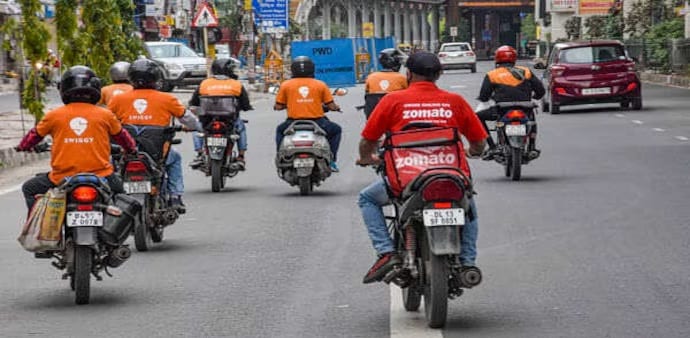
Delivery partners associated with food delivery, quick commerce and e-commerce platforms — including Swiggy, Zomato, Zepto, Blinkit, Amazon and Flipkart — have called for a nationwide strike on December 25 and December 31, 2025. The strike has been announced by the Telangana Gig and Platform Workers Union along with the Indian Federation of App-Based Transport Workers, and is expected to see participation across metros and large tier-2 cities.
Unions said the action was aimed at pressing platform companies to address what they describe as worsening earnings, long and unpredictable working hours, and rising safety risks, particularly during peak demand periods and festivals. Delivery workers form the backbone of last-mile logistics, and large-scale participation could affect same-day deliveries, grocery orders and restaurant deliveries during the year-end holiday season.
In a statement, the unions said workers are grappling with falling per-order payouts, unsafe delivery targets, arbitrary account or ID blocking, and the absence of basic welfare and social security protections. They also raised concerns over ultra-fast delivery models — such as 10-minute deliveries — which, they argue, compromise road safety and place excessive pressure on riders.
Among the key demands are transparent and fair pay structures that reflect actual working hours and operational costs, the withdrawal of ultra-fast delivery models, and an end to account suspensions without due process. Workers are also seeking improved safety gear, better accident insurance, assured work allocation without algorithmic discrimination, and mandatory rest breaks.
The unions have further called for stronger app-level grievance redressal mechanisms to address routing and payment failures, alongside broader job security measures including health insurance, accident coverage and pension benefits. According to a report by The Hindu, workers have also alleged being “blackmailed” or penalised for joining unions and organising collectively.
The strike comes shortly after the government implemented new labour reforms to formally recognise gig and platform workers. Under the updated Code on Social Security, which came into force on November 21, 2025, digital platforms are required to contribute 1-2% of their annual turnover to a Social Security Fund, capped at 5% of total payments made to gig workers. The fund is intended to support welfare schemes such as health insurance, accident cover and maternity benefits.
While several platform companies have welcomed the reforms as a step toward regulatory clarity, unions argue that the measures do not go far enough. They maintain that core issues around minimum pay, worker safety and algorithm-driven control of work allocation remain unresolved, necessitating stronger regulation and enforcement.
Food deliveries and e-commerce orders across major Indian cities could face disruptions later this month after gig workers across leading platforms announced an all-India strike, intensifying scrutiny of working conditions in the fast-growing app-based delivery economy.
Delivery partners associated with food delivery, quick commerce and e-commerce platforms — including Swiggy, Zomato, Zepto, Blinkit, Amazon and Flipkart — have called for a nationwide strike on December 25 and December 31, 2025. The strike has been announced by the Telangana Gig and Platform Workers Union along with the Indian Federation of App-Based Transport Workers, and is expected to see participation across metros and large tier-2 cities.
Unions said the action was aimed at pressing platform companies to address what they describe as worsening earnings, long and unpredictable working hours, and rising safety risks, particularly during peak demand periods and festivals. Delivery workers form the backbone of last-mile logistics, and large-scale participation could affect same-day deliveries, grocery orders and restaurant deliveries during the year-end holiday season.
In a statement, the unions said workers are grappling with falling per-order payouts, unsafe delivery targets, arbitrary account or ID blocking, and the absence of basic welfare and social security protections. They also raised concerns over ultra-fast delivery models — such as 10-minute deliveries — which, they argue, compromise road safety and place excessive pressure on riders.
Among the key demands are transparent and fair pay structures that reflect actual working hours and operational costs, the withdrawal of ultra-fast delivery models, and an end to account suspensions without due process. Workers are also seeking improved safety gear, better accident insurance, assured work allocation without algorithmic discrimination, and mandatory rest breaks.
The unions have further called for stronger app-level grievance redressal mechanisms to address routing and payment failures, alongside broader job security measures including health insurance, accident coverage and pension benefits. According to a report by The Hindu, workers have also alleged being “blackmailed” or penalised for joining unions and organising collectively.
The strike comes shortly after the government implemented new labour reforms to formally recognise gig and platform workers. Under the updated Code on Social Security, which came into force on November 21, 2025, digital platforms are required to contribute 1-2% of their annual turnover to a Social Security Fund, capped at 5% of total payments made to gig workers. The fund is intended to support welfare schemes such as health insurance, accident cover and maternity benefits.
While several platform companies have welcomed the reforms as a step toward regulatory clarity, unions argue that the measures do not go far enough. They maintain that core issues around minimum pay, worker safety and algorithm-driven control of work allocation remain unresolved, necessitating stronger regulation and enforcement.