
'One of the darkest chapters in Pakistan's human rights record': Assam CM flags Balochistan as Indo-Pak tensions intensify
Pakistani state agencies are accused of abducting, torturing, and killing activists, students, intellectuals, and ordinary citizens in Balochistan.
- May 2, 2025,
- Updated May 2, 2025 1:45 PM IST
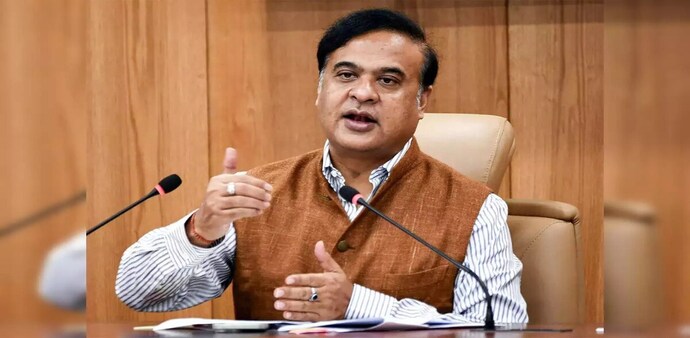
As tensions between India and Pakistan continue to intensify in the wake of the Pahalgam terror attack, Assam Chief Minister Himanta Biswa Sarma on Friday highlighted the Pakistan military establishment's "kill and dump policy" in Balochistan. Pakistani state agencies are accused of abducting, torturing, and killing activists, students, intellectuals, and ordinary citizens in Balochistan.
Taking to X (previously Twitter), Sarma wrote that the extrajudicial killings in Balochistan "remain one of the darkest chapters in Pakistan's human rights record". He further said: "This inhumane practice has become the very face of state-sponsored terror in Balochistan, where families, instead of hope, receive the battered and mutilated bodies of their loved ones."
In his post, he also mentioned Prime Minister Narendra Modi's 2016 Independence Day speech, wherein the latter mentioned Balochistan and Gilgit-Baltistan.
"Referring to the 'rivers of red' flowing through Balochistan, he gave voice to a people denied justice and dignity, affirming that India stands firmly with the oppressed and the silenced. His words carried not only moral clarity, but also international weight, bringing overdue attention to a crisis Pakistan has tried to keep hidden," the Assam CM wrote.
As per the data by The Voice for Baloch Missing Persons, over 20,000 disappearances have been reported from the region since the early 2000s, and hundreds of bodies have been recovered under suspicious and gruesome circumstances.
"Many show signs of severe torture, pointing to a systematic policy of silencing dissent through fear and violence. This is no longer a regional or political issue—it is a humanitarian emergency," Sarma signed off.
On April 22, five to six terrorists opened fire at the Baisaran Valley in Pahalgam, killing 26 people, most of whom were tourists. The Resistance Front (TRF), a proxy outfit of the Lashkar-e-Taiba (LeT), has taken responsibility for the attack.
Ever since, India has taken stringent steps against Pakistan, including the suspension of the Indus Waters Treaty (IWT) and downgrading diplomatic ties with Islamabad. Other steps taken by India against Pakistan include the expulsion of Pakistani military attachés from New Delhi and the closure of the Wagah-Attari border.
On Tuesday, PM Modi said that the Indian armed forces have "complete operational freedom" to decide on the mode, targets, and timing of India's response to the dastardly attack in Pahalgam.
The Prime Minister said this during a meeting with Defence Minister Rajnath Singh, National Security Advisor (NSA) Ajit Doval, Chief of Defence Staff (CDS) General Anil Chauhan, Army Chief General Upendra Dwivedi, Air Force Chief Air Marshal A.P. Singh, and Navy Chief Admiral Dinesh Tripathi.
As tensions between India and Pakistan continue to intensify in the wake of the Pahalgam terror attack, Assam Chief Minister Himanta Biswa Sarma on Friday highlighted the Pakistan military establishment's "kill and dump policy" in Balochistan. Pakistani state agencies are accused of abducting, torturing, and killing activists, students, intellectuals, and ordinary citizens in Balochistan.
Taking to X (previously Twitter), Sarma wrote that the extrajudicial killings in Balochistan "remain one of the darkest chapters in Pakistan's human rights record". He further said: "This inhumane practice has become the very face of state-sponsored terror in Balochistan, where families, instead of hope, receive the battered and mutilated bodies of their loved ones."
In his post, he also mentioned Prime Minister Narendra Modi's 2016 Independence Day speech, wherein the latter mentioned Balochistan and Gilgit-Baltistan.
"Referring to the 'rivers of red' flowing through Balochistan, he gave voice to a people denied justice and dignity, affirming that India stands firmly with the oppressed and the silenced. His words carried not only moral clarity, but also international weight, bringing overdue attention to a crisis Pakistan has tried to keep hidden," the Assam CM wrote.
As per the data by The Voice for Baloch Missing Persons, over 20,000 disappearances have been reported from the region since the early 2000s, and hundreds of bodies have been recovered under suspicious and gruesome circumstances.
"Many show signs of severe torture, pointing to a systematic policy of silencing dissent through fear and violence. This is no longer a regional or political issue—it is a humanitarian emergency," Sarma signed off.
On April 22, five to six terrorists opened fire at the Baisaran Valley in Pahalgam, killing 26 people, most of whom were tourists. The Resistance Front (TRF), a proxy outfit of the Lashkar-e-Taiba (LeT), has taken responsibility for the attack.
Ever since, India has taken stringent steps against Pakistan, including the suspension of the Indus Waters Treaty (IWT) and downgrading diplomatic ties with Islamabad. Other steps taken by India against Pakistan include the expulsion of Pakistani military attachés from New Delhi and the closure of the Wagah-Attari border.
On Tuesday, PM Modi said that the Indian armed forces have "complete operational freedom" to decide on the mode, targets, and timing of India's response to the dastardly attack in Pahalgam.
The Prime Minister said this during a meeting with Defence Minister Rajnath Singh, National Security Advisor (NSA) Ajit Doval, Chief of Defence Staff (CDS) General Anil Chauhan, Army Chief General Upendra Dwivedi, Air Force Chief Air Marshal A.P. Singh, and Navy Chief Admiral Dinesh Tripathi.