
Pak Army chief hid in bunker during Op Sindoor: Retd Indian officer says Asim Munir feared backlash
“The only Army chief who went into a bunker during the operations and elevated himself to a field marshal just to avoid the public scrutiny,” Dhillon told ANI.
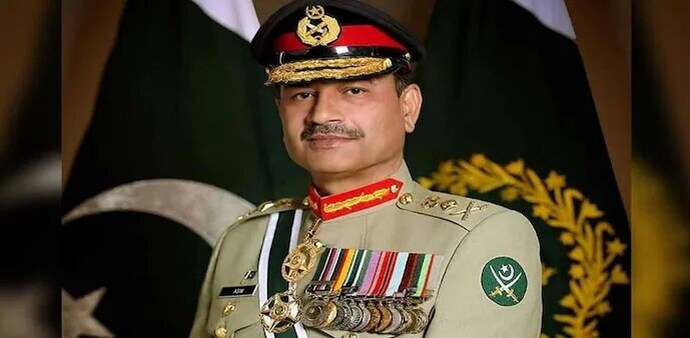
- Sep 13, 2025,
- Updated Sep 13, 2025 9:33 PM IST
Pakistan Army Chief Asim Munir hid in a bunker and quietly elevated himself to field marshal during India’s Operation Sindoor, retired Indian Army officer Lt Gen KJS “Tiny” Dhillon alleged Saturday.
Lt Gen (retd) KJS Dhillon has accused Pakistan Army Chief Asim Munir of taking refuge in a bunker and promoting himself to field marshal to evade public scrutiny during India’s high-stakes Operation Sindoor earlier this year.
“The only Army chief who went into a bunker during the operations and elevated himself to a field marshal just to avoid the public scrutiny,” Dhillon told ANI. He also criticized Munir’s political proximity, calling him “the only army chief to accompany the head of state to the SCO meeting” and “the only one to be invited by an American president for lunch.”
Munir was officially elevated to field marshal on May 20, just days after India carried out precision strikes on terror hubs across Pakistan and PoJK in response to the Pahalgam terror attack that killed 26 civilians. He is only the second in Pakistan’s history to hold the rank after former president Ayub Khan.
Operation Sindoor marked a sharp military escalation. India struck nine terror targets following the April 22 attack, downed five Pakistani fighter jets, and destroyed a large enemy aircraft nearly 300 km away, according to Air Chief Marshal AP Singh.
Dhillon, who previously led India’s Defence Intelligence Agency, emphasized the shift in global perception. “Now we are a new India... a military might, soon the third largest economy. When we act, people don’t question,” he said, drawing parallels with the U.S. raid that killed Osama bin Laden.
He elaborates on these claims in his new book, Operation Sindoor: The Untold Story of India’s Deep Strikes Inside Pakistan, where he outlines how India’s military response reshaped deterrence in the region.
Pakistan Army Chief Asim Munir hid in a bunker and quietly elevated himself to field marshal during India’s Operation Sindoor, retired Indian Army officer Lt Gen KJS “Tiny” Dhillon alleged Saturday.
Lt Gen (retd) KJS Dhillon has accused Pakistan Army Chief Asim Munir of taking refuge in a bunker and promoting himself to field marshal to evade public scrutiny during India’s high-stakes Operation Sindoor earlier this year.
“The only Army chief who went into a bunker during the operations and elevated himself to a field marshal just to avoid the public scrutiny,” Dhillon told ANI. He also criticized Munir’s political proximity, calling him “the only army chief to accompany the head of state to the SCO meeting” and “the only one to be invited by an American president for lunch.”
Munir was officially elevated to field marshal on May 20, just days after India carried out precision strikes on terror hubs across Pakistan and PoJK in response to the Pahalgam terror attack that killed 26 civilians. He is only the second in Pakistan’s history to hold the rank after former president Ayub Khan.
Operation Sindoor marked a sharp military escalation. India struck nine terror targets following the April 22 attack, downed five Pakistani fighter jets, and destroyed a large enemy aircraft nearly 300 km away, according to Air Chief Marshal AP Singh.
Dhillon, who previously led India’s Defence Intelligence Agency, emphasized the shift in global perception. “Now we are a new India... a military might, soon the third largest economy. When we act, people don’t question,” he said, drawing parallels with the U.S. raid that killed Osama bin Laden.
He elaborates on these claims in his new book, Operation Sindoor: The Untold Story of India’s Deep Strikes Inside Pakistan, where he outlines how India’s military response reshaped deterrence in the region.