
Pakistan used Chinese CCTV to spy on Indian military sites: Report
The ISI accessed live visual feeds for nearly three months from key defence sites and central armed police forces (CAPFs) installations across Punjab, Haryana, Rajasthan and Jammu and Kashmir
- Apr 13, 2026,
- Updated Apr 13, 2026 5:49 PM IST
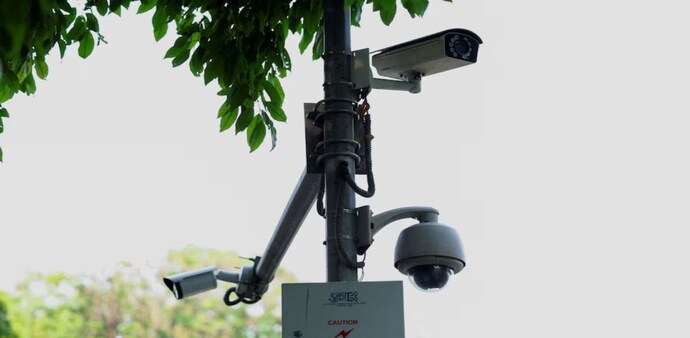
Pakistan's intelligence agency used compromised Chinese CCTV systems to monitor Indian military installations and security infrastructure, according to a report by Hindu BusinessLine.
The Inter-Services Intelligence (ISI) orchestrated a covert operation by infiltrating cameras installed near strategic assets in border states and Union Territories. The aim was to track military movements and logistics in real time and enable precise targeting in the event of a future conflict.
According to senior Delhi Police officials cited in the report, the ISI accessed live visual feeds for nearly three months from key defence sites and central armed police forces (CAPFs) installations across Punjab, Haryana, Rajasthan and Jammu and Kashmir.
The feeds were routed through nine solar-powered, SIM-enabled devices linked to EseeCloud, a widely used platform for surveillance systems.
EseeCloud, developed by a Chinese company, allegedly transmitted footage to data centres in China, from where it was relayed to handlers in Pakistan, the report said.
The findings emerged during an ongoing investigation by the Delhi Police Special Cell, which on Friday said it had busted an espionage module linked to the ISI and Babbar Khalsa International after arresting six people - three each from Punjab and Delhi.
Police recovered nine CCTV cameras installed near sensitive defence and security locations in areas close to the Pakistan border.
Additional Commissioner of Police (Special Cell) Pramod Singh Kushwaha said the installations were spread across multiple locations.
"These locations included Kapurthala, Jalandhar, Pathankot, Patiala and Moga in Punjab, as well as Ambala in Haryana, Kathua in Jammu and Kashmir, and Bikaner and Alwar in Rajasthan," he told reporters.
He said these areas were highly sensitive due to "regular troop movements, proximity to international borders, and the presence of key Army cantonments and logistical corridors".
Police said the devices were installed under the cover of monitoring truck movement in a transportation business. A Dubai-based Indian operator allegedly led the network, while an ISI handler known by the code name "Captain Rana" supervised the operation.
The group also used sleeper cells across Spain, Germany and Dubai to place the cameras at designated locations, the report said. The operation involved round-the-clock monitoring of the movements of personnel and equipment. The accused were funded through UPI accounts, partly using proceeds from smuggled weapons.
The report said the method is similar to tactics reportedly used by Israeli intelligence in Iran. Israeli agencies reportedly hacked Tehran's traffic camera network over several years, gaining access to live surveillance feeds to track movements of senior officials, including Supreme Leader Ayatollah Ali Khamenei. The footage was transmitted to external servers and combined with other intelligence inputs to build detailed "pattern of life" profiles, enabling precise targeting.
Pakistan's intelligence agency used compromised Chinese CCTV systems to monitor Indian military installations and security infrastructure, according to a report by Hindu BusinessLine.
The Inter-Services Intelligence (ISI) orchestrated a covert operation by infiltrating cameras installed near strategic assets in border states and Union Territories. The aim was to track military movements and logistics in real time and enable precise targeting in the event of a future conflict.
According to senior Delhi Police officials cited in the report, the ISI accessed live visual feeds for nearly three months from key defence sites and central armed police forces (CAPFs) installations across Punjab, Haryana, Rajasthan and Jammu and Kashmir.
The feeds were routed through nine solar-powered, SIM-enabled devices linked to EseeCloud, a widely used platform for surveillance systems.
EseeCloud, developed by a Chinese company, allegedly transmitted footage to data centres in China, from where it was relayed to handlers in Pakistan, the report said.
The findings emerged during an ongoing investigation by the Delhi Police Special Cell, which on Friday said it had busted an espionage module linked to the ISI and Babbar Khalsa International after arresting six people - three each from Punjab and Delhi.
Police recovered nine CCTV cameras installed near sensitive defence and security locations in areas close to the Pakistan border.
Additional Commissioner of Police (Special Cell) Pramod Singh Kushwaha said the installations were spread across multiple locations.
"These locations included Kapurthala, Jalandhar, Pathankot, Patiala and Moga in Punjab, as well as Ambala in Haryana, Kathua in Jammu and Kashmir, and Bikaner and Alwar in Rajasthan," he told reporters.
He said these areas were highly sensitive due to "regular troop movements, proximity to international borders, and the presence of key Army cantonments and logistical corridors".
Police said the devices were installed under the cover of monitoring truck movement in a transportation business. A Dubai-based Indian operator allegedly led the network, while an ISI handler known by the code name "Captain Rana" supervised the operation.
The group also used sleeper cells across Spain, Germany and Dubai to place the cameras at designated locations, the report said. The operation involved round-the-clock monitoring of the movements of personnel and equipment. The accused were funded through UPI accounts, partly using proceeds from smuggled weapons.
The report said the method is similar to tactics reportedly used by Israeli intelligence in Iran. Israeli agencies reportedly hacked Tehran's traffic camera network over several years, gaining access to live surveillance feeds to track movements of senior officials, including Supreme Leader Ayatollah Ali Khamenei. The footage was transmitted to external servers and combined with other intelligence inputs to build detailed "pattern of life" profiles, enabling precise targeting.