
'Pay better, build demand - the Henry Ford way': Ex-Planning Commission member's growth mantra for India
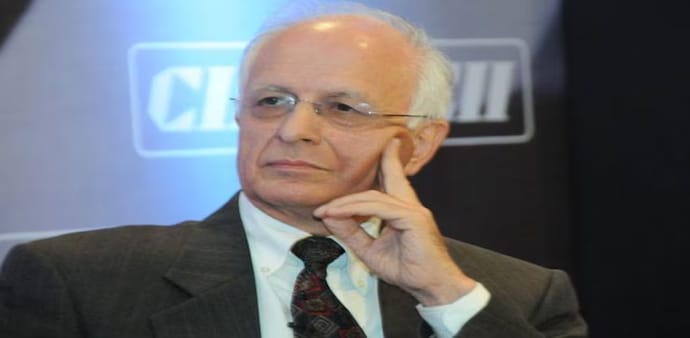
Arun Maira, former member of the Planning Commission, points to the case of Henry Ford I, who understood the systemic loop connecting wages, demand, and growth
- Nov 2, 2025,
- Updated Nov 2, 2025 4:00 PM IST
India doesn't just need more factories - it needs fatter paychecks. That's one of the policy prescriptions in a new book by Arun Maira, former member of the Planning Commission (now Niti Aayog), who argues that Henry Ford's higher-wage playbook offers a model for the Indian economy.
"The primary sub-system of industrial growth is the system connecting investment, demand, and incomes," Maira writes in his new book - 'Reimagining India's Economy: The Road to a More Equitable Society'. "Investments will be made when there is an expectation of demand for what will be produced by the investment. Demand will arise along with incomes. Incomes will grow if people have jobs that provide good wages."
Henry Ford's playbook for higher growth Maira points to the case of Henry Ford I, who understood the systemic loop connecting wages, demand, and growth. "When he doubled the wages of workers in his factories (mostly immigrant, unskilled workers), his competitors protested that he was spoiling the labour market. Ford said he wanted to increase demand for his cars, so he wanted to pay workers more so that they could afford to buy the cars," he notes.
Ford's approach was not just about generosity but innovation. The cars had to be affordable, even with the higher wages. "So, his innovations were the simplicity of the car (the legendary Ford Model T) and the design of a production system (the assembly line) that required workers to perform simple, repetitive tasks, and enabled the total cost of the cars to be lower even though the workers were paid higher wages," he writes.
According to Maira, Ford's system became a self-sustaining cycle of growth: innovation in production design enabled higher wages without increasing overall costs; higher wages increased demand, which led to more investments and job creation.
"Expansion of demand in the economy induced further investments to expand production. Thus, the automobile industry expanded and, with it, jobs. It became a major engine for the growth of the US economy," he adds.
The former policymaker believes India can replicate this cycle by similar innovation-driven growth, particularly in its rural economy. "Ford's innovative engine of growth stirred up internal demand, leading to profitable investments, with growth of jobs and incomes within the economy. It is a model for India's rural economy," he says.
Maira earlier served as chairman of Boston Consulting Group, India, and spent over two decades with the Tata Group, including a stint as executive director on the board of Tata Motors in the 1980s.
He argues that innovations in enterprise design and production methods can engage more people in rural India - producing value-added goods and services locally. This, he says, will help rural economies grow and create more jobs.
"Growth of rural demand can increase demand for products from urban factories, thus providing a fillip for investments and jobs in urban areas too," he notes, citing the 2007–2012 period when rural Indian demand boosted sales of two-wheelers and other consumer products even as the global economy remained in a slump.
While Ford's model relies on internal demand, Maira acknowledges that India, like many Asian economies, has often looked outward for growth. "Stirring up demand within the economy as the engine of growth is more difficult than tapping into demand outside the economy to provide the impetus for investments and growth," he writes. This, he adds, is the logic of "export-led growth" that powered economies such as China.
Ease of Doing Business: A long way to go
To sustain industrialisation, Maira says India must enhance its technological capacity. "Effort is required to convert the investment into actual output," he writes. Hence, "smart investors also assess the difficulties in setting up and operating enterprises in the country."
This is why the World Bank's "Ease of Doing Business" framework and the government's push to simplify regulations are critical. Yet, despite India's large domestic market and pool of manpower, "India still has a long way to go to make it easy to 'do business'," he says. "Regulations are cumbersome for investors. And the implementation of regulations by inefficient and even corrupt bureaucracies makes life even more difficult for investors and managers."
He points out that "government departments continue to work in silos," making it hard for businesses to obtain timely approvals. "Reduction of regulations is easier than improvement of the quality and implementation of regulations," Maira writes. Improving regulation, he argues, "requires consensus amongst contentious stakeholders, as well as reforming administration - both of which are difficult."
As a result, governments often opt for easier, populist fixes. "To attract more investments, governments are tempted to simply reduce regulations for investors and enterprises. However, this easy fix results in the throwing of the baby (good regulation) out with the bathwater (bad administration of regulations)."
Maira warns that while deregulation may attract investments in the short term, its long-term consequences can destabilise systems. "This has been seen in the financial system of the US, where the tussle between the need to release, as well as to curb, the 'animal spirits' in the financial sector continues."
Hire and fire policy could backfire
The World Bank's own framework, Maira notes, recognised early on that reducing labour regulations to make it easy to 'hire and fire' could backfire. "Merely reducing labour regulations, to make it easy to 'hire and fire', would reduce incentives for employers to invest in the skills of workers. Moreover, societal tensions, caused by strife between workers and employers, could make the country a less attractive place for investors," he warns.
The solution, according to him, lies in balanced reforms. "Governments must focus on consultations with stakeholders to improve labour regulations to make the country a sustainably attractive place in which to produce one's products."
India's industrial policy, Maira adds, should prioritise job creation over mere investment numbers. "Keeping in mind that the principal aim of an industrial policy is to generate more employment for people in India, the government should encourage investments by both foreign and domestic investors that create more work/jobs in India," he writes. "Therefore, concessions from regulations and/or subsidies provided to attract investments should be linked more to the number of jobs created, than to the amounts invested as they presently are."
India doesn't just need more factories - it needs fatter paychecks. That's one of the policy prescriptions in a new book by Arun Maira, former member of the Planning Commission (now Niti Aayog), who argues that Henry Ford's higher-wage playbook offers a model for the Indian economy.
"The primary sub-system of industrial growth is the system connecting investment, demand, and incomes," Maira writes in his new book - 'Reimagining India's Economy: The Road to a More Equitable Society'. "Investments will be made when there is an expectation of demand for what will be produced by the investment. Demand will arise along with incomes. Incomes will grow if people have jobs that provide good wages."
Henry Ford's playbook for higher growth Maira points to the case of Henry Ford I, who understood the systemic loop connecting wages, demand, and growth. "When he doubled the wages of workers in his factories (mostly immigrant, unskilled workers), his competitors protested that he was spoiling the labour market. Ford said he wanted to increase demand for his cars, so he wanted to pay workers more so that they could afford to buy the cars," he notes.
Ford's approach was not just about generosity but innovation. The cars had to be affordable, even with the higher wages. "So, his innovations were the simplicity of the car (the legendary Ford Model T) and the design of a production system (the assembly line) that required workers to perform simple, repetitive tasks, and enabled the total cost of the cars to be lower even though the workers were paid higher wages," he writes.
According to Maira, Ford's system became a self-sustaining cycle of growth: innovation in production design enabled higher wages without increasing overall costs; higher wages increased demand, which led to more investments and job creation.
"Expansion of demand in the economy induced further investments to expand production. Thus, the automobile industry expanded and, with it, jobs. It became a major engine for the growth of the US economy," he adds.
The former policymaker believes India can replicate this cycle by similar innovation-driven growth, particularly in its rural economy. "Ford's innovative engine of growth stirred up internal demand, leading to profitable investments, with growth of jobs and incomes within the economy. It is a model for India's rural economy," he says.
Maira earlier served as chairman of Boston Consulting Group, India, and spent over two decades with the Tata Group, including a stint as executive director on the board of Tata Motors in the 1980s.
He argues that innovations in enterprise design and production methods can engage more people in rural India - producing value-added goods and services locally. This, he says, will help rural economies grow and create more jobs.
"Growth of rural demand can increase demand for products from urban factories, thus providing a fillip for investments and jobs in urban areas too," he notes, citing the 2007–2012 period when rural Indian demand boosted sales of two-wheelers and other consumer products even as the global economy remained in a slump.
While Ford's model relies on internal demand, Maira acknowledges that India, like many Asian economies, has often looked outward for growth. "Stirring up demand within the economy as the engine of growth is more difficult than tapping into demand outside the economy to provide the impetus for investments and growth," he writes. This, he adds, is the logic of "export-led growth" that powered economies such as China.
Ease of Doing Business: A long way to go
To sustain industrialisation, Maira says India must enhance its technological capacity. "Effort is required to convert the investment into actual output," he writes. Hence, "smart investors also assess the difficulties in setting up and operating enterprises in the country."
This is why the World Bank's "Ease of Doing Business" framework and the government's push to simplify regulations are critical. Yet, despite India's large domestic market and pool of manpower, "India still has a long way to go to make it easy to 'do business'," he says. "Regulations are cumbersome for investors. And the implementation of regulations by inefficient and even corrupt bureaucracies makes life even more difficult for investors and managers."
He points out that "government departments continue to work in silos," making it hard for businesses to obtain timely approvals. "Reduction of regulations is easier than improvement of the quality and implementation of regulations," Maira writes. Improving regulation, he argues, "requires consensus amongst contentious stakeholders, as well as reforming administration - both of which are difficult."
As a result, governments often opt for easier, populist fixes. "To attract more investments, governments are tempted to simply reduce regulations for investors and enterprises. However, this easy fix results in the throwing of the baby (good regulation) out with the bathwater (bad administration of regulations)."
Maira warns that while deregulation may attract investments in the short term, its long-term consequences can destabilise systems. "This has been seen in the financial system of the US, where the tussle between the need to release, as well as to curb, the 'animal spirits' in the financial sector continues."
Hire and fire policy could backfire
The World Bank's own framework, Maira notes, recognised early on that reducing labour regulations to make it easy to 'hire and fire' could backfire. "Merely reducing labour regulations, to make it easy to 'hire and fire', would reduce incentives for employers to invest in the skills of workers. Moreover, societal tensions, caused by strife between workers and employers, could make the country a less attractive place for investors," he warns.
The solution, according to him, lies in balanced reforms. "Governments must focus on consultations with stakeholders to improve labour regulations to make the country a sustainably attractive place in which to produce one's products."
India's industrial policy, Maira adds, should prioritise job creation over mere investment numbers. "Keeping in mind that the principal aim of an industrial policy is to generate more employment for people in India, the government should encourage investments by both foreign and domestic investors that create more work/jobs in India," he writes. "Therefore, concessions from regulations and/or subsidies provided to attract investments should be linked more to the number of jobs created, than to the amounts invested as they presently are."