
Pharma tariffs may rise as high as 250%: Donald Trump
Donald Trump said: “We’ll start with a small tariff on pharmaceuticals, but in a year or so, it will rise to 150%, and then to 250%. We want pharmaceuticals made in America.”
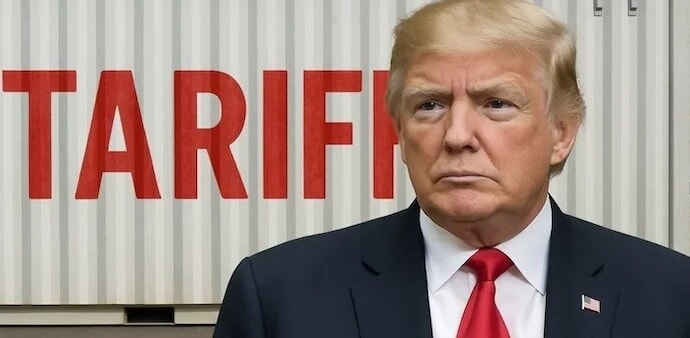
- Aug 5, 2025,
- Updated Aug 5, 2025 8:32 PM IST
In a sharp escalation of trade tensions, US President Donald Trump on Tuesday announced plans to slap aggressive new tariffs on pharmaceutical imports and hinted at fresh duties on semiconductors in the coming days. He also renewed criticism of India, warning that tariffs on Indian goods could rise “very substantially” within 24 hours due to New Delhi’s continued oil trade with Russia.
Speaking in an interview with CNBC, Trump said: “We’ll start with a small tariff on pharmaceuticals, but in a year or so, it will rise to 150%, and then to 250%. We want pharmaceuticals made in America.”
While he did not disclose the initial tariff rate, Trump made it clear that the long-term goal is to force pharmaceutical manufacturing back into the United States. He also revealed that new tariffs targeting semiconductors and chips would be announced “within the next week or so,” though he offered no further details.
This comes amid Trump’s broader campaign to reduce U.S. reliance on foreign supply chains. The proposed tariff spikes, especially on essential goods like medicines, could significantly impact global producers and exporters.
Separately, Trump took aim at India, accusing it of fueling Russia’s war machine by continuing to buy and profit from discounted Russian crude. “They’re fueling the war machine, and if they’re going to do that, then I’m not going to be happy,” Trump said. “India’s tariffs are too high — we’re going to raise ours beyond 25%, very substantially, within the next 24 hours.”
The warning marks the second time in as many days that Trump has accused India of “reselling Russian oil for massive profits,” a claim that has sparked outrage in New Delhi.
India’s Foreign Ministry responded sharply, stating that the US and EU were unfairly singling out India while continuing their own trade with Russia. “It is revealing that the very nations criticising India are themselves indulging in trade with Russia,” the ministry said, pointing to massive LNG imports by the EU and US purchases of Russian uranium and chemicals.
The statement added that trade with Russia is not illegal and that India does not recognise unilateral sanctions imposed by other regions like the EU.
India imported around 1.75 million barrels of crude oil per day from Russia between January and June 2025 — a slight increase from the previous year. Meanwhile, Indian refiner Nayara Energy, which is partly owned by Russian energy giant Rosneft, has faced EU sanctions as part of the West’s broader crackdown on Russian oil.
Ajay Srivastava, founder of the Global Trade Research Initiative, said India’s exports to the U.S. could fall by up to 30% in the current fiscal year, dropping from $86.5 billion to $60.6 billion.
“If these tariffs go through, it will hit India hard across sectors — especially textiles, pharma, and IT services,” Srivastava noted.
In a sharp escalation of trade tensions, US President Donald Trump on Tuesday announced plans to slap aggressive new tariffs on pharmaceutical imports and hinted at fresh duties on semiconductors in the coming days. He also renewed criticism of India, warning that tariffs on Indian goods could rise “very substantially” within 24 hours due to New Delhi’s continued oil trade with Russia.
Speaking in an interview with CNBC, Trump said: “We’ll start with a small tariff on pharmaceuticals, but in a year or so, it will rise to 150%, and then to 250%. We want pharmaceuticals made in America.”
While he did not disclose the initial tariff rate, Trump made it clear that the long-term goal is to force pharmaceutical manufacturing back into the United States. He also revealed that new tariffs targeting semiconductors and chips would be announced “within the next week or so,” though he offered no further details.
This comes amid Trump’s broader campaign to reduce U.S. reliance on foreign supply chains. The proposed tariff spikes, especially on essential goods like medicines, could significantly impact global producers and exporters.
Separately, Trump took aim at India, accusing it of fueling Russia’s war machine by continuing to buy and profit from discounted Russian crude. “They’re fueling the war machine, and if they’re going to do that, then I’m not going to be happy,” Trump said. “India’s tariffs are too high — we’re going to raise ours beyond 25%, very substantially, within the next 24 hours.”
The warning marks the second time in as many days that Trump has accused India of “reselling Russian oil for massive profits,” a claim that has sparked outrage in New Delhi.
India’s Foreign Ministry responded sharply, stating that the US and EU were unfairly singling out India while continuing their own trade with Russia. “It is revealing that the very nations criticising India are themselves indulging in trade with Russia,” the ministry said, pointing to massive LNG imports by the EU and US purchases of Russian uranium and chemicals.
The statement added that trade with Russia is not illegal and that India does not recognise unilateral sanctions imposed by other regions like the EU.
India imported around 1.75 million barrels of crude oil per day from Russia between January and June 2025 — a slight increase from the previous year. Meanwhile, Indian refiner Nayara Energy, which is partly owned by Russian energy giant Rosneft, has faced EU sanctions as part of the West’s broader crackdown on Russian oil.
Ajay Srivastava, founder of the Global Trade Research Initiative, said India’s exports to the U.S. could fall by up to 30% in the current fiscal year, dropping from $86.5 billion to $60.6 billion.
“If these tariffs go through, it will hit India hard across sectors — especially textiles, pharma, and IT services,” Srivastava noted.