
Pilot action under scrutiny in deadly Air India 787 crash; probe nears key conclusion: Report
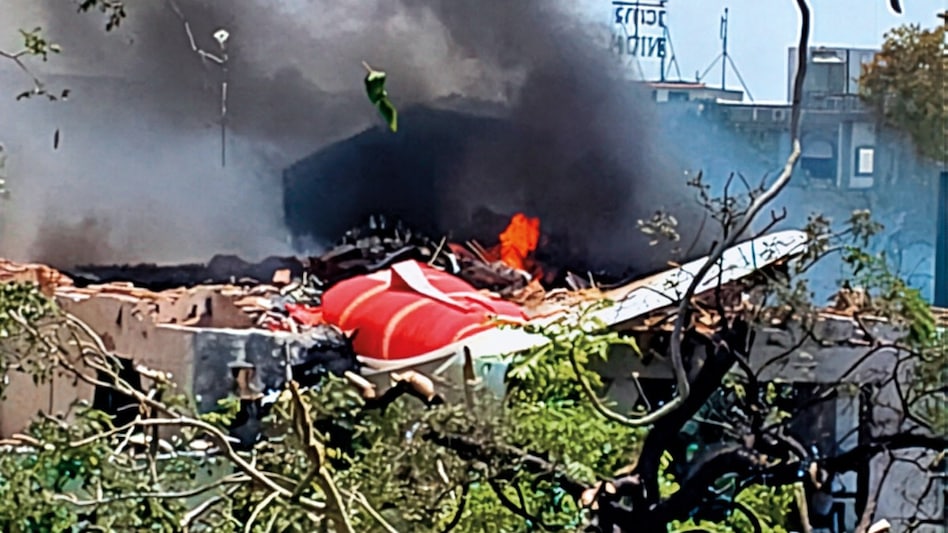
The crash on June 12, which claimed 241 of the 242 lives onboard — including former Gujarat Chief Minister Vijay Rupani — occurred just minutes after takeoff from Ahmedabad’s Sardar Vallabhbhai Patel International Airport.
- Jan 30, 2026,
- Updated Jan 30, 2026 9:21 PM IST
India’s investigation into last year’s catastrophic crash of an Air India Boeing 787-8 Dreamliner is increasingly focusing on deliberate pilot action as the probable cause, according to a Bloomberg report. The shift marks a significant change in the probe's direction, as investigators previously appeared resistant to the theory of pilot involvement.
The crash on June 12, which claimed 241 of the 242 lives onboard — including former Gujarat Chief Minister Vijay Rupani — occurred just minutes after takeoff from Ahmedabad’s Sardar Vallabhbhai Patel International Airport. The aircraft, operating as Flight AI171 to London, plunged into a hostel complex at BJ Medical College in Meghani Nagar, making it one of India’s worst aviation disasters in recent history.
According to individuals familiar with the investigation, Indian authorities have ruled out mechanical failure and found no evidence of sabotage, the report said citing sources. This has left pilot action as the strongest line of inquiry, although the findings have not been made public, it added.
Business Today was unable to verify the latest development in the case independently.
The aircraft was commanded by Captain Sumeet Sabharwal, 56, a veteran with more than 15,600 flight hours. First Officer Clive Kunder, who had logged 3,403 flying hours, served as second in command. Leaked information from earlier stages of the investigation suggested that the captain may have intentionally shut off engine fuel flow, raising suspicions of a potential murder-suicide. A preliminary assessment by US investigators also indicated no mechanical fault with the aircraft.
Despite mounting evidence, resistance to the pilot involvement theory has reportedly persisted — both within the investigative authorities and among the families of the deceased pilots.
The probe has also triggered controversy beyond the cockpit. In January, the Aircraft Accident Investigation Bureau (AAIB) summoned Captain Varun Anand — nephew of the late Captain Sabharwal and a current Air India pilot — for questioning. The Federation of Indian Pilots (FIP) objected strongly, calling the summons “wholly unwarranted” and an act of harassment. The FIP said the notice lacked clarity on the statutory grounds, the purpose of the inquiry, and Anand’s capacity in the matter. A legal notice was sent to the AAIB in response.
In the wake of the crash, India’s aviation regulator, the Directorate General of Civil Aviation (DGCA), ordered additional safety inspections of Air India’s Dreamliner fleet. Air India’s parent company, the Tata Group, announced a compensation of ₹1.25 crore to the families of those killed.
Meanwhile, the Supreme Court has agreed to hear a Public Interest Litigation (PIL) seeking a court-monitored probe. Filed by an NGO, the petition alleges that the official investigation violates fundamental rights and questions the adequacy of the probe, raising broader concerns about the Boeing 787 fleet's safety. The AAIB’s investigation remains ongoing.
(The copy will be updated with responses from the concerned parties as when they are received)
India’s investigation into last year’s catastrophic crash of an Air India Boeing 787-8 Dreamliner is increasingly focusing on deliberate pilot action as the probable cause, according to a Bloomberg report. The shift marks a significant change in the probe's direction, as investigators previously appeared resistant to the theory of pilot involvement.
The crash on June 12, which claimed 241 of the 242 lives onboard — including former Gujarat Chief Minister Vijay Rupani — occurred just minutes after takeoff from Ahmedabad’s Sardar Vallabhbhai Patel International Airport. The aircraft, operating as Flight AI171 to London, plunged into a hostel complex at BJ Medical College in Meghani Nagar, making it one of India’s worst aviation disasters in recent history.
According to individuals familiar with the investigation, Indian authorities have ruled out mechanical failure and found no evidence of sabotage, the report said citing sources. This has left pilot action as the strongest line of inquiry, although the findings have not been made public, it added.
Business Today was unable to verify the latest development in the case independently.
The aircraft was commanded by Captain Sumeet Sabharwal, 56, a veteran with more than 15,600 flight hours. First Officer Clive Kunder, who had logged 3,403 flying hours, served as second in command. Leaked information from earlier stages of the investigation suggested that the captain may have intentionally shut off engine fuel flow, raising suspicions of a potential murder-suicide. A preliminary assessment by US investigators also indicated no mechanical fault with the aircraft.
Despite mounting evidence, resistance to the pilot involvement theory has reportedly persisted — both within the investigative authorities and among the families of the deceased pilots.
The probe has also triggered controversy beyond the cockpit. In January, the Aircraft Accident Investigation Bureau (AAIB) summoned Captain Varun Anand — nephew of the late Captain Sabharwal and a current Air India pilot — for questioning. The Federation of Indian Pilots (FIP) objected strongly, calling the summons “wholly unwarranted” and an act of harassment. The FIP said the notice lacked clarity on the statutory grounds, the purpose of the inquiry, and Anand’s capacity in the matter. A legal notice was sent to the AAIB in response.
In the wake of the crash, India’s aviation regulator, the Directorate General of Civil Aviation (DGCA), ordered additional safety inspections of Air India’s Dreamliner fleet. Air India’s parent company, the Tata Group, announced a compensation of ₹1.25 crore to the families of those killed.
Meanwhile, the Supreme Court has agreed to hear a Public Interest Litigation (PIL) seeking a court-monitored probe. Filed by an NGO, the petition alleges that the official investigation violates fundamental rights and questions the adequacy of the probe, raising broader concerns about the Boeing 787 fleet's safety. The AAIB’s investigation remains ongoing.
(The copy will be updated with responses from the concerned parties as when they are received)