
PM Modi shares Gujarat water governance model, highlights community participation
The article traces India’s water-governance journey over the past 25 years, beginning with reforms undertaken in Gujarat between 2001 and 2014
- Oct 7, 2026,
- Updated Oct 7, 2026 7:55 AM IST
Prime Minister Narendra Modi on Tuesday highlighted India’s evolving water-governance model, saying the country’s experience could offer useful lessons to nations across the Global South.
Sharing an article published in The Indian Express, Modi said water security goes beyond infrastructure and depends on planning, strong local institutions and community participation.
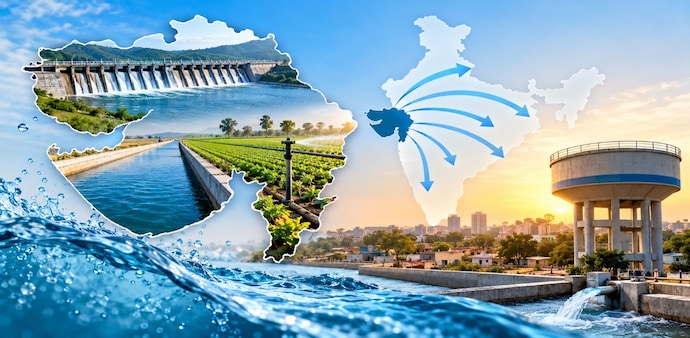
The article, titled “From India to Global South, a Gujarat water-governance model,” examines how water reforms initiated in Gujarat developed into a broader national approach to water management.
READ THIS: Coconut shells, rice husks and more: How 4 Indian startups are giving farm waste a new life
Gujarat as a Laboratory for Water Reforms
The article traces India’s water-governance journey over the past 25 years, beginning with reforms undertaken in Gujarat between 2001 and 2014. It argues that these initiatives provided a foundation for several large-scale programmes implemented across India after 2014.
The national initiatives include the Swachh Bharat Mission, Jal Jeevan Mission, Jal Shakti Abhiyan, Namami Gange, Atal Bhujal Yojana and Per Drop More Crop. Together, these programmes have focused on drinking-water access, sanitation, river rejuvenation, groundwater management and water conservation.
Four Key Lessons for Water Security
The case study highlighted in the article identifies four broad lessons for countries seeking to strengthen water security.
The first is to prioritise governance alongside infrastructure. The article highlights the “4 Ps” political leadership, public financing, partnerships and people’s participation as important components of successful water management.
The second lesson is to manage water resources and water services together. Building pipelines, canals and other infrastructure is not enough if sustainable water sources are not available. The approach calls for long-term planning that considers rising urban, industrial and agricultural demand.
Community Participation at the Centre
The third lesson focuses on community ownership. Institutions such as Pani Samitis can help local communities participate in water-related decision-making and management.
The Gujarat experience also highlighted the role of Chintan Shivirs, which brought stakeholders together to identify challenges and develop practical solutions. Such approaches have subsequently influenced water governance at the national level.
Scaling Up for the Global South
The fourth lesson is the need to think and implement at scale. The article notes that the world remains off track on the UN’s Sustainable Development Goal 6, which seeks universal access to safe water and sanitation by 2030.
India’s experience with programmes such as Jal Jeevan Mission, the article argues, demonstrates how political leadership, financing, institutional capacity and community participation can be combined to deliver large-scale reforms.
Prime Minister Narendra Modi on Tuesday highlighted India’s evolving water-governance model, saying the country’s experience could offer useful lessons to nations across the Global South.
Sharing an article published in The Indian Express, Modi said water security goes beyond infrastructure and depends on planning, strong local institutions and community participation.
The article, titled “From India to Global South, a Gujarat water-governance model,” examines how water reforms initiated in Gujarat developed into a broader national approach to water management.
READ THIS: Coconut shells, rice husks and more: How 4 Indian startups are giving farm waste a new life
Gujarat as a Laboratory for Water Reforms
The article traces India’s water-governance journey over the past 25 years, beginning with reforms undertaken in Gujarat between 2001 and 2014. It argues that these initiatives provided a foundation for several large-scale programmes implemented across India after 2014.
The national initiatives include the Swachh Bharat Mission, Jal Jeevan Mission, Jal Shakti Abhiyan, Namami Gange, Atal Bhujal Yojana and Per Drop More Crop. Together, these programmes have focused on drinking-water access, sanitation, river rejuvenation, groundwater management and water conservation.
Four Key Lessons for Water Security
The case study highlighted in the article identifies four broad lessons for countries seeking to strengthen water security.
The first is to prioritise governance alongside infrastructure. The article highlights the “4 Ps” political leadership, public financing, partnerships and people’s participation as important components of successful water management.
The second lesson is to manage water resources and water services together. Building pipelines, canals and other infrastructure is not enough if sustainable water sources are not available. The approach calls for long-term planning that considers rising urban, industrial and agricultural demand.
Community Participation at the Centre
The third lesson focuses on community ownership. Institutions such as Pani Samitis can help local communities participate in water-related decision-making and management.
The Gujarat experience also highlighted the role of Chintan Shivirs, which brought stakeholders together to identify challenges and develop practical solutions. Such approaches have subsequently influenced water governance at the national level.
Scaling Up for the Global South
The fourth lesson is the need to think and implement at scale. The article notes that the world remains off track on the UN’s Sustainable Development Goal 6, which seeks universal access to safe water and sanitation by 2030.
India’s experience with programmes such as Jal Jeevan Mission, the article argues, demonstrates how political leadership, financing, institutional capacity and community participation can be combined to deliver large-scale reforms.