
'Political leaders aren't required to dictate battlefield responses': Brahma Chellaney on Naravane row
'Civilian control of the military does not entail political micro-management of battlefield decisions,' says Chellaney
- Feb 10, 2026,
- Updated Feb 10, 2026 4:19 PM IST
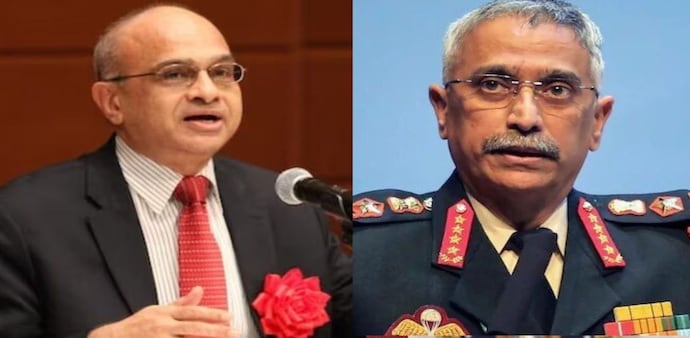
Amid a political storm over a passage in former Army chief MM Naravane's unreleased memoir, geostrategist Brahma Chellaney has questioned the premise of the controversy. He argued that civilian authority does not extend to real-time battlefield micro-management.
In a detailed note, Chellaney said he had publicly urged the government to clear former Naravane's manuscript so that his memoir can finally be released. "That appeal stands," he said, but added that he remained "genuinely puzzled by the political controversy" over a particular episode described in the book, relating to Chinese tanks advancing toward Indian positions at Rechin La on the Kailash Heights in August 2020.
According to Naravane's account, Chellaney wrote, the Chinese advance led the Army chief to seek urgent guidance from the Defence Minister and the National Security Adviser. The political leadership, he said, authorised Naravane to respond as he judged appropriate, conveying the direction, "Jo uchit samjho, woh karo" ("Do what you think is fit").
Despite being granted what Chellaney described as "carte blanche", Naravane portrays the episode as an abdication of responsibility by the government. Naravane, it appears, argued that the political leadership should have specified the precise response he was to undertake. "That claim deserves closer scrutiny," Chellaney wrote, especially given Naravane's own record during the border crisis with China.
Encroachments and messaging during the Ladakh crisis
Chellaney, a professor of strategic studies at the Centre for Policy Research, noted that the serial Chinese encroachments across multiple points in eastern Ladakh during April-May 2020 occurred on Naravane's watch as Army chief. He described these as "not minor incursions but coordinated intrusions that fundamentally altered the military status quo along the Line of Actual Control."
Yet, he pointed out, no senior Army officer was publicly held accountable "for what was a grave lapse." He was equally critical of Naravane's messaging at the time. From early May 2020, the professor wrote, Naravane "repeatedly downplayed the scope and intent of Chinese actions."
"On May 14, 2020, he attributed troop clashes around several encroached areas to 'aggressive behavior by both sides', creating a false equivalence between the aggressor and Indian forces," Chellaney said.
Naravane also described the confrontations in Ladakh and Sikkim as arising from 'differing perceptions' of the LAC alignment, effectively portraying what Chellaney characterized as 'deliberate territorial advances as cartographic misunderstandings.' At another point, he asserted that the incidents were "neither co-related nor do they have any connection with other global or local activities."
"Such statements mattered," Chellaney wrote. They "did not merely reflect diplomatic caution; they publicly diluted the clarity of India's position at a moment of acute military crisis."
Rechin La and the question of command
It is in this context, the geostrategist argued, that Naravane's account of the Rechin La episode should be evaluated. Chellaney said that Naravane is suggesting that the political leadership erred by granting him operational discretion rather than prescribing a specific military response.
"This is an odd contention," the professor wrote. "Civilian control of the military does not entail political micro-management of battlefield decisions."
On the contrary, he argued, "professional armed forces are entrusted with operational judgment precisely so that political leaders are not required to dictate tactical responses in real time."
Delegation of authority during a crisis, he added, "is not a failure of leadership; it is a recognition of the military's professional domain."
"Does an Army chief require explicit political instructions on how to counter localized enemy aggression on the ground? Or is the exercise of professional military judgment - within clearly articulated political objectives - the very essence of command?" he asked.
Amid a political storm over a passage in former Army chief MM Naravane's unreleased memoir, geostrategist Brahma Chellaney has questioned the premise of the controversy. He argued that civilian authority does not extend to real-time battlefield micro-management.
In a detailed note, Chellaney said he had publicly urged the government to clear former Naravane's manuscript so that his memoir can finally be released. "That appeal stands," he said, but added that he remained "genuinely puzzled by the political controversy" over a particular episode described in the book, relating to Chinese tanks advancing toward Indian positions at Rechin La on the Kailash Heights in August 2020.
According to Naravane's account, Chellaney wrote, the Chinese advance led the Army chief to seek urgent guidance from the Defence Minister and the National Security Adviser. The political leadership, he said, authorised Naravane to respond as he judged appropriate, conveying the direction, "Jo uchit samjho, woh karo" ("Do what you think is fit").
Despite being granted what Chellaney described as "carte blanche", Naravane portrays the episode as an abdication of responsibility by the government. Naravane, it appears, argued that the political leadership should have specified the precise response he was to undertake. "That claim deserves closer scrutiny," Chellaney wrote, especially given Naravane's own record during the border crisis with China.
Encroachments and messaging during the Ladakh crisis
Chellaney, a professor of strategic studies at the Centre for Policy Research, noted that the serial Chinese encroachments across multiple points in eastern Ladakh during April-May 2020 occurred on Naravane's watch as Army chief. He described these as "not minor incursions but coordinated intrusions that fundamentally altered the military status quo along the Line of Actual Control."
Yet, he pointed out, no senior Army officer was publicly held accountable "for what was a grave lapse." He was equally critical of Naravane's messaging at the time. From early May 2020, the professor wrote, Naravane "repeatedly downplayed the scope and intent of Chinese actions."
"On May 14, 2020, he attributed troop clashes around several encroached areas to 'aggressive behavior by both sides', creating a false equivalence between the aggressor and Indian forces," Chellaney said.
Naravane also described the confrontations in Ladakh and Sikkim as arising from 'differing perceptions' of the LAC alignment, effectively portraying what Chellaney characterized as 'deliberate territorial advances as cartographic misunderstandings.' At another point, he asserted that the incidents were "neither co-related nor do they have any connection with other global or local activities."
"Such statements mattered," Chellaney wrote. They "did not merely reflect diplomatic caution; they publicly diluted the clarity of India's position at a moment of acute military crisis."
Rechin La and the question of command
It is in this context, the geostrategist argued, that Naravane's account of the Rechin La episode should be evaluated. Chellaney said that Naravane is suggesting that the political leadership erred by granting him operational discretion rather than prescribing a specific military response.
"This is an odd contention," the professor wrote. "Civilian control of the military does not entail political micro-management of battlefield decisions."
On the contrary, he argued, "professional armed forces are entrusted with operational judgment precisely so that political leaders are not required to dictate tactical responses in real time."
Delegation of authority during a crisis, he added, "is not a failure of leadership; it is a recognition of the military's professional domain."
"Does an Army chief require explicit political instructions on how to counter localized enemy aggression on the ground? Or is the exercise of professional military judgment - within clearly articulated political objectives - the very essence of command?" he asked.