
Rajnath Singh refuses to sign SCO document. China, Pakistan skip Pahalgam, mention Balochistan instead
This implies that there will be no joint statement from the SCO meeting.
- Jun 26, 2025,
- Updated Jun 26, 2025 2:02 PM IST
Defence Minister Rajnath Singh on Wednesday refused to sign the Shanghai Cooperation Organisation (SCO) document that could have diluted India's stand against terrorism and the Pahalgam terror attack, in which 26 tourists were killed by Pakistan-trained terrorists in Jammu and Kashmir. This implies that there will be no joint statement from the SCO meeting, India Today reported, citing sources.
The SCO chair, China, and its "all-weather friend" Pakistan, tried to divert attention from terrorism in the SCO document, but Singh maintained his ground firmly on India's position vis-a-vis terrorism, as per sources.
To add insult to injury, the SCO document skipped any mention of the Pahalgam attack but mentioned Balochistan instead. This was seen as a veiled attempt to accuse India of creating unrest in the Pakistani province.
"India is not satisfied with the language of the joint document; there was no mention of the terrorist attack in Pahalgam, there was mention of the incidents that happened in Pakistan, so India refused to sign the joint declaration, and there is no joint communique either," sources told news agency ANI.
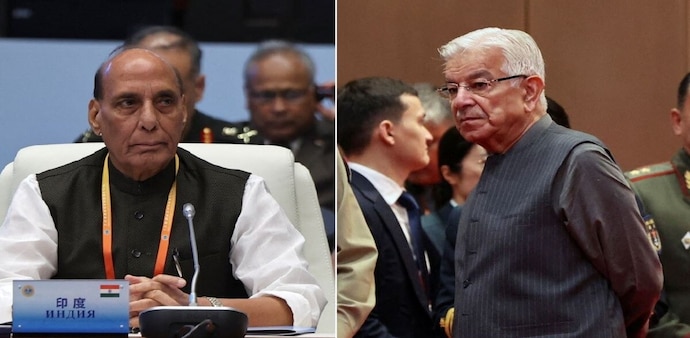
At the summit held in China's Qingdao, Rajnath Singh came face-to-face with his Pakistani counterpart Khawaja Asif for the first time since the Pahalgam attack and the subsequent Operation Sindoor. Tensions between the two leaders were evident since no pleasantries were exchanged with Asif at the meeting, sources mentioned.
Earlier in the day, Singh called out Pakistan for using terrorism as an instrument of state policy and said that "epicentres of terrorism" are no longer safe.
Referring to the Pahalgam terror attack and India's response to Pakistan in the form of Operation Sindoor, Singh said: "We have shown that epicentres of terrorism are no longer safe and we will not hesitate to target them."
Backing India's action against Pakistan under the codename Operation Sindoor, Singh said that it was a series of pre-emptive strikes in a bid to "deter further cross-border terrorist attacks" and "dismantle cross-border terrorist infrastructure" in Pakistan.
He also urged the SCO member countries to speak up against terrorism.
"Some countries use cross-border terrorism as an instrument of policy and provide shelter to terrorists. There should be no place for such double standards. SCO should not hesitate to criticise such nations," he said. Rajnath Singh also voiced India's support for Afghanistan at the multilateral summit.
"India has been consistent and steadfast in its policy in support of peace, security and stability in Afghanistan," he underscored. The Resistance Front (TRF), an offshoot of the Lashkar-e-Taiba (LeT), claimed responsibility for the Pahalgam attack.
Previously, Pakistan, with China's help, also managed to get TRF's name removed from the April 25 UN Security Council statement on Pahalgam attack.
Defence Minister Rajnath Singh on Wednesday refused to sign the Shanghai Cooperation Organisation (SCO) document that could have diluted India's stand against terrorism and the Pahalgam terror attack, in which 26 tourists were killed by Pakistan-trained terrorists in Jammu and Kashmir. This implies that there will be no joint statement from the SCO meeting, India Today reported, citing sources.
The SCO chair, China, and its "all-weather friend" Pakistan, tried to divert attention from terrorism in the SCO document, but Singh maintained his ground firmly on India's position vis-a-vis terrorism, as per sources.
To add insult to injury, the SCO document skipped any mention of the Pahalgam attack but mentioned Balochistan instead. This was seen as a veiled attempt to accuse India of creating unrest in the Pakistani province.
"India is not satisfied with the language of the joint document; there was no mention of the terrorist attack in Pahalgam, there was mention of the incidents that happened in Pakistan, so India refused to sign the joint declaration, and there is no joint communique either," sources told news agency ANI.
At the summit held in China's Qingdao, Rajnath Singh came face-to-face with his Pakistani counterpart Khawaja Asif for the first time since the Pahalgam attack and the subsequent Operation Sindoor. Tensions between the two leaders were evident since no pleasantries were exchanged with Asif at the meeting, sources mentioned.
Earlier in the day, Singh called out Pakistan for using terrorism as an instrument of state policy and said that "epicentres of terrorism" are no longer safe.
Referring to the Pahalgam terror attack and India's response to Pakistan in the form of Operation Sindoor, Singh said: "We have shown that epicentres of terrorism are no longer safe and we will not hesitate to target them."
Backing India's action against Pakistan under the codename Operation Sindoor, Singh said that it was a series of pre-emptive strikes in a bid to "deter further cross-border terrorist attacks" and "dismantle cross-border terrorist infrastructure" in Pakistan.
He also urged the SCO member countries to speak up against terrorism.
"Some countries use cross-border terrorism as an instrument of policy and provide shelter to terrorists. There should be no place for such double standards. SCO should not hesitate to criticise such nations," he said. Rajnath Singh also voiced India's support for Afghanistan at the multilateral summit.
"India has been consistent and steadfast in its policy in support of peace, security and stability in Afghanistan," he underscored. The Resistance Front (TRF), an offshoot of the Lashkar-e-Taiba (LeT), claimed responsibility for the Pahalgam attack.
Previously, Pakistan, with China's help, also managed to get TRF's name removed from the April 25 UN Security Council statement on Pahalgam attack.