
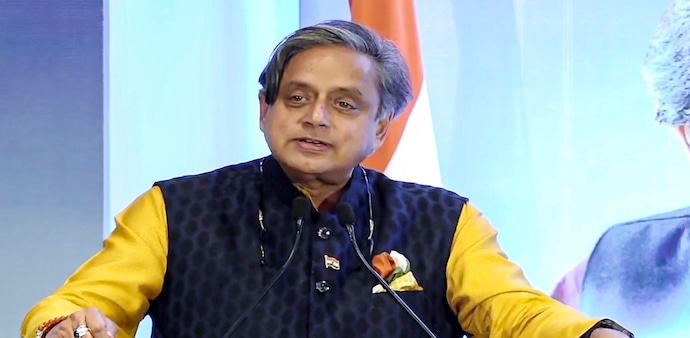
‘Reflects the geopolitical realities of 1945…’: Shashi Tharoor says UN needs to be recreated
The disconnect between countries’ actual influence and their formal authority has weakened confidence in international law and made states increasingly cynical about Security Council resolutions, Tharoor said.
- Oct 21, 2026,
- Updated Oct 21, 2026 4:27 PM IST
The United Nations is increasingly ineffective in maintaining international peace and security, with an outdated Security Council structure and veto-driven paralysis undermining its credibility, Congress leader Shashi Tharoor said.
In an opinion piece for The Indian Express, Tharoor said the UN, despite remaining central to global affairs, was at a precarious crossroads, with wars in Ukraine, Iran, Gaza, Libya and Yemen continuing without effective intervention. He also criticised recent secretaries-general for their apparent inability to uphold the principles of the UN Charter.
The UN Security Council’s permanent membership, he argued, reflects the geopolitical realities of a far older world. “It is undeniable that the UNSC anachronistically reflects the geopolitical realities of 1945 and not those of 2025. The world has undergone a radical transformation over those eight decades,” he wrote.
Decades after the end of colonial empires and the emergence of new economic powers, billions of people remain without permanent representation, while major nations are excluded from the body responsible for global security.
This disconnect between countries’ actual influence and their formal authority has weakened confidence in international law and made states increasingly cynical about Security Council resolutions, Tharoor said.
He identified the veto power as another major obstacle, arguing that permanent members can use it, or threaten to use it, to shield themselves and their allies from accountability over wars, humanitarian disasters and violations of national sovereignty.
Repeated deadlocks have pushed countries towards smaller coalitions, regional alliances and forums such as the G20. However, Tharoor said these groupings cannot replace the UN’s universal membership or deploy peacekeepers to conflict zones.
Without an effective Security Council, he warned, global affairs could increasingly follow the Thucydidean principle that “the strong do what they can and the weak suffer what they must”, leaving smaller and developing countries with little institutional recourse.
“Everyone agrees the UN needs reform, but they don’t agree on what that means,” he said. While developed countries tend to focus on budget cuts, mergers and administrative streamlining, developing nations seek greater representation and a stronger voice in setting global priorities.
He called for expanding permanent Security Council membership to include underrepresented regions and emerging powers, limiting the use of vetoes and strengthening accountability between the Council and the UN General Assembly.
However, he cautioned that reforms must not drive powerful member states out of the organisation.
Despite its shortcomings, Tharoor said the UN remains indispensable as a forum where adversaries can meet, de-escalate tensions and negotiate during international crises. The priority, he argued, should be to rebuild an effective multilateral institution rather than abandon it.