
Republic Day 2026: Where did India’s first Republic Day parade began and when it moved to Rajpath
77th Republic Day: The historic event marked the coming into force of the Constitution of India, replacing the Government of India Act, 1935, and completing the country’s transition from a dominion to a sovereign republic.
- Jan 25, 2026,
- Updated Jan 25, 2026 5:56 PM IST
India’s iconic Republic Day parade, a grand display of the nation’s military strength, cultural diversity and constitutional values, began its journey on January 26, 1950, the day the country formally became a republic.
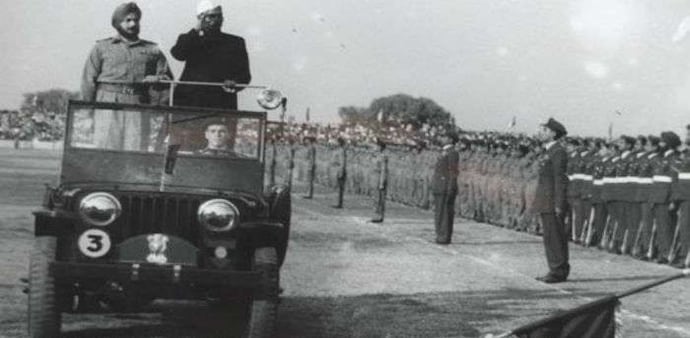
The first Republic Day parade was held at Irwin Stadium in New Delhi, now known as the National Stadium. The historic event marked the coming into force of the Constitution of India, replacing the Government of India Act, 1935, and completing the country’s transition from a dominion to a sovereign republic.
India’s first President, Dr Rajendra Prasad, took the salute at the parade. The celebrations were relatively modest compared to today’s spectacle, but they carried immense symbolic significance. The parade showcased the armed forces and underscored the authority of the newly adopted Constitution and the democratic framework of the young nation.
Dr Rajendra Prasad began his address in Hindi before switching to English. Marking the historic moment, he told the gathering that, for the first time in India’s long and complex past, the entire country had been united under a single Constitution and one Union, entrusted with the responsibility of ensuring the welfare of more than 320 million people.
When did the parade shift to Rajpath
For the first few years after independence, Republic Day parades continued to be held at Irwin Stadium. However, as the scale and ceremonial importance of the event grew, the need for a more expansive and symbolically powerful venue became evident.
In 1955, the Republic Day parade was shifted to Rajpath, then known as Kingsway, the ceremonial boulevard stretching from Rashtrapati Bhavan to India Gate. The move transformed the parade into a grander national event, offering greater visibility and space for elaborate military displays, tableaux from states and ministries, and mass public participation.
Rajpath — recently renamed Kartavya Path — soon became inseparable from Republic Day celebrations. The wide avenue, designed as the heart of New Delhi’s ceremonial landscape, provided the perfect setting to reflect India’s unity, diversity and constitutional spirit.
Over the decades, the Republic Day parade at Rajpath evolved into one of India’s most watched national events, featuring fly-pasts by the Indian Air Force, cultural tableaux highlighting regional heritage, and participation by foreign dignitaries as chief guests.
India’s iconic Republic Day parade, a grand display of the nation’s military strength, cultural diversity and constitutional values, began its journey on January 26, 1950, the day the country formally became a republic.
The first Republic Day parade was held at Irwin Stadium in New Delhi, now known as the National Stadium. The historic event marked the coming into force of the Constitution of India, replacing the Government of India Act, 1935, and completing the country’s transition from a dominion to a sovereign republic.
India’s first President, Dr Rajendra Prasad, took the salute at the parade. The celebrations were relatively modest compared to today’s spectacle, but they carried immense symbolic significance. The parade showcased the armed forces and underscored the authority of the newly adopted Constitution and the democratic framework of the young nation.
Dr Rajendra Prasad began his address in Hindi before switching to English. Marking the historic moment, he told the gathering that, for the first time in India’s long and complex past, the entire country had been united under a single Constitution and one Union, entrusted with the responsibility of ensuring the welfare of more than 320 million people.
When did the parade shift to Rajpath
For the first few years after independence, Republic Day parades continued to be held at Irwin Stadium. However, as the scale and ceremonial importance of the event grew, the need for a more expansive and symbolically powerful venue became evident.
In 1955, the Republic Day parade was shifted to Rajpath, then known as Kingsway, the ceremonial boulevard stretching from Rashtrapati Bhavan to India Gate. The move transformed the parade into a grander national event, offering greater visibility and space for elaborate military displays, tableaux from states and ministries, and mass public participation.
Rajpath — recently renamed Kartavya Path — soon became inseparable from Republic Day celebrations. The wide avenue, designed as the heart of New Delhi’s ceremonial landscape, provided the perfect setting to reflect India’s unity, diversity and constitutional spirit.
Over the decades, the Republic Day parade at Rajpath evolved into one of India’s most watched national events, featuring fly-pasts by the Indian Air Force, cultural tableaux highlighting regional heritage, and participation by foreign dignitaries as chief guests.