
'Reveals dangerous mindset': Ex-foreign secretary slams Yunus over 'Seven Sisters' remark
'Reveals dangerous mindset': Ex-foreign secretary slams Yunus over 'Seven Sisters' remark
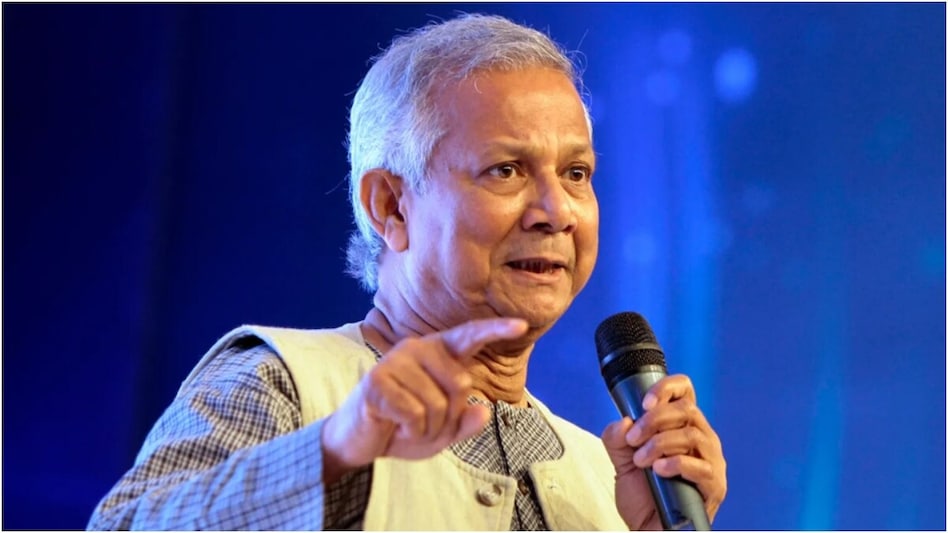
In his 25-minute farewell speech, Yunus made a provocative statement, saying Bangladesh can provide economic opportunity to India's northeastern region through its "open sea."
Business Today Desk
- Feb 17, 2026,
- Updated Feb 17, 2026 1:33 PM IST
Fresh tensions have surfaced in India–Bangladesh relations after the outgoing interim chief of Bangladesh, Muhammad Yunus, referred to India's Northeast as the "Seven Sisters" in his farewell address without mentioning India. Former foreign secretary Kanwal Sibal on Tuesday issued a sharp response, calling the remarks indicative of a "dangerous mindset."
Advertisement
In his 25-minute farewell speech, Yunus made a provocative statement, saying Bangladesh can provide economic opportunity to India's northeastern region through its "open sea." His comments revived a theme he had first introduced during a visit to China last year, when he labelled India's Northeast as "landlocked" and urged greater regional connectivity through Bangladesh.
"Bangladesh can provide huge potential for economic prosperity for the seven sister states, Nepal and Bhutan...Our open seas are not just borders - they are gateways to the global economy," Yunus said.
What drew particular attention in New Delhi was that Yunus mentioned Nepal and Bhutan as sovereign nations in the same context, while omitting any reference to India when speaking of the Seven Sisters - a term commonly used for the northeastern states of India.
Advertisement
Responding to the remarks, Sibal said: "Yunus's reference to the 7 sisters without mentioning India even while he mentions Bhutan and Nepal as sovereign nations in the same context reveals the dangerous mindset of this man and those around him."
Sibal went further, referring to an earlier episode during Yunus's tenure. "No wonder he was distributing a book carrying a map of greater Bangladesh on its cover which he disingenuously called grafitti and had the temerity to present it to FS Misri when he called on him."
He added that India would respond by tightening its vigilance along its eastern frontier. "India will no doubt increase its vigilance on our borders in the northeast with Bangladesh, including with West Bengal."
Advertisement
Yunus's remarks are being seen as an attempt to position Bangladesh as a gateway for India's northeastern states to access global markets through maritime routes. The suggestion, however, has been interpreted by Indian officials and observers as an effort to frame the region as distinct from India, a sensitive issue in bilateral ties.
India has consistently maintained that it does not accept any external commentary that appears to question its territorial integrity. Yunus's earlier reference to the Northeast during his China visit had drawn criticism from External Affairs Minister S Jaishankar and chief ministers of northeastern states.
Fresh tensions have surfaced in India–Bangladesh relations after the outgoing interim chief of Bangladesh, Muhammad Yunus, referred to India's Northeast as the "Seven Sisters" in his farewell address without mentioning India. Former foreign secretary Kanwal Sibal on Tuesday issued a sharp response, calling the remarks indicative of a "dangerous mindset."
Advertisement
In his 25-minute farewell speech, Yunus made a provocative statement, saying Bangladesh can provide economic opportunity to India's northeastern region through its "open sea." His comments revived a theme he had first introduced during a visit to China last year, when he labelled India's Northeast as "landlocked" and urged greater regional connectivity through Bangladesh.
"Bangladesh can provide huge potential for economic prosperity for the seven sister states, Nepal and Bhutan...Our open seas are not just borders - they are gateways to the global economy," Yunus said.
What drew particular attention in New Delhi was that Yunus mentioned Nepal and Bhutan as sovereign nations in the same context, while omitting any reference to India when speaking of the Seven Sisters - a term commonly used for the northeastern states of India.
Advertisement
Responding to the remarks, Sibal said: "Yunus's reference to the 7 sisters without mentioning India even while he mentions Bhutan and Nepal as sovereign nations in the same context reveals the dangerous mindset of this man and those around him."
Sibal went further, referring to an earlier episode during Yunus's tenure. "No wonder he was distributing a book carrying a map of greater Bangladesh on its cover which he disingenuously called grafitti and had the temerity to present it to FS Misri when he called on him."
He added that India would respond by tightening its vigilance along its eastern frontier. "India will no doubt increase its vigilance on our borders in the northeast with Bangladesh, including with West Bengal."
Advertisement
Yunus's remarks are being seen as an attempt to position Bangladesh as a gateway for India's northeastern states to access global markets through maritime routes. The suggestion, however, has been interpreted by Indian officials and observers as an effort to frame the region as distinct from India, a sensitive issue in bilateral ties.
India has consistently maintained that it does not accept any external commentary that appears to question its territorial integrity. Yunus's earlier reference to the Northeast during his China visit had drawn criticism from External Affairs Minister S Jaishankar and chief ministers of northeastern states.
Read more!