
₹12.2 lakh crore infra bet: Union Budget 2026 focuses on cities, connectivity and clean transport
Union Budget 2026: The Budget also proposed incentives to indigenise seaplane manufacturing, enhance last-mile and remote connectivity, and promote tourism. A Viability Gap Funding (VGF) scheme will be introduced to support seaplane operations.
- Feb 1, 2026,
- Updated Feb 1, 2026 4:33 PM IST
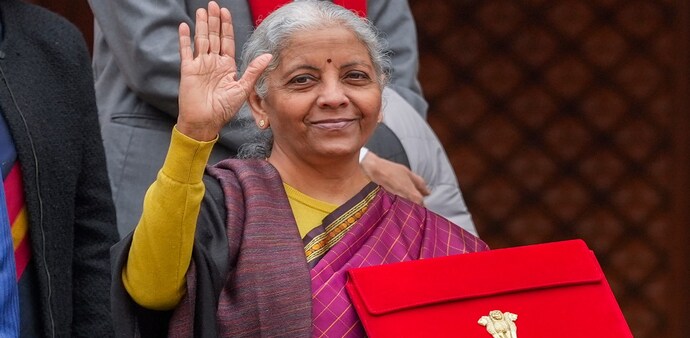
Union Finance Minister Nirmala Sitharaman on February 1 announced a sharp increase in public capital expenditure (capex) to ₹12.2 lakh crore for FY 2026-27, up from ₹11.2 lakh crore in the ongoing financial year, underscoring the government’s continued focus on infrastructure-led growth.
Presenting the Union Budget 2026, Sitharaman said public capex has risen manifold over the past decade — from ₹2 lakh crore in FY 2014-15 to ₹11.2 lakh crore in Budget Estimates 2025-26. The higher allocation for FY 2026-27, she said, is aimed at maintaining the momentum in infrastructure creation.
Follow our live coverage on Union Budget 2026 live
To unlock value from public assets and boost private participation, the government will set up dedicated Real Estate Investment Trusts (REITs) for Central Public Sector Enterprises (CPSEs) to accelerate monetisation and recycling of large real estate holdings. An Infrastructure Risk Guarantee Fund will also be established to provide prudently calibrated partial credit guarantees to lenders, strengthening confidence among private developers during the construction and development phase of infrastructure projects.
Freight, Waterways & Coastal Shipping get green boost
As part of efforts to promote environmentally sustainable cargo movement, the Budget proposed new Dedicated Freight Corridors connecting Dankuni in the East to Surat in the West. The government will also operationalise 20 new National Waterways over the next five years, beginning with National Waterway-5 in Odisha to link mineral-rich Talcher and Angul with industrial hubs such as Kalinga Nagar and ports at Paradeep and Dhamra.
To support inland water transport, regional centres of excellence will be set up for skill development, while a ship repair ecosystem catering to inland waterways will be developed in Varanasi and Patna. A Coastal Cargo Promotion Scheme will be launched to encourage a modal shift from road and rail, with the objective of increasing the share of inland waterways and coastal shipping from 6% to 12% by 2047.
The Budget also proposed incentives to indigenise seaplane manufacturing, enhance last-mile and remote connectivity, and promote tourism. A Viability Gap Funding (VGF) scheme will be introduced to support seaplane operations.
City Economic Regions & High-Speed Rail as growth connectors
In a major urban development initiative, Sitharaman announced the creation of City Economic Regions (CERs), with an allocation of ₹5,000 crore per region over five years. The funding will be provided through a challenge-mode approach, using a reform-cum-results-based financing mechanism to implement city-specific economic development plans.
The government will also develop seven high-speed rail corridors between major cities as “growth connectors” to promote environmentally sustainable passenger transport. These corridors include Mumbai-Pune, Pune-Hyderabad, Hyderabad-Bengaluru, Hyderabad-Chennai, Chennai-Bengaluru, Delhi-Varanasi and Varanasi-Siliguri.
Union Finance Minister Nirmala Sitharaman on February 1 announced a sharp increase in public capital expenditure (capex) to ₹12.2 lakh crore for FY 2026-27, up from ₹11.2 lakh crore in the ongoing financial year, underscoring the government’s continued focus on infrastructure-led growth.
Presenting the Union Budget 2026, Sitharaman said public capex has risen manifold over the past decade — from ₹2 lakh crore in FY 2014-15 to ₹11.2 lakh crore in Budget Estimates 2025-26. The higher allocation for FY 2026-27, she said, is aimed at maintaining the momentum in infrastructure creation.
Follow our live coverage on Union Budget 2026 live
To unlock value from public assets and boost private participation, the government will set up dedicated Real Estate Investment Trusts (REITs) for Central Public Sector Enterprises (CPSEs) to accelerate monetisation and recycling of large real estate holdings. An Infrastructure Risk Guarantee Fund will also be established to provide prudently calibrated partial credit guarantees to lenders, strengthening confidence among private developers during the construction and development phase of infrastructure projects.
Freight, Waterways & Coastal Shipping get green boost
As part of efforts to promote environmentally sustainable cargo movement, the Budget proposed new Dedicated Freight Corridors connecting Dankuni in the East to Surat in the West. The government will also operationalise 20 new National Waterways over the next five years, beginning with National Waterway-5 in Odisha to link mineral-rich Talcher and Angul with industrial hubs such as Kalinga Nagar and ports at Paradeep and Dhamra.
To support inland water transport, regional centres of excellence will be set up for skill development, while a ship repair ecosystem catering to inland waterways will be developed in Varanasi and Patna. A Coastal Cargo Promotion Scheme will be launched to encourage a modal shift from road and rail, with the objective of increasing the share of inland waterways and coastal shipping from 6% to 12% by 2047.
The Budget also proposed incentives to indigenise seaplane manufacturing, enhance last-mile and remote connectivity, and promote tourism. A Viability Gap Funding (VGF) scheme will be introduced to support seaplane operations.
City Economic Regions & High-Speed Rail as growth connectors
In a major urban development initiative, Sitharaman announced the creation of City Economic Regions (CERs), with an allocation of ₹5,000 crore per region over five years. The funding will be provided through a challenge-mode approach, using a reform-cum-results-based financing mechanism to implement city-specific economic development plans.
The government will also develop seven high-speed rail corridors between major cities as “growth connectors” to promote environmentally sustainable passenger transport. These corridors include Mumbai-Pune, Pune-Hyderabad, Hyderabad-Bengaluru, Hyderabad-Chennai, Chennai-Bengaluru, Delhi-Varanasi and Varanasi-Siliguri.