
RTI reveals Rs 67 crore earned from India AI Impact Expo 2026
The Expo was conducted as a side event of the India AI Summit 2026
- Apr 1, 2026,
- Updated Apr 1, 2026 7:17 PM IST
The India AI Impact Summit 2026, positioned as one of the most prominent global gatherings on artificial intelligence this year, has also delivered significant commercial returns, according to new details accessed through a Right to Information (RTI) query.
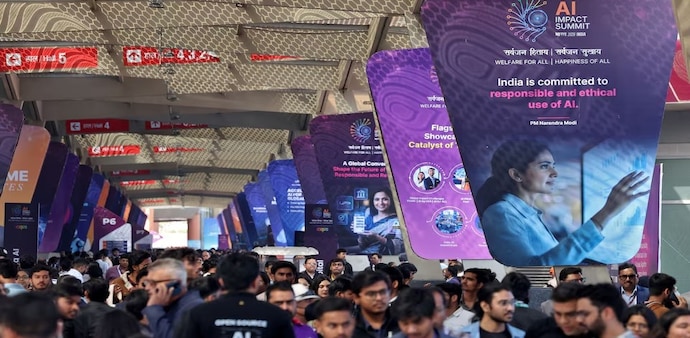
An RTI response reviewed by India Today reveals that the India AI Impact Expo 2026, which was held alongside the summit from 16 to 21 February, generated approximately Rs 67 crore in revenue through the sale of exhibition space.
The Software Technology Parks of India (STPI), under the Ministry of Electronics and Information Technology, shared with India Today in its RTI reply that the total revenue generated from the sale of exhibition space was approximately Rs 67 crore. The Expo served as a key side event to the larger summit, bringing together companies, startups, and institutions to showcase AI-driven products and innovations.
According to the RTI response, exhibition space at the Expo was allocated through an Expression of Interest (EoI) process, with allotments made on a first-come, first-served basis, subject to availability and the approved layout plan of the venue.
When asked about the distribution of space among participating institutions, STPI stated that such information is already available in the public domain via the event’s official website. It added that no additional compiled dataset is maintained beyond what has been disclosed publicly.
The response further shed light on the intent behind the Expo, describing it as a “structured platform” designed to enable exhibitors to showcase their AI products, services, and innovations. The objective, it said, was to facilitate engagement, awareness, and interaction between participants and their target audiences.
The India AI Impact Summit 2026 has been widely seen as a marker of India’s growing influence in shaping global AI discourse. The scale of participation and the revenue generated through its Expo component underline the increasing commercial and strategic importance of AI within the country’s technology ecosystem.
With strong industry interest reflected in the exhibition revenues, the event signals not just policy ambition but also rising private sector investment and engagement in India’s AI landscape.
Must Read: Anthropic’s Claude Cowork Is Disrupting Finance, HR & Wall Street Jobs
AI Impact Summit
The AI Impact Summit in New Delhi marked a shift in global AI governance, with 91 countries and international organisations adopting a common declaration. Moving away from earlier “risk-focused” approaches seen in Bletchley, Seoul, and Paris, the summit emphasised impact, trust, and human-centric AI, enabling broader consensus. Notably, India secured backing from both the United States and China, despite prior disagreements.
The reframing from risks to benefits helped bridge divides on AI regulation and competition.
Beyond the declaration, the summit produced key policy frameworks through multi-country collaboration. These included tools for workforce transition and reskilling, such as structured skilling principles, and governance initiatives like the Trusted AI Commons and child safety frameworks.
The agenda also covered sustainable AI infrastructure, climate considerations, and a shift in data governance through an accountability-based approach. Inclusion remained central, with initiatives promoting equitable AI access and strengthening AI-driven scientific collaboration across countries.
The India AI Impact Summit 2026, positioned as one of the most prominent global gatherings on artificial intelligence this year, has also delivered significant commercial returns, according to new details accessed through a Right to Information (RTI) query.
An RTI response reviewed by India Today reveals that the India AI Impact Expo 2026, which was held alongside the summit from 16 to 21 February, generated approximately Rs 67 crore in revenue through the sale of exhibition space.
The Software Technology Parks of India (STPI), under the Ministry of Electronics and Information Technology, shared with India Today in its RTI reply that the total revenue generated from the sale of exhibition space was approximately Rs 67 crore. The Expo served as a key side event to the larger summit, bringing together companies, startups, and institutions to showcase AI-driven products and innovations.
According to the RTI response, exhibition space at the Expo was allocated through an Expression of Interest (EoI) process, with allotments made on a first-come, first-served basis, subject to availability and the approved layout plan of the venue.
When asked about the distribution of space among participating institutions, STPI stated that such information is already available in the public domain via the event’s official website. It added that no additional compiled dataset is maintained beyond what has been disclosed publicly.
The response further shed light on the intent behind the Expo, describing it as a “structured platform” designed to enable exhibitors to showcase their AI products, services, and innovations. The objective, it said, was to facilitate engagement, awareness, and interaction between participants and their target audiences.
The India AI Impact Summit 2026 has been widely seen as a marker of India’s growing influence in shaping global AI discourse. The scale of participation and the revenue generated through its Expo component underline the increasing commercial and strategic importance of AI within the country’s technology ecosystem.
With strong industry interest reflected in the exhibition revenues, the event signals not just policy ambition but also rising private sector investment and engagement in India’s AI landscape.
Must Read: Anthropic’s Claude Cowork Is Disrupting Finance, HR & Wall Street Jobs
AI Impact Summit
The AI Impact Summit in New Delhi marked a shift in global AI governance, with 91 countries and international organisations adopting a common declaration. Moving away from earlier “risk-focused” approaches seen in Bletchley, Seoul, and Paris, the summit emphasised impact, trust, and human-centric AI, enabling broader consensus. Notably, India secured backing from both the United States and China, despite prior disagreements.
The reframing from risks to benefits helped bridge divides on AI regulation and competition.
Beyond the declaration, the summit produced key policy frameworks through multi-country collaboration. These included tools for workforce transition and reskilling, such as structured skilling principles, and governance initiatives like the Trusted AI Commons and child safety frameworks.
The agenda also covered sustainable AI infrastructure, climate considerations, and a shift in data governance through an accountability-based approach. Inclusion remained central, with initiatives promoting equitable AI access and strengthening AI-driven scientific collaboration across countries.