
'Russia stood by us when...': EAM Jaishankar explains why India's ties with Moscow endure
India and Russia have historically very good relations, particularly since the 1950s, and that history is not forgotten, says EAM Jaishankar
- Oct 4, 2026,
- Updated Oct 4, 2026 5:40 PM IST
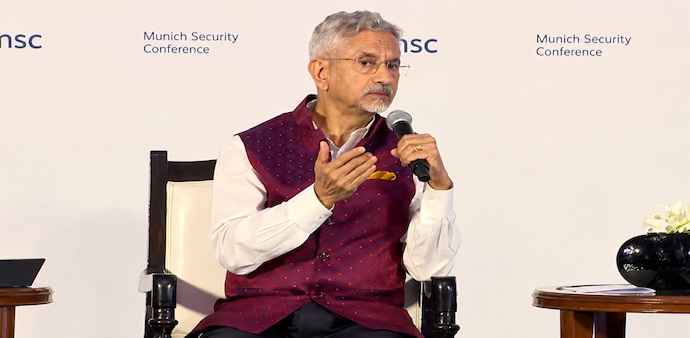
External Affairs Minister S Jaishankar has defended India's long-standing relationship with Russia, saying Moscow and the Soviet Union before it had stood by New Delhi when its security and territorial integrity were under threat.
"India and Russia have historically very good relations, particularly since the 1950s, and that history is not forgotten. Generally, in most cases, people neither forget good or bad history," Jaishankar said while responding to a question at the Munich Security Conference.
"Russia and the Soviet Union before that, was a country that stood by us in many ways when our security, when our territorial integrity was under threat," Jaishankar said when asked where he saw the future of India-Russia ties.
"And at a time when much of the world preferred backing a military regime next to us, Russia was a country with which our relations were very good, and we are obviously shaped in many ways by that legacy."
India has faced continued pressure from the US and European countries over its purchases of Russian oil, which they argue helps Moscow sustain its war in Ukraine.
"Today, the relationship has widened beyond that. Again, the world has changed, we have changed, our own relationships are not what they were in the 70s and 80s, neither is the case with Russia's."
'India's experience has been positive'
The foreign minister said India's ties with Russia had evolved beyond their traditional defence relationship.
"It is very much more today an economic relationship as well. There is a military component, there are nuclear components, there are space issues, but there is a significant amount of trade and investment between the two countries, and of course energy and resources as well," he said.
He also said countries naturally assess their relationships through their own experiences. "I can't expect Europe, for example, to look at the world and say, okay, what does India think, and my view should be based on India's experience. Europe will base its judgment on Europe's experience. India will base its judgment on India's experience," Jaishankar said. "So India's experience has been frankly quite positive and consistently positive."
Jaishankar, however, reiterated that India wanted the war in Ukraine to end through dialogue and diplomacy, while continuing to engage with both Moscow and Kyiv.
"Our position on that conflict has been very clear, which is that we would like to see an end to this conflict," he said. "And we believe that this will require dialogue and diplomacy."
"There have to be negotiations in this regard. We have been advocating it for many years, and in recent months, we have got a little bit more involved beyond advocacy. We have conversations with both Russia and Ukraine in this regard. We are trying to be helpful, starting with the Black Sea safety of shipping issue, but going beyond that to cover some immediate concerns, which both of them have on grain exports, on energy exports, and on non-attack possibilities. So those are ongoing conversations right now," the EAM added.
External Affairs Minister S Jaishankar has defended India's long-standing relationship with Russia, saying Moscow and the Soviet Union before it had stood by New Delhi when its security and territorial integrity were under threat.
"India and Russia have historically very good relations, particularly since the 1950s, and that history is not forgotten. Generally, in most cases, people neither forget good or bad history," Jaishankar said while responding to a question at the Munich Security Conference.
"Russia and the Soviet Union before that, was a country that stood by us in many ways when our security, when our territorial integrity was under threat," Jaishankar said when asked where he saw the future of India-Russia ties.
"And at a time when much of the world preferred backing a military regime next to us, Russia was a country with which our relations were very good, and we are obviously shaped in many ways by that legacy."
India has faced continued pressure from the US and European countries over its purchases of Russian oil, which they argue helps Moscow sustain its war in Ukraine.
"Today, the relationship has widened beyond that. Again, the world has changed, we have changed, our own relationships are not what they were in the 70s and 80s, neither is the case with Russia's."
'India's experience has been positive'
The foreign minister said India's ties with Russia had evolved beyond their traditional defence relationship.
"It is very much more today an economic relationship as well. There is a military component, there are nuclear components, there are space issues, but there is a significant amount of trade and investment between the two countries, and of course energy and resources as well," he said.
He also said countries naturally assess their relationships through their own experiences. "I can't expect Europe, for example, to look at the world and say, okay, what does India think, and my view should be based on India's experience. Europe will base its judgment on Europe's experience. India will base its judgment on India's experience," Jaishankar said. "So India's experience has been frankly quite positive and consistently positive."
Jaishankar, however, reiterated that India wanted the war in Ukraine to end through dialogue and diplomacy, while continuing to engage with both Moscow and Kyiv.
"Our position on that conflict has been very clear, which is that we would like to see an end to this conflict," he said. "And we believe that this will require dialogue and diplomacy."
"There have to be negotiations in this regard. We have been advocating it for many years, and in recent months, we have got a little bit more involved beyond advocacy. We have conversations with both Russia and Ukraine in this regard. We are trying to be helpful, starting with the Black Sea safety of shipping issue, but going beyond that to cover some immediate concerns, which both of them have on grain exports, on energy exports, and on non-attack possibilities. So those are ongoing conversations right now," the EAM added.