
Safran signals deeper India bet, offers fighter engine line if orders grow
Chief Executive Olivier Andriès said India remains the only nation outside France where Safran is willing to commit to end-to-end assembly of engines and critical components for Rafale fighter jets if future orders materialise.
- Nov 26, 2025,
- Updated Nov 26, 2025 2:31 PM IST
Safran deepened its long-term manufacturing and defence footprint in India on Wednesday, with Chief Executive Olivier Andriès declaring the country a “key pillar” of the group’s global industrial strategy across both civil and military aviation. Speaking to a group of journalists in Hyderabad at a media roundtable after inaugurating the world’s largest LEAP engine MRO facility, Andriès said India remains the only nation outside France where Safran is willing to commit to end-to-end assembly of engines and critical components for Rafale fighter jets if future orders materialise.
“In today’s world, only four countries can develop a 5th-generation fighter engine: the U.S., the U.K., France and Russia. China is still developing that capability,” he said. “India is the only country in the world where we would be happy to commit.”
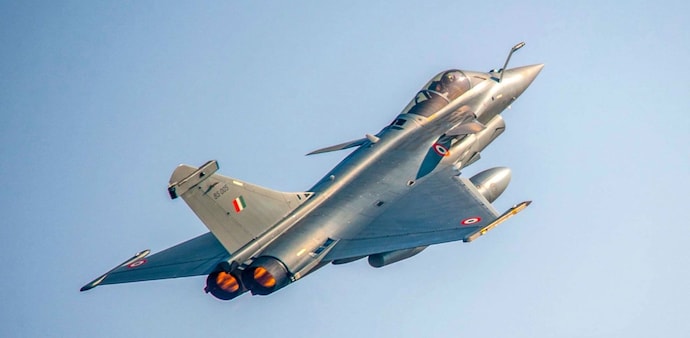
Safran currently produces the M88 engine powering the Rafale fighter and has now broken ground on its first M88 MRO shop outside France, located in Hyderabad. Andriès said the company is prepared to go further: “If there are more Rafale orders beyond the MRO facility, we would begin to set up a full assembly line for fighter engines in India.”
The new LEAP engine MRO centre, a €200 million investment, will begin receiving engines in early 2026. Safran plans a phased ramp-up: 30 engines in the first year, 60 the next, and 90 the year after. “We cannot get to 300 immediately because we need to train and upskill people,” Andriès said, noting that technicians usually undergo training in Morocco, Mexico and France. The company intends to train at least 100 Indian engineers and technicians annually.
Once fully operational, the 45,000-sq-m LEAP facility will support up to 300 shop visits a year, serving not just Indian carriers but airlines across Asia and beyond. “We will have the capacity to maintain engines from airlines outside Asia. This is the biggest facility in the world,” Andriès added. Five Indian airlines already operate more than 400 LEAP-powered aircraft, with some 2,000 engines on order, making India CFM International’s third-largest market.
Safran also announced a joint venture with Bharat Electronics Ltd. to manufacture the Hammer air-to-surface weapon locally. Alongside this, two previously announced investments—an engineering centre and an electronics and actuation manufacturing facility, both in Bengaluru—are progressing toward a combined €30 million rollout.
Andriès attributed Safran’s accelerated India push to the “strong India–France relationship” and said the company expects its India revenue to triple to over €3 billion by 2030, with half generated from operations within the country.
Safran deepened its long-term manufacturing and defence footprint in India on Wednesday, with Chief Executive Olivier Andriès declaring the country a “key pillar” of the group’s global industrial strategy across both civil and military aviation. Speaking to a group of journalists in Hyderabad at a media roundtable after inaugurating the world’s largest LEAP engine MRO facility, Andriès said India remains the only nation outside France where Safran is willing to commit to end-to-end assembly of engines and critical components for Rafale fighter jets if future orders materialise.
“In today’s world, only four countries can develop a 5th-generation fighter engine: the U.S., the U.K., France and Russia. China is still developing that capability,” he said. “India is the only country in the world where we would be happy to commit.”
Safran currently produces the M88 engine powering the Rafale fighter and has now broken ground on its first M88 MRO shop outside France, located in Hyderabad. Andriès said the company is prepared to go further: “If there are more Rafale orders beyond the MRO facility, we would begin to set up a full assembly line for fighter engines in India.”
The new LEAP engine MRO centre, a €200 million investment, will begin receiving engines in early 2026. Safran plans a phased ramp-up: 30 engines in the first year, 60 the next, and 90 the year after. “We cannot get to 300 immediately because we need to train and upskill people,” Andriès said, noting that technicians usually undergo training in Morocco, Mexico and France. The company intends to train at least 100 Indian engineers and technicians annually.
Once fully operational, the 45,000-sq-m LEAP facility will support up to 300 shop visits a year, serving not just Indian carriers but airlines across Asia and beyond. “We will have the capacity to maintain engines from airlines outside Asia. This is the biggest facility in the world,” Andriès added. Five Indian airlines already operate more than 400 LEAP-powered aircraft, with some 2,000 engines on order, making India CFM International’s third-largest market.
Safran also announced a joint venture with Bharat Electronics Ltd. to manufacture the Hammer air-to-surface weapon locally. Alongside this, two previously announced investments—an engineering centre and an electronics and actuation manufacturing facility, both in Bengaluru—are progressing toward a combined €30 million rollout.
Andriès attributed Safran’s accelerated India push to the “strong India–France relationship” and said the company expects its India revenue to triple to over €3 billion by 2030, with half generated from operations within the country.