
Sanjeev Sanyal counters popular perception: 'Union Govt is too small, not too large'
Sanjeev Sanyal said a comprehensive exercise is underway to map the Union Government and all its agencies
- Sep 22, 2025,
- Updated Sep 22, 2025 2:51 PM IST
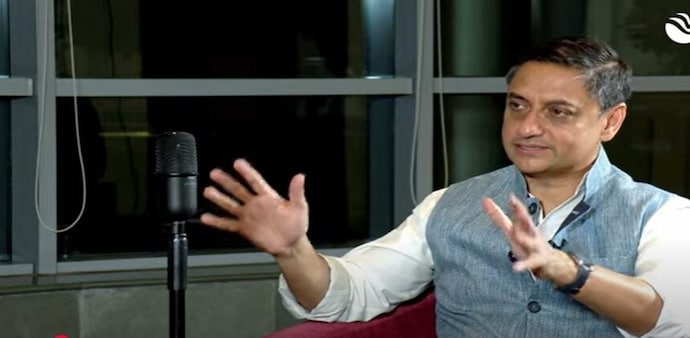
Economist and Prime Minister's Economic Advisory Council (PMEAC) member Sanjeev Sanyal has said the perception that the Union government is bloated is misplaced, arguing instead that it suffers from imbalances and lacks strength in critical areas.
"In fact, the Union government is perhaps not too large, it's probably too small - contrary to what people think," Sanyal said in an interview with Moneycontrol. "The problem is that there are too many people in outdated parts of the government and not enough people in bits that should grow."
"The more severe problem is not that there are too many people, but that it's all imbalanced. How many people do we have in cybersecurity? Almost nobody, I mean very small number whereas this should be a huge department with large numbers of people, we don't. But there are other outdated departments with lots of people," he said.
Process Reforms and Cutting Red Tape
Responding to a question on Prime Minister Narendra Modi's promise of "minimum government, maximum governance," Sanyal rejected the idea that little had changed. "It is not true. We have actually removed hundreds of outdated laws. We can give you a list of them somewhere. Similarly, I've been personally involved in dramatically simplifying many things," he said.
He cited the example of drone regulation. "It used to require 77 clearances to fly a drone. I and a government official who was then in PMO, over a few weekends, we reduced it from 77 to 7. That's how the entire drone sector took off."
Sanyal also pointed to mapping regulations. "There used to be a monopoly earlier of the Survey of India on all maps in the country. So, technically, Google Maps was illegal. So it was again somewhere during the Covid period that I wrote a note, which eventually got implemented - and that ended the monopoly of the Survey of India."
He added that redundant bodies had been shut down or merged. "I personally can take some credit of shutting down all kinds of useless bodies in the Government of India. Tariff Commission, there was All India Handicraft Board. All India Handloom Board. There used to be Children's Film Society. It was not closed, it was merged - but it disappeared as an entity. And some of these bizarre bodies nobody knew."
Mapping the Government
Sanyal said a comprehensive exercise is underway to map the Union Government and all its agencies. "Once that is completed before the end of the year, we will have a very good sense of the landscape of the central government — how many bodies it has, how many people are in each of those bodies, and so on. And that will allow us then to be able to see if the government can be restructured."
He emphasised that the central reform effort could also be replicated by states. "This process reform and all of this that we talked about are from the central government. Exact same thing can be done at the state government level. And I have myself gone and made presentations about how to do process reforms in state capitals," he said.
Sanyal added that reform training must be incorporated into the bureaucracy's learning. "One of the problems is that you can blame the bureaucracy for not doing these things but the fact is there's nothing in their training, which trains them to how to do reforms. So what happens is that every official is reinventing the wheel."
Economist and Prime Minister's Economic Advisory Council (PMEAC) member Sanjeev Sanyal has said the perception that the Union government is bloated is misplaced, arguing instead that it suffers from imbalances and lacks strength in critical areas.
"In fact, the Union government is perhaps not too large, it's probably too small - contrary to what people think," Sanyal said in an interview with Moneycontrol. "The problem is that there are too many people in outdated parts of the government and not enough people in bits that should grow."
"The more severe problem is not that there are too many people, but that it's all imbalanced. How many people do we have in cybersecurity? Almost nobody, I mean very small number whereas this should be a huge department with large numbers of people, we don't. But there are other outdated departments with lots of people," he said.
Process Reforms and Cutting Red Tape
Responding to a question on Prime Minister Narendra Modi's promise of "minimum government, maximum governance," Sanyal rejected the idea that little had changed. "It is not true. We have actually removed hundreds of outdated laws. We can give you a list of them somewhere. Similarly, I've been personally involved in dramatically simplifying many things," he said.
He cited the example of drone regulation. "It used to require 77 clearances to fly a drone. I and a government official who was then in PMO, over a few weekends, we reduced it from 77 to 7. That's how the entire drone sector took off."
Sanyal also pointed to mapping regulations. "There used to be a monopoly earlier of the Survey of India on all maps in the country. So, technically, Google Maps was illegal. So it was again somewhere during the Covid period that I wrote a note, which eventually got implemented - and that ended the monopoly of the Survey of India."
He added that redundant bodies had been shut down or merged. "I personally can take some credit of shutting down all kinds of useless bodies in the Government of India. Tariff Commission, there was All India Handicraft Board. All India Handloom Board. There used to be Children's Film Society. It was not closed, it was merged - but it disappeared as an entity. And some of these bizarre bodies nobody knew."
Mapping the Government
Sanyal said a comprehensive exercise is underway to map the Union Government and all its agencies. "Once that is completed before the end of the year, we will have a very good sense of the landscape of the central government — how many bodies it has, how many people are in each of those bodies, and so on. And that will allow us then to be able to see if the government can be restructured."
He emphasised that the central reform effort could also be replicated by states. "This process reform and all of this that we talked about are from the central government. Exact same thing can be done at the state government level. And I have myself gone and made presentations about how to do process reforms in state capitals," he said.
Sanyal added that reform training must be incorporated into the bureaucracy's learning. "One of the problems is that you can blame the bureaucracy for not doing these things but the fact is there's nothing in their training, which trains them to how to do reforms. So what happens is that every official is reinventing the wheel."