
SC grants extra week for West Bengal electoral roll revision, says ‘SIR must go on without obstruction’
The court also allowed the Election Commission of India (ECI) to replace any EROs or Assistant EROs found unsuitable.
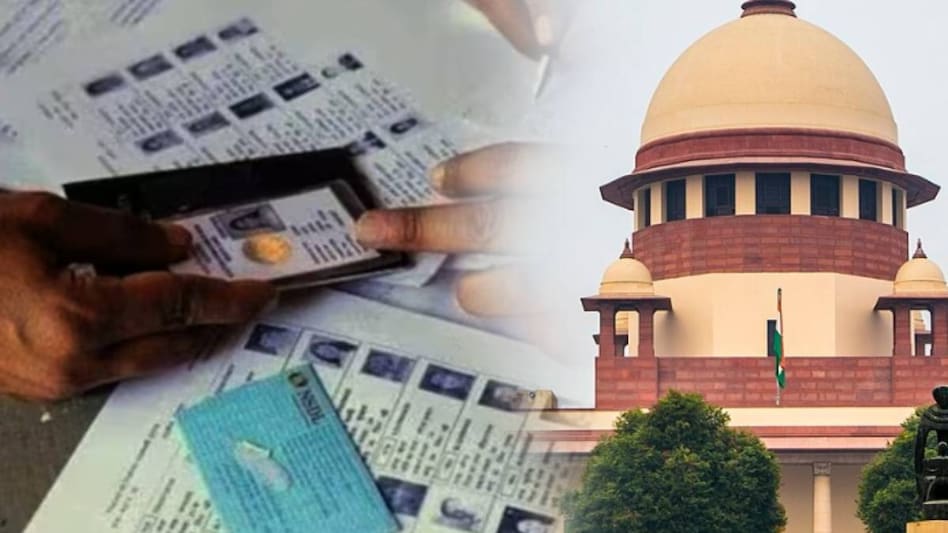
- Feb 9, 2026,
- Updated Feb 9, 2026 7:13 PM IST
The Supreme Court on Monday allowed one more week to complete the Special Intensive Revision (SIR) of electoral rolls in West Bengal and said the process must go on without any obstruction, according to Bar and Bench.
A bench of Justices Joymalya Bagchi and N.V. Anjaria said scrutiny of applications and finalisation of data can continue beyond the earlier February 14 deadline.
Electoral Registration Officers (EROs) have now been given one extra week to finish the work.
Chief Justice of India Surya Kant made the court’s stand clear, saying, “We will remove hurdles, but we will not create any impediments in the completion of SIR. Let us be very clear about it.”
During the hearing, the court directed that 8,555 Group B officers named by the West Bengal government must report to their District Electoral Officers by 5 pm.
The court also allowed the Election Commission of India (ECI) to replace any EROs or Assistant EROs found unsuitable. New officers may be given short training before working as micro observers. The bench clarified that they can only assist, and the final decision will remain with the EROs.
The court also took note of law and order concerns. Referring to claims in the ECI’s affidavit that no FIRs were registered despite complaints about the burning of objection forms, the Chief Justice said the Director General of Police must explain his stand. “We show cause the DGP to file his personal affidavit to explain his response to the counter affidavit by the ECI. We deem it appropriate for the DGP to explain this on his part,” the CJI said.
The bench pointed out gaps in communication between the state government and the ECI on the deployment of officers.
It noted that although the state had said it was ready to provide over 8,500 officers, the detailed list was submitted only during the court hearing.
Senior advocate D.S. Naidu, appearing for the ECI, said EROs perform quasi-judicial duties and need experience in handling such work. He told the court that while around 300 Group B officers were asked for, only 64 officers with relevant experience were initially provided.
On the draft electoral rolls, the court was told that out of 7.08 crore voters, 6.75 crore have been mapped so far.
Around 32 lakh voters are still unmapped, and 1.36 crore voters fall under the “logical discrepancy” category. Many of these cases are due to small spelling differences in surnames.
The Chief Justice said the final results of the verification process will be reviewed. “We will see after the verification how many of these notices are dropped. If 80% of the cases are dropped, then your argument will be the same — that minor discrepancies are incorrect,” he said.
The Supreme Court said it will address genuine problems but stressed that the revision of electoral rolls must be completed on time. The case will continue to be heard to ensure the SIR process moves forward while preventing any unfair removal of voters from the list.
The Supreme Court on Monday allowed one more week to complete the Special Intensive Revision (SIR) of electoral rolls in West Bengal and said the process must go on without any obstruction, according to Bar and Bench.
A bench of Justices Joymalya Bagchi and N.V. Anjaria said scrutiny of applications and finalisation of data can continue beyond the earlier February 14 deadline.
Electoral Registration Officers (EROs) have now been given one extra week to finish the work.
Chief Justice of India Surya Kant made the court’s stand clear, saying, “We will remove hurdles, but we will not create any impediments in the completion of SIR. Let us be very clear about it.”
During the hearing, the court directed that 8,555 Group B officers named by the West Bengal government must report to their District Electoral Officers by 5 pm.
The court also allowed the Election Commission of India (ECI) to replace any EROs or Assistant EROs found unsuitable. New officers may be given short training before working as micro observers. The bench clarified that they can only assist, and the final decision will remain with the EROs.
The court also took note of law and order concerns. Referring to claims in the ECI’s affidavit that no FIRs were registered despite complaints about the burning of objection forms, the Chief Justice said the Director General of Police must explain his stand. “We show cause the DGP to file his personal affidavit to explain his response to the counter affidavit by the ECI. We deem it appropriate for the DGP to explain this on his part,” the CJI said.
The bench pointed out gaps in communication between the state government and the ECI on the deployment of officers.
It noted that although the state had said it was ready to provide over 8,500 officers, the detailed list was submitted only during the court hearing.
Senior advocate D.S. Naidu, appearing for the ECI, said EROs perform quasi-judicial duties and need experience in handling such work. He told the court that while around 300 Group B officers were asked for, only 64 officers with relevant experience were initially provided.
On the draft electoral rolls, the court was told that out of 7.08 crore voters, 6.75 crore have been mapped so far.
Around 32 lakh voters are still unmapped, and 1.36 crore voters fall under the “logical discrepancy” category. Many of these cases are due to small spelling differences in surnames.
The Chief Justice said the final results of the verification process will be reviewed. “We will see after the verification how many of these notices are dropped. If 80% of the cases are dropped, then your argument will be the same — that minor discrepancies are incorrect,” he said.
The Supreme Court said it will address genuine problems but stressed that the revision of electoral rolls must be completed on time. The case will continue to be heard to ensure the SIR process moves forward while preventing any unfair removal of voters from the list.