
SCALP Missiles, HAMMER Bombs, Kamikaze Drones: India’s precision arsenal in Operation Sindoor
Its stealth design and precision-guidance system reportedly enabled the destruction of key targets like Jaish-e-Mohammed’s infrastructure in Bahawalpur and Lashkar-e-Taiba’s command center in Muridke.
- May 7, 2025,
- Updated May 7, 2025 10:02 AM IST
India’s Operation Sindoor was not just a show of intent—it was a demonstration of precision warfare, executed with some of the most advanced weapons in the Indian Air Force’s arsenal.
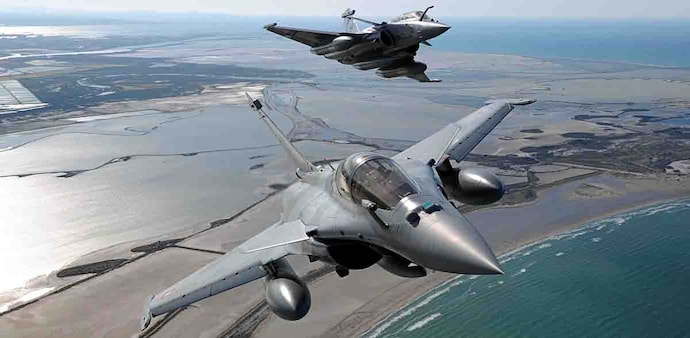
Though an official briefing is awaited, multiple reports indicate that Rafale jets were deployed to launch a mix of SCALP cruise missiles, HAMMER bombs, and loitering munitions (kamikaze drones) to strike nine terror-linked sites in Pakistan and Pakistan-Occupied Kashmir.
SCALP: Deep precision from a distance At the heart of the strike package was the SCALP (Storm Shadow) missile—an air-launched, long-range cruise missile designed for deep penetration strikes. With a range of over 250 km, SCALP allowed the IAF to hit hardened targets like bunkers, command centers, and fortified camps without crossing Indian airspace.
Its stealth design and precision-guidance system reportedly enabled the destruction of key targets like Jaish-e-Mohammed’s infrastructure in Bahawalpur and Lashkar-e-Taiba’s command center in Muridke.
HAMMER: Versatile and tactical Used alongside SCALP was the HAMMER (Highly Agile Modular Munition Extended Range) bomb, another French-origin precision munition. Fired from Rafales, HAMMER is modular and can be guided using GPS, infrared, or laser targeting.
Its ability to strike with high accuracy from a distance makes it ideal for medium-range tactical targets. According to reports, HAMMER was used in locations where the targets were either mobile or surrounded by civilian infrastructure—ensuring minimum collateral damage.
Kamikaze Drones: Real-time precision Completing the strike triad were loitering munitions, also known as kamikaze drones. These drones hover over a target area, transmitting real-time data, and can strike autonomously or via remote control. Their agility makes them ideal for targeting moving threats, temporary camps, or commanders on the move. Reports suggest that they were critical in hitting targets across Kotli, Muzaffarabad, and secondary camps in Gulpur, Bhimber, and Bagh.
While India has yet to publicly confirm the exact weapon systems used in Operation Sindoor, the reported use of this arsenal underscores a shift toward stand-off, tech-driven warfare—focused on precision, deterrence, and avoiding escalation by steering clear of civilian and military infrastructure not linked to terror groups.
India’s Operation Sindoor was not just a show of intent—it was a demonstration of precision warfare, executed with some of the most advanced weapons in the Indian Air Force’s arsenal.
Though an official briefing is awaited, multiple reports indicate that Rafale jets were deployed to launch a mix of SCALP cruise missiles, HAMMER bombs, and loitering munitions (kamikaze drones) to strike nine terror-linked sites in Pakistan and Pakistan-Occupied Kashmir.
SCALP: Deep precision from a distance At the heart of the strike package was the SCALP (Storm Shadow) missile—an air-launched, long-range cruise missile designed for deep penetration strikes. With a range of over 250 km, SCALP allowed the IAF to hit hardened targets like bunkers, command centers, and fortified camps without crossing Indian airspace.
Its stealth design and precision-guidance system reportedly enabled the destruction of key targets like Jaish-e-Mohammed’s infrastructure in Bahawalpur and Lashkar-e-Taiba’s command center in Muridke.
HAMMER: Versatile and tactical Used alongside SCALP was the HAMMER (Highly Agile Modular Munition Extended Range) bomb, another French-origin precision munition. Fired from Rafales, HAMMER is modular and can be guided using GPS, infrared, or laser targeting.
Its ability to strike with high accuracy from a distance makes it ideal for medium-range tactical targets. According to reports, HAMMER was used in locations where the targets were either mobile or surrounded by civilian infrastructure—ensuring minimum collateral damage.
Kamikaze Drones: Real-time precision Completing the strike triad were loitering munitions, also known as kamikaze drones. These drones hover over a target area, transmitting real-time data, and can strike autonomously or via remote control. Their agility makes them ideal for targeting moving threats, temporary camps, or commanders on the move. Reports suggest that they were critical in hitting targets across Kotli, Muzaffarabad, and secondary camps in Gulpur, Bhimber, and Bagh.
While India has yet to publicly confirm the exact weapon systems used in Operation Sindoor, the reported use of this arsenal underscores a shift toward stand-off, tech-driven warfare—focused on precision, deterrence, and avoiding escalation by steering clear of civilian and military infrastructure not linked to terror groups.