
‘Show the world your airbases if nothing was hit’: Sushant Sareen challenges Pakistan
The challenge follows a wave of open-source intelligence (OSINT) assessments suggesting India’s strikes, carried out in retaliation for the April 22 Pahalgam terror attack, caused visible damage to key Pakistani airbases.
- May 11, 2025,
- Updated May 11, 2025 7:03 PM IST
Amid growing satellite evidence of Indian cruise missile strikes on Pakistani military installations, Indian security analyst Sushant Sareen has publicly challenged Pakistan to back its denials with verifiable proof. In a post on X, Sareen called on Pakistan’s military to allow independent media and international journalists to inspect all 11 airbases that were reportedly targeted by the Indian Air Force.
“If India is lying, show the world,” Sareen wrote, urging Pakistan’s @OfficialDGISPR to take credible journalists, including CNN’s Nic Robertson, to the sites in question. “Also issue a roster of all your pilots who are still living… let’s have an independent inquiry to check how much damage India actually caused,” he added.
The challenge follows a wave of open-source intelligence (OSINT) assessments suggesting India’s strikes, carried out in retaliation for the April 22 Pahalgam terror attack, caused visible damage to key Pakistani airbases.
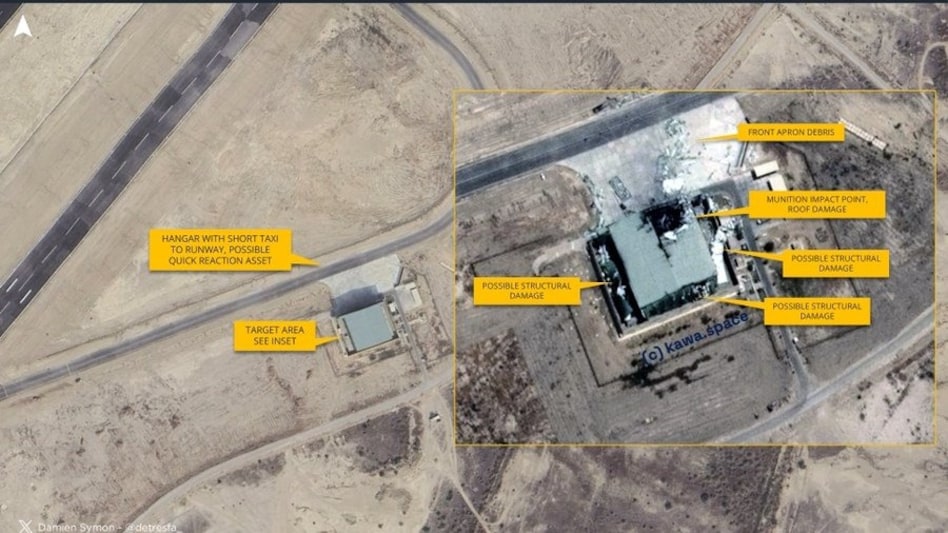
Kawa Space released bomb damage assessment (BDA) images showing strikes on PAF bases in Bholari, Sargodha, Jacobabad, and Nur Khan. OSINT analyst Damien Symon confirmed structural damage to hangars, runways, and ground support assets. “Imagery spotlights damage at Pakistan’s Bholari and Jacobabad airbases… the Indian Air Force strike appears to have affected key infrastructure,” Symon wrote.
Even satellite data from a Chinese firm, MizazVision, supported claims of impact at Nur Khan airbase, further undercutting Pakistan’s insistence that the strikes were ineffective.
The conflict was triggered after 26 tourists were killed in a terror attack in Jammu and Kashmir’s Pahalgam. India’s response included deep-strike precision missile attacks on terror camps and strategic military targets in Pakistan and Pakistan-Occupied Jammu and Kashmir (PoJK). Pakistan retaliated with drone strikes on Indian civilian areas, prompting another wave of Indian strikes on military facilities.
Sources have since confirmed that India has adopted a new rules-of-engagement policy: any future terror act linked to Pakistan will be treated as an act of war.
As visual evidence mounts, Sareen’s call highlights a growing demand for transparency from Islamabad. “Despite Pakistan getting its butt kicked, it had the confidence and audacity to declare victory,” he said. The challenge: either prove the bases are untouched—or confront the damage done.
Amid growing satellite evidence of Indian cruise missile strikes on Pakistani military installations, Indian security analyst Sushant Sareen has publicly challenged Pakistan to back its denials with verifiable proof. In a post on X, Sareen called on Pakistan’s military to allow independent media and international journalists to inspect all 11 airbases that were reportedly targeted by the Indian Air Force.
“If India is lying, show the world,” Sareen wrote, urging Pakistan’s @OfficialDGISPR to take credible journalists, including CNN’s Nic Robertson, to the sites in question. “Also issue a roster of all your pilots who are still living… let’s have an independent inquiry to check how much damage India actually caused,” he added.
The challenge follows a wave of open-source intelligence (OSINT) assessments suggesting India’s strikes, carried out in retaliation for the April 22 Pahalgam terror attack, caused visible damage to key Pakistani airbases.
Kawa Space released bomb damage assessment (BDA) images showing strikes on PAF bases in Bholari, Sargodha, Jacobabad, and Nur Khan. OSINT analyst Damien Symon confirmed structural damage to hangars, runways, and ground support assets. “Imagery spotlights damage at Pakistan’s Bholari and Jacobabad airbases… the Indian Air Force strike appears to have affected key infrastructure,” Symon wrote.
Even satellite data from a Chinese firm, MizazVision, supported claims of impact at Nur Khan airbase, further undercutting Pakistan’s insistence that the strikes were ineffective.
The conflict was triggered after 26 tourists were killed in a terror attack in Jammu and Kashmir’s Pahalgam. India’s response included deep-strike precision missile attacks on terror camps and strategic military targets in Pakistan and Pakistan-Occupied Jammu and Kashmir (PoJK). Pakistan retaliated with drone strikes on Indian civilian areas, prompting another wave of Indian strikes on military facilities.
Sources have since confirmed that India has adopted a new rules-of-engagement policy: any future terror act linked to Pakistan will be treated as an act of war.
As visual evidence mounts, Sareen’s call highlights a growing demand for transparency from Islamabad. “Despite Pakistan getting its butt kicked, it had the confidence and audacity to declare victory,” he said. The challenge: either prove the bases are untouched—or confront the damage done.