
'Significant setback for US': American expert on Modi-Putin-Xi meeting in China
He argued that India's repositioning toward Russia and China is undoing decades of US diplomacy.
- Sep 2, 2025,
- Updated Sep 2, 2025 7:52 PM IST
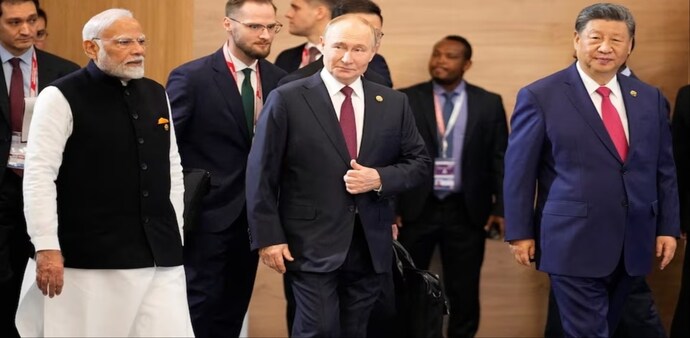
Author and foreign affairs commentator David Ignatius has described the sight of Prime Minister Narendra Modi joining Russian President Vladimir Putin and Chinese President Xi Jinping at the Shanghai Cooperation Organisation (SCO) summit in Tianjin as a serious blow to Washington's long-term strategy.
"The summit at Tianjin was a significant setback for the United States. The image of Vladimir Putin holding hands with the leader of India, Narendra Modi, was a sign that Putin is getting away with it. That three years into this (Ukraine) war, he is now claiming this was the West's fault, and he has an audience of prominent world leaders who agree with him, including somebody who was a key person in America's efforts to create a new kind of informal partnership to contain China — namely, India," Ignatius told MSNBC.
He argued that India's repositioning toward Russia and China is undoing decades of US diplomacy. "India's repositioning toward Russia and China reverses diplomacy that has been conducted since the administration of George W Bush, at least. And it's a really significant setback in terms of the broader outlook for Trump's foreign policy," the commentator said.
Ignatius added that Trump now faces difficulties across multiple fronts: "The Ukraine war is still far from settled, and Russia is essentially thumbing its nose at President Trump. The Gaza war continues in a bloodier-than-ever direction that has got Israel divided against itself. Just a terrible situation for Israel and the Palestinians. And Trump, seemingly, unable to make his peace policies, one of the central things he ran on - 'I'm going to go make peace' — to make those policies work. And this weekend's summit was a symbol of just how tough the obstacles to him succeeding in foreign policy have become."
Earlier, former US National Security Advisor John Bolton warned that Trump's trade and tariff policies have pushed India back toward Moscow and Beijing. "There's a lot of bad news here, very little good news. The West has spent decades, the US in particular, trying to wean India away from its Cold War attachment to the Soviet Union, Russia, buying sophisticated weapons from them, and cautioning India on the danger posed by China," Bolton said in an interview with Sky News.
Bolton argued that Trump's approach has "shredded" years of work. "Donald Trump in the past weeks has essentially upended that and for a variety of reasons now sent India back toward Russia to grow closer to China and just shredding these decades of efforts to try and change that alignment. I'm not saying this can't be fixed, but it's going to take a lot of work and I don't see it starting anytime soon."
The former NSA also pointed to tariffs as a trigger for India's frustration. "It's a series of things that Trump has done that have offended the Indians... Trump just dismissed it and set 25% tariffs, then carried through on his threat to either tariff Russia or impose secondary tariffs on countries buying Russian oil and gas. Trump whacked India with another 25%. Did not tariff Russia. Did not tariff China, the largest purchaser of Russian oil and gas," he said.
Author and foreign affairs commentator David Ignatius has described the sight of Prime Minister Narendra Modi joining Russian President Vladimir Putin and Chinese President Xi Jinping at the Shanghai Cooperation Organisation (SCO) summit in Tianjin as a serious blow to Washington's long-term strategy.
"The summit at Tianjin was a significant setback for the United States. The image of Vladimir Putin holding hands with the leader of India, Narendra Modi, was a sign that Putin is getting away with it. That three years into this (Ukraine) war, he is now claiming this was the West's fault, and he has an audience of prominent world leaders who agree with him, including somebody who was a key person in America's efforts to create a new kind of informal partnership to contain China — namely, India," Ignatius told MSNBC.
He argued that India's repositioning toward Russia and China is undoing decades of US diplomacy. "India's repositioning toward Russia and China reverses diplomacy that has been conducted since the administration of George W Bush, at least. And it's a really significant setback in terms of the broader outlook for Trump's foreign policy," the commentator said.
Ignatius added that Trump now faces difficulties across multiple fronts: "The Ukraine war is still far from settled, and Russia is essentially thumbing its nose at President Trump. The Gaza war continues in a bloodier-than-ever direction that has got Israel divided against itself. Just a terrible situation for Israel and the Palestinians. And Trump, seemingly, unable to make his peace policies, one of the central things he ran on - 'I'm going to go make peace' — to make those policies work. And this weekend's summit was a symbol of just how tough the obstacles to him succeeding in foreign policy have become."
Earlier, former US National Security Advisor John Bolton warned that Trump's trade and tariff policies have pushed India back toward Moscow and Beijing. "There's a lot of bad news here, very little good news. The West has spent decades, the US in particular, trying to wean India away from its Cold War attachment to the Soviet Union, Russia, buying sophisticated weapons from them, and cautioning India on the danger posed by China," Bolton said in an interview with Sky News.
Bolton argued that Trump's approach has "shredded" years of work. "Donald Trump in the past weeks has essentially upended that and for a variety of reasons now sent India back toward Russia to grow closer to China and just shredding these decades of efforts to try and change that alignment. I'm not saying this can't be fixed, but it's going to take a lot of work and I don't see it starting anytime soon."
The former NSA also pointed to tariffs as a trigger for India's frustration. "It's a series of things that Trump has done that have offended the Indians... Trump just dismissed it and set 25% tariffs, then carried through on his threat to either tariff Russia or impose secondary tariffs on countries buying Russian oil and gas. Trump whacked India with another 25%. Did not tariff Russia. Did not tariff China, the largest purchaser of Russian oil and gas," he said.