
‘Sindh may return to India’: Rajnath Singh says Sindhi Hindus never accepted partition
He also strongly defended the Citizenship Amendment Act (CAA), saying it was introduced to address the injustice faced by persecuted minorities in neighbouring countries.
- Nov 23, 2025,
- Updated Nov 23, 2025 9:41 PM IST
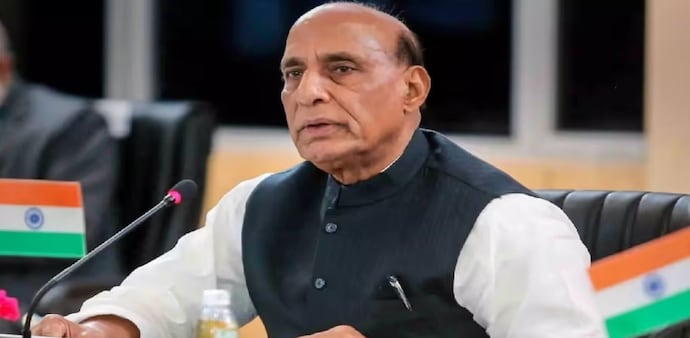
Defence Minister Rajnath Singh said that although Sindh is not part of India today, borders are not permanent, and the region could "return to India" in the future. He was addressing the Sindhi Samaj Sammelan in Delhi on November 23, where he also acknowledged the emotional trauma endured by Sindhi Hindus post-Partition.
Singh said, "This is Advani's (Lal Krishna Advani's quote). Today, the land of Sindh may not be a part of India, but civilisationally, Sindh will always be a part of India. And as far as land is concerned, borders can change. Who knows, tomorrow Sindh may return to India again."
"Many Sindhi Hindus, especially those of Lal Krishna Advani's generation, have not accepted the separation of Sindh from India," Singh said, citing the veteran BJP leader's reflections.
Emphasising Sindh's cultural and spiritual significance, Singh remarked, “Our people of Sindh, who hold the Indus River sacred, will always be our own. No matter where they are, they will always be ours.” He added that even many Muslims in the region regarded the Indus water as sacred as the Aab-e-Zamzam of Mecca.
Sindh region, known as the homeland of the Sindhi people, has been a significant part of India's civilisation. It was also the centre of the Indus Valley Civilisation. The region became part of Pakistan with the partition in 1947.
He also strongly defended the Citizenship Amendment Act (CAA), saying it was introduced to address the injustice faced by persecuted minorities in neighbouring countries. Singh said many had suffered violence, forced conversions and displacement, but were ignored by past governments due to appeasement politics.
“The people who truly deserved help were not given the rights they deserved. Their suffering was overlooked,” he said. “But if anyone understood this pain, it was Prime Minister Narendra Modi. That is why we introduced the Citizenship Amendment Bill.”
The CAA, enacted in 2019, provides a pathway to Indian citizenship for non-Muslim minorities from Pakistan, Afghanistan, and Bangladesh who entered India before December 31, 2014
Defence Minister Rajnath Singh said that although Sindh is not part of India today, borders are not permanent, and the region could "return to India" in the future. He was addressing the Sindhi Samaj Sammelan in Delhi on November 23, where he also acknowledged the emotional trauma endured by Sindhi Hindus post-Partition.
Singh said, "This is Advani's (Lal Krishna Advani's quote). Today, the land of Sindh may not be a part of India, but civilisationally, Sindh will always be a part of India. And as far as land is concerned, borders can change. Who knows, tomorrow Sindh may return to India again."
"Many Sindhi Hindus, especially those of Lal Krishna Advani's generation, have not accepted the separation of Sindh from India," Singh said, citing the veteran BJP leader's reflections.
Emphasising Sindh's cultural and spiritual significance, Singh remarked, “Our people of Sindh, who hold the Indus River sacred, will always be our own. No matter where they are, they will always be ours.” He added that even many Muslims in the region regarded the Indus water as sacred as the Aab-e-Zamzam of Mecca.
Sindh region, known as the homeland of the Sindhi people, has been a significant part of India's civilisation. It was also the centre of the Indus Valley Civilisation. The region became part of Pakistan with the partition in 1947.
He also strongly defended the Citizenship Amendment Act (CAA), saying it was introduced to address the injustice faced by persecuted minorities in neighbouring countries. Singh said many had suffered violence, forced conversions and displacement, but were ignored by past governments due to appeasement politics.
“The people who truly deserved help were not given the rights they deserved. Their suffering was overlooked,” he said. “But if anyone understood this pain, it was Prime Minister Narendra Modi. That is why we introduced the Citizenship Amendment Bill.”
The CAA, enacted in 2019, provides a pathway to Indian citizenship for non-Muslim minorities from Pakistan, Afghanistan, and Bangladesh who entered India before December 31, 2014