
Southern Railway achieves 100% electrification across 5,068-km broad gauge network
Southern Railway has completed electrification across its entire 5,068 route-kilometre broad gauge network with the Pattukottai-Karaikudi section. The milestone ends traction changes on the network and is expected to reduce diesel dependence.
- Sep 16, 2026,
- Updated Sep 16, 2026 5:21 PM IST
Indian Railways has achieved another milestone in its effort to make its network more modern and energy-efficient, with Southern Railway’s entire broad gauge network now ready for electric train operations. This means 100% electrification has been completed across Southern Railway’s 5,068 route-kilometre broad gauge network, marking the end of a journey that began in 1931.
The milestone was achieved with the completion of the 71-kilometre Pattukottai-Karaikudi rail section in Tamil Nadu. The inspection of this section was completed on 9 September 2026 by Southern Railway Principal Chief Electrical Engineer Shri Ganesh. With this, electric traction is now available across the full 5,068 route-kilometre broad gauge network of Southern Railway.
READ THIS: Delhi-Mumbai in 12 hours? Railways is racing to make this train journey much faster
The journey of electric traction in Southern Railway began nearly 95 years ago. Electric traction was introduced for the first time in the Madras region on 11 May 1931. After that, different parts of the railway network were electrified in phases over time. Dependence on diesel traction gradually reduced as the reach of electric traction expanded, and by 2026 the entire network had come under electric traction.
On 11 September 2026, the Ministry of Railways posted on X and described the achievement as “a leap forward towards sustainable rail travel” and said Southern Railway was now 100% electrified. Electric traction means the use of electricity to pull trains. With track electrification, trains are hauled by electric locomotives instead of diesel locomotives.
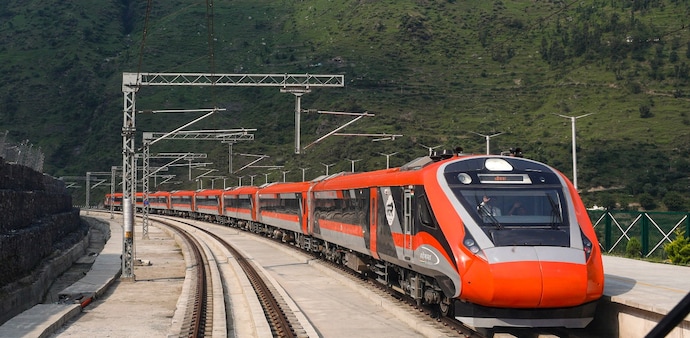
One major operational benefit of full electrification is that trains will no longer need traction changes on the network. Earlier, if the next part of a route was not electrified, the train could require a change in traction to continue the journey. Electric locomotives draw power from overhead electric wires, and if a section ahead was not electrified, a diesel locomotive could be needed. With electric traction now available across Southern Railway’s entire broad gauge network, that requirement has ended.
Changing traction takes additional time and also requires extra co-ordination at the level of locomotives and crew. With the full network electrified, train operations are expected to become easier. Electric locomotives can be used more effectively, and operational hurdles linked to traction changes will be removed, helping improve train efficiency.
For the Railways, electrification is not limited to making train operations easier. A key objective is also to reduce dependence on fossil fuels. With electric traction now available across the entire network, dependence on diesel will come down, while Indian Railways’ wider modernisation effort will also be strengthened.
Indian Railways has achieved another milestone in its effort to make its network more modern and energy-efficient, with Southern Railway’s entire broad gauge network now ready for electric train operations. This means 100% electrification has been completed across Southern Railway’s 5,068 route-kilometre broad gauge network, marking the end of a journey that began in 1931.
The milestone was achieved with the completion of the 71-kilometre Pattukottai-Karaikudi rail section in Tamil Nadu. The inspection of this section was completed on 9 September 2026 by Southern Railway Principal Chief Electrical Engineer Shri Ganesh. With this, electric traction is now available across the full 5,068 route-kilometre broad gauge network of Southern Railway.
READ THIS: Delhi-Mumbai in 12 hours? Railways is racing to make this train journey much faster
The journey of electric traction in Southern Railway began nearly 95 years ago. Electric traction was introduced for the first time in the Madras region on 11 May 1931. After that, different parts of the railway network were electrified in phases over time. Dependence on diesel traction gradually reduced as the reach of electric traction expanded, and by 2026 the entire network had come under electric traction.
On 11 September 2026, the Ministry of Railways posted on X and described the achievement as “a leap forward towards sustainable rail travel” and said Southern Railway was now 100% electrified. Electric traction means the use of electricity to pull trains. With track electrification, trains are hauled by electric locomotives instead of diesel locomotives.
One major operational benefit of full electrification is that trains will no longer need traction changes on the network. Earlier, if the next part of a route was not electrified, the train could require a change in traction to continue the journey. Electric locomotives draw power from overhead electric wires, and if a section ahead was not electrified, a diesel locomotive could be needed. With electric traction now available across Southern Railway’s entire broad gauge network, that requirement has ended.
Changing traction takes additional time and also requires extra co-ordination at the level of locomotives and crew. With the full network electrified, train operations are expected to become easier. Electric locomotives can be used more effectively, and operational hurdles linked to traction changes will be removed, helping improve train efficiency.
For the Railways, electrification is not limited to making train operations easier. A key objective is also to reduce dependence on fossil fuels. With electric traction now available across the entire network, dependence on diesel will come down, while Indian Railways’ wider modernisation effort will also be strengthened.