
'Starting a company is much more...': Zoho's Sridhar Vembu on why India once felt hopeless
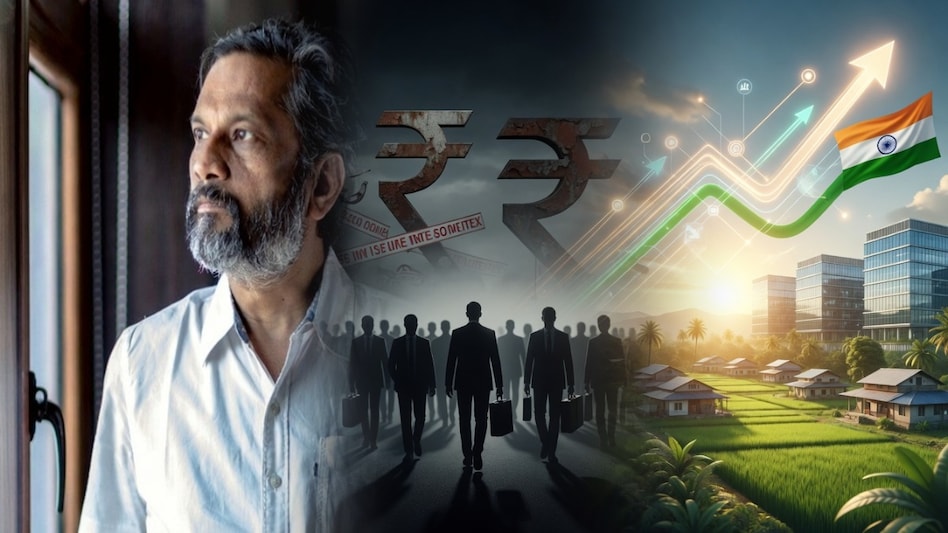
'I remember feeling extremely dejected about our country. Punjab, Kashmir, and Assam were all burning,' says Zoho's Sridhar Vembu
- Apr 23, 2026,
- Updated Apr 23, 2026 1:35 PM IST
Zoho founder Sridhar Vembu on Thursday said starting a company in India has become far easier today, pointing to wider access to talent and lower costs as key changes from the past. "We can start companies much more easily now. We can do it from a very low-cost-of-living place, too. If you have talent, you can make it in India today. That was much harder in the socialist raj days," he wrote on X.
Don't Miss: ‘Won’t happen overnight…’: Pirojsha Godrej on India’s self-sufficiency amid Iran war
He framed the shift against his own experience as a student at IIT Madras in the late 1980s. "In the 1980s, most IITians would go abroad. In 1989, when I graduated from IIT Madras, I remember feeling extremely dejected about our country. Punjab, Kashmir, and Assam were all burning."
At the time, he said, his focus had moved away from engineering. "My heart was not in engineering. I was mostly reading books in Economics and Philosophy," he wrote, adding that a central question drove him: "Why are we so poor?"
That question led him and some classmates to write an article in an IIT campus newspaper around 1988–89, arguing that the system was failing to serve the country and that India was facing "a profound stagnation." He said he would like to revisit what he thought at the time.
Must Read: Don't obsess over coding: Sridhar Vembu's advice to engineers in AI-era
By 1989, Vembu said he had become "a committed anti-socialist," shaped by what he described as years of stagnation. He pointed to global developments, including the collapse of the Soviet Union and unrest in China, alongside India's economic stress.
"By 1991, India needed an emergency IMF loan. The 1991 economic reforms by Shri Manmohan Singh happened due to pressure from the IMF. So you can imagine the mood in 1989."
He left India that year. "That was the India I left in 1989. I was feeling miserable to leave but hopeless to stay." During his PhD years in the early 1990s, he said he continued to examine the question of poverty, studying countries like Singapore and Japan, before taking up a research role at Qualcomm in 1994.
When asked by a social media user what answer he eventually found to why India was so poor, Vembu pointed to talent. "We have been poor because we waste our talent on a truly massive scale. Zoho is built by very ordinary Indians from very humble backgrounds. That kind of talent pool is there everywhere in India."
Tapping that talent could reshape India's economic trajectory, he said. "We have to tap it to create tens of thousands of companies like this. At that point, we will be shockingly wealthy as a nation."
Zoho founder Sridhar Vembu on Thursday said starting a company in India has become far easier today, pointing to wider access to talent and lower costs as key changes from the past. "We can start companies much more easily now. We can do it from a very low-cost-of-living place, too. If you have talent, you can make it in India today. That was much harder in the socialist raj days," he wrote on X.
Don't Miss: ‘Won’t happen overnight…’: Pirojsha Godrej on India’s self-sufficiency amid Iran war
He framed the shift against his own experience as a student at IIT Madras in the late 1980s. "In the 1980s, most IITians would go abroad. In 1989, when I graduated from IIT Madras, I remember feeling extremely dejected about our country. Punjab, Kashmir, and Assam were all burning."
At the time, he said, his focus had moved away from engineering. "My heart was not in engineering. I was mostly reading books in Economics and Philosophy," he wrote, adding that a central question drove him: "Why are we so poor?"
That question led him and some classmates to write an article in an IIT campus newspaper around 1988–89, arguing that the system was failing to serve the country and that India was facing "a profound stagnation." He said he would like to revisit what he thought at the time.
Must Read: Don't obsess over coding: Sridhar Vembu's advice to engineers in AI-era
By 1989, Vembu said he had become "a committed anti-socialist," shaped by what he described as years of stagnation. He pointed to global developments, including the collapse of the Soviet Union and unrest in China, alongside India's economic stress.
"By 1991, India needed an emergency IMF loan. The 1991 economic reforms by Shri Manmohan Singh happened due to pressure from the IMF. So you can imagine the mood in 1989."
He left India that year. "That was the India I left in 1989. I was feeling miserable to leave but hopeless to stay." During his PhD years in the early 1990s, he said he continued to examine the question of poverty, studying countries like Singapore and Japan, before taking up a research role at Qualcomm in 1994.
When asked by a social media user what answer he eventually found to why India was so poor, Vembu pointed to talent. "We have been poor because we waste our talent on a truly massive scale. Zoho is built by very ordinary Indians from very humble backgrounds. That kind of talent pool is there everywhere in India."
Tapping that talent could reshape India's economic trajectory, he said. "We have to tap it to create tens of thousands of companies like this. At that point, we will be shockingly wealthy as a nation."