
‘Steadiest since WWII’: Jaishankar defends India-Russia ties in a shifting world order
The External Affairs Minister also cited recent visits by key Indian officials, including NSA Ajit Doval, Union Minister Ashwini Vaishnaw, and NITI Aayog Vice Chairman Suman Bery, as evidence of the depth of the bilateral relationship.
- Aug 21, 2025,
- Updated Aug 21, 2025 4:52 PM IST
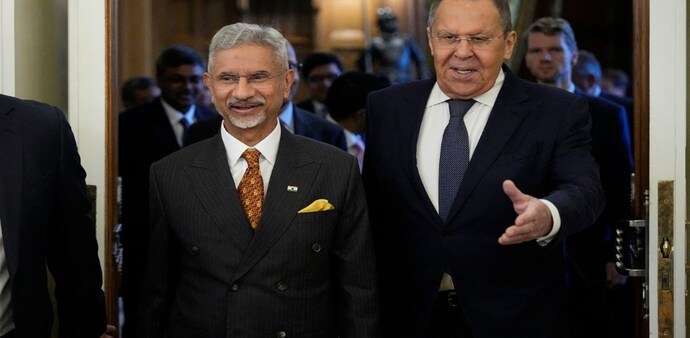
At a joint press conference in Moscow, External Affairs Minister S. Jaishankar described India and Russia as “the steadiest of the major relationships in the world after the Second World War.” His counterpart, Russian Foreign Minister Sergey Lavrov, echoed the sentiment, calling the partnership “special” and shaped by their countries' leadership.
Jaishankar’s visit follows discussions with Russian Deputy Prime Minister Denis Manturov. He said his meeting with Lavrov offered an opportunity to review political ties and deepen cooperation across sectors. “I look forward to an exchange of views on politics, on trade, on economics, investment, defence, science and technology, and of course people-to-people exchanges,” he said.
He highlighted recent high-level engagements, including last year’s 22nd Annual Summit and follow-up talks in Kazan, as key moments of direction in the Special and Privileged Strategic Partnership. Preparations are underway for the next summit later this year.
Addressing US criticism over India’s oil trade with Russia, Jaishankar pushed back. “We are not the biggest purchasers of Russian oil, that is China... the biggest purchasers of LNG, that is the European Union... We are a country where the Americans have said for the last few years that we should do everything to stabilise the world energy market, including buying oil from Russia... We also buy oil from the US, and that amount has increased. So honestly, we are very perplexed at the logic of the argument that you had referred to,” he said.
He also cited recent visits by key Indian officials, including NSA Ajit Doval, Union Minister Ashwini Vaishnaw, and NITI Aayog Vice Chairman Suman Bery, as evidence of the depth of the bilateral relationship.
Looking ahead, Jaishankar said India and Russia must align to the “evolving geopolitical situation, the shifting economic and trade landscape, and our shared goal to maximize our complementarity.”
Lavrov welcomed Jaishankar to Moscow, reaffirming their “special strategic partnership.” He emphasized the importance of collaboration in a shifting world order. “This is a multipolar system of international relations with an increasing role played by the SCO, BRICS and the G20... the United Nations remains a platform for cooperation, compromise and seeking agreement,” he said.
Lavrov added that Moscow supported “balanced approaches” and hoped for productive talks.
At a joint press conference in Moscow, External Affairs Minister S. Jaishankar described India and Russia as “the steadiest of the major relationships in the world after the Second World War.” His counterpart, Russian Foreign Minister Sergey Lavrov, echoed the sentiment, calling the partnership “special” and shaped by their countries' leadership.
Jaishankar’s visit follows discussions with Russian Deputy Prime Minister Denis Manturov. He said his meeting with Lavrov offered an opportunity to review political ties and deepen cooperation across sectors. “I look forward to an exchange of views on politics, on trade, on economics, investment, defence, science and technology, and of course people-to-people exchanges,” he said.
He highlighted recent high-level engagements, including last year’s 22nd Annual Summit and follow-up talks in Kazan, as key moments of direction in the Special and Privileged Strategic Partnership. Preparations are underway for the next summit later this year.
Addressing US criticism over India’s oil trade with Russia, Jaishankar pushed back. “We are not the biggest purchasers of Russian oil, that is China... the biggest purchasers of LNG, that is the European Union... We are a country where the Americans have said for the last few years that we should do everything to stabilise the world energy market, including buying oil from Russia... We also buy oil from the US, and that amount has increased. So honestly, we are very perplexed at the logic of the argument that you had referred to,” he said.
He also cited recent visits by key Indian officials, including NSA Ajit Doval, Union Minister Ashwini Vaishnaw, and NITI Aayog Vice Chairman Suman Bery, as evidence of the depth of the bilateral relationship.
Looking ahead, Jaishankar said India and Russia must align to the “evolving geopolitical situation, the shifting economic and trade landscape, and our shared goal to maximize our complementarity.”
Lavrov welcomed Jaishankar to Moscow, reaffirming their “special strategic partnership.” He emphasized the importance of collaboration in a shifting world order. “This is a multipolar system of international relations with an increasing role played by the SCO, BRICS and the G20... the United Nations remains a platform for cooperation, compromise and seeking agreement,” he said.
Lavrov added that Moscow supported “balanced approaches” and hoped for productive talks.